Blog

The Resurrected God: Believing What Our Eyes See

IMG_0179

Luke 24:36-48

You are a witness to the resurrection of Jesus Christ.

 
In our Gospel reading, the disciples are reeling from the events they have just witnessed. After they witnessed Jesus crucified and buried, they saw the empty tomb. In the chaos of trying to understand what was happening, word begins to spread that Jesus is appearing to disciples far and wide. Disciples on the road to Emmaus unknowingly share a conversation and meal with the risen Jesus. Other disciples are hiding in fear behind locked doors waiting for some assurance that what they were experiencing was real and if it was safe for them to live public lives. Amid the chaos, in that chamber of fear and confusion, Jesus appears and calms the storm in their lives.

 
“Peace to you!”, are the words of Jesus. These words are followed by two questions: “Why are you troubled and why do you doubt?” These questions may appear to be naïve, especially to those enduring the uncertainties of life. But Jesus is far from naïve. He is sovereign. He has everything under control. What looked like his final fate in this world was nothing but victory for all of eternity. The disciples encounter the risen Jesus and have their fears vanquished and their hearts encouraged. The tomb was not the end of the relationship between the disciples and Jesus. Instead, the empty tomb was the proclamation that things on earth would be forever changed. And Jesus was not finished with his disciples—there was work to be done.

 
We are witnesses along with these disciples. Their task is our task. To go and proclaim the forgiveness of sins in the name of Jesus to all nations. Regardless of our struggles, fears, anxieties, or doubts, Jesus is alive. He has set us free from the chains of bondage to sin and death. We are witnesses to this miracle and, thus, we must testify. For because Christ is risen, all have the hope of eternal life. Amen.

The Resurrection of the Dead

The following is the sermon manuscript I used on April 8, 2017, the Second Sunday of Easter. It will vary in places from the actual sermon preached.

Sermon Text – Ruth 1:1-5

In the days when the judges ruled there was a famine in the land, and a man of Bethlehem in Judah went to sojourn in the country of Moab, he and his wife and his two sons. The name of the man was Elimelech and the name of his wife Naomi, and the names of his two sons were Mahlon and Chilion. They were Ephrathites from Bethlehem in Judah. They went into the country of Moab and remained there. But Elimelech, the husband of Naomi, died, and she was left with her two sons. These took Moabite wives; the name of the one was Orpah and the name of the other Ruth. They lived there about ten years, and both Mahlon and Chilion died, so that the woman was left without her two sons and her husband.

“God is a God of the living, not the dead.” That is the proclamation of the Resurrection of Jesus Christ for all people and for all time.

Ruth is a story about resurrection. Naomi begins this story as a person surrounded by death – the deaths of her husband and her sons – with only death to look forward to herself. She ends this story celebrating a new birth. Naomi begins this story as a foreigner in a foreign land with no family except her adopted family in Ruth. She ends this story in her own hometown with her own relative to look after her for her the rest of her life. Naomi begins this story as someone whose line is all but cut off – her sons bore no children! It ends with her as the great-great grandmother of David, the king. Naomi begins this story, as we’ll see next week, wanting to rename herself “Mara” – bitter – because “the Almighty has dealt bitterly with [her].” She ends this story hearing the chorus of the women: “Blessed be the LORD, who has not left you . . . He [through his redeemer] shall be to you a restorer of life and a nourisher of your old age.”

“God is a God of the living, not the dead.” That is the proclamation of the Resurrection of Jesus Christ for all people and for all time.

Ruth is indeed a story about resurrection. But as all good resurrection stories go, it is a story that begins in death. In the first seven words, we find out that this story takes place “in the time of the Judges.” Now the only reason Derek and I picked the gloomy book of Judges for our Lenten sermon series is so that you’d know exactly what that setting means.

Ok, that’s not entirely true.

Actually, we’re sadists.

Ok, that’s not exactly true either.

No, the reason we forced you through the doom and gloom of Judges for five weeks (I know you probably thought it was longer than that!) was to highlight how much depravity the human race is capable of on its own and how desperately we need Jesus to rise from the dead! And we kept the depravity kind of tame! We didn’t even go into the end of the book of Judges and discuss the concubine who’s thrown out to an angry mob that literally rapes her to death Sodom-and-Gomorrah-style so that her priest-lover can dismember her body and send pieces of it to the twelve tribes of Israel which, of course, starts a civil war!

You’re welcome.

The refrain in the book of Judges, as its very last verse says, is “In those days there was no king in Israel. Everyone did what was right in his own eyes.” Doing what is right in your own eyes is sin. And as we know from the second chapter of the Bible onward, sin always leads to death. When God warns Adam not to eat of the Tree of Knowledge of good and evil, God says that the “day that you eat of it, you shall surely die.” Up to the moment that Adam and Eve eat of the fruit, they only knew good. And every moment since we, their children, have known good and evil. Death is evil. It is not part of God’s original design of creation. It is a corruption perpetrated by us – every human being that’s ever lived – as we work with Satan himself to bring it about. It is God’s pronouncement of judgment, a curse, that if the things he’s created insist on having their own way apart from him, he allows them to do so. And the way apart from God leads to death. As Judges shows us, doing what is right in your own eyes leads to death.

The desire of the people of Israel eventually becomes the desire for a king who will show them what is right in God’s eyes. Of course, there is resistance to this idea of earthly kingship (going all the way back to Moses) because God himself desires to be their king. And some of the irony in these first few verses is that a man whose name is “My God is King” – Elimelech – is going to reject God as king and do what is right in his own eyes. Now, we can’t be too judgmental of Elimelech. We would probably do the same thing if we were in his situation. If our family faced starvation, we would probably want to take them away to a place with food! Hear again the irony: Bethlehem, the “House of Bread” has no bread! What choice does he have?

But Elimelech should know that this starvation is the result of famine that’s God’s punishment for Israel’s disobedience in the time of Judges, and that if the people repented and cried out to God he would again show them his favor! Instead of trusting in the Lord, his King, to provide, he despairs. He names his children based on the words that mean “to be sick” – Mahlon – and “to come to an end” – Chilion. And he takes his wife, “Pleasant” – or Naomi – and he leaves the Promised Land to go to the land of Israel’s sworn enemy, Moab.

And he dies.

He dies leaving Naomi a widow and his sons without wives away from their hometown in Bethlehem, away from their fellow Ephrathites, away from Judah, away from the covenant people of Israel. And it’s Elimelech’s desperate disobedience that leads to the desperate disobedience of his sons, for they ignore clear commands in the Law against marrying people outside the covenant community – specifically against marrying those Moabite women – and take Ruth and Naomi as their wives. And for ten years they are childless in Moab. Orpah and Ruth bear no children. And Mahlon and Chilion die in Moab away from their home.

And Naomi is left with no husband, no children, no grandchildren. She is a stranger in a strange land, the victim of the results of sin and death, the victim of the choices of people she loved who, though desperate, wanted to do what was right in their own eyes in the face of that desperation.

She will not repeat that pattern.

She will go home. She will be faithful. She will trust in the Lord and be kind to her Moabite daughter-in-law. And in the midst of death, God will make new life. Naomi, destitute and lacking hope, will be one of the great-grandmothers of the Source of all hope – Jesus Christ – as God works wonders around this foreign daughter-in-law of hers. A foreigner in a foreign land, she will be the demonstration, through her daughter-in-law, Ruth, that God welcomes the stranger, the foreigner, the sojourner into his Kingdom! Indeed, God welcomes in especially those in the margins, those even hated by people who claim to be his people, because God’s reach is global. Naomi’s life, though here surrounded by death, will be the example for us, who live over 3,000 years after her, that God is a God of the living, not the dead.

Because in the midst of death, in the midst of despair, even in the midst of her doubt as we’ll see next time, Naomi trusts in the resurrection of Jesus Christ. No, of course she was not a witness to it. Well, actually she was, just not in the way we normally think about who a witness is. The only Jesus she knew was the leader who conquered the Promised Land under the hand of God – Joshua. The Jesus we know is named after Joshua, “God Saves.” Even though she would see none of Jesus’ signs or miracles, Naomi returns to the land of Joshua, to the very town in which Jesus would be born. She does not try to find a redeemer in the midst of people who do not worship her God. Instead she returns humbly, but grieving, to find a redeemer in the birthplace of our Redeemer, Jesus, the one who over 1,000 years after her would be the Redeemer of the whole world.

How do we react to the despair of sin and death? I don’t have to explain to you what reacting to death feels like. We see it too often all around us to need a reminder. We have felt it in the loss of loved ones. We have feared it in the sicknesses of our friends. We have mourned it for our country and for the world – especially when it is so hard for us to escape the constant images of violence and warfare and death. We have known it in our churches as we have seen attendance and giving decline, and as we have seen other churches with long histories shut their doors.

Certainly, we grieve. It is right and proper for us to grieve death because death is opposed to God! Wherever we see death, we should hate it and long for its final end when, as Revelation 21 tells us, death is cast into the very pit of Hell along with sin forever and ever.

If there is an overall shape to the pattern of Judges, it’s that the people of God move from good times at the start to truly horrific times through their own disobedience. And if there’s an overall shape to Ruth, it’s the movement from raw, familial tragedy, as we see in our passage today, to the abundant life that’s promised to the whole world through the Son of David, the Son of God, Jesus Christ who rose from the dead!

But where is God in this story? That’s certainly a question we ask in the midst of death, isn’t it?

I have to admit made quite a few assumptions here. I’ve said that the famine was judgment for Israel’s disobedience. I’ve said that Elimelech and his sons’ disobedience led to death. I’ve said that God will restore Naomi and bring about new life. I’ve inferred these things from other scriptures. But the text today doesn’t explicitly say any of that. God as a character in the book of Ruth seems to be absent. Oh certainly, characters mention God, the LORD, the Almighty. But there is no direct narration of God actively doing anything.

But what a grave mistake it would be for us to assume that God is anywhere close to absent in this story! The book of Ruth is one of the most powerful statements of God’s sovereign hand over all creation in the Bible. There are many things that will happen over the next few chapters that we might be tempted to say are just coincidence, or luck, or shrewd women taking advantage of a situation. Shrewd, faithful, and obedient women do take advantage of the situations in this book, but they do so because God has arranged it. God sees their need, and he meets their need. He sees their desperate state, he sees their example of faith and faithfulness, and he brings them from death to life.

Because “God is a God of the living, not the dead.” That is the proclamation of the Resurrection of Jesus Christ for all people and for all time.

The times in our lives when God seems the most absent, as he does in many places in the book of Ruth, are not the times when God has ceased to work! God is working, even here through refugees, to bring all his people into a home – his home. God is working, even here through a foreigner, to bring all his people into his family. God is working, even here, to bring life from death. Indeed he is working to bring into the world the One who is the Resurrection and the Life! Especially in the places we do not see him working, God is on the move bringing death to life for us and for his whole creation!

At the center of all of human history is the Resurrection of Jesus Christ. At the center of all human hope is the Resurrection of Jesus Christ. At the center of eternal, everlasting life – for Naomi and for us today – is the Resurrection of Jesus Christ. And in this season of Easter, in the midst of grieving real tragedy in our personal lives, in the world, and in our churches, we proclaim that the Resurrection of Jesus Christ has made all things new.

In the name of the One who has passed from death to life, to whom we proclaim all majesty and glory and dominion forever and ever, Amen.
The God of the Living: John 20:19-31

Derek and Sherrad are writing a reflection on the Gospel reading for each Sunday this Easter season called, “The Resurrected God.”

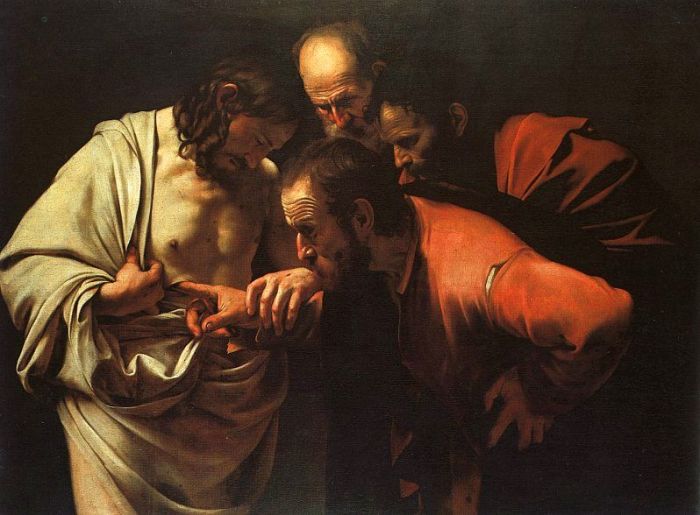
Image credit: The Incredulity of Saint Thomas, Caravaggio

John 20:19 On the evening of that day, the first day of the week, the doors being locked where the disciples were for fear of the Jews, Jesus came and stood among them and said to them, “Peace be with you.” 20 When he had said this, he showed them his hands and his side. Then the disciples were glad when they saw the Lord. 21 Jesus said to them again, “Peace be with you. As the Father has sent me, even so I am sending you.” 22 And when he had said this, he breathed on them and said to them, “Receive the Holy Spirit. 23 If you forgive the sins of any, they are forgiven them; if you withhold forgiveness from any, it is withheld.”

24 Now Thomas, one of the twelve, called the Twin, was not with them when Jesus came. 25 So the other disciples told him, “We have seen the Lord.” But he said to them, “Unless I see in his hands the mark of the nails, and place my finger into the mark of the nails, and place my hand into his side, I will never believe.”

26 Eight days later, his disciples were inside again, and Thomas was with them. Although the doors were locked, Jesus came and stood among them and said, “Peace be with you.” 27 Then he said to Thomas, “Put your finger here, and see my hands; and put out your hand, and place it in my side. Do not disbelieve, but believe.” 28 Thomas answered him, “My Lord and my God!” 29 Jesus said to him, “Have you believed because you have seen me? Blessed are those who have not seen and yet have believed.”

30 Now Jesus did many other signs in the presence of the disciples, which are not written in this book; 31 but these are written so that you may believe that Jesus is the Christ, the Son of God, and that by believing you may have life in his name.

The disciples do not see a ghost of Jesus. They do not see a hallucination, or a vision, or a dream of Jesus. They do not see a reanimated Jesus. Thomas does not put his hands into the side of a zombie.

They see, for the first time, what it is to be human. Jesus is what they will one day become, a human person with a glorified body over which death no longer has sway.

Make no mistake, John’s description of the locked doors in v. 19 is not here to make us think that this Jesus now exists on some ethereal plane where he can walk through walls. He has not transcended above the physical. But neither is he bound by what we think is physical. He is not, as the disciples are, chained indoors by fear, threats, or death. He has passed through all these things and come out alive. Neither is he stopped by the locked doors. His resurrected body is more realthan the doors, more physical than the physical. As he said, he is the Door. And the doors the disciples vainly lock are as ghosts to him.

He offers them peace – three times in this passage – because his body is the sign of their peace. Why should they fear the Jewish leaders? The Sanhedrin could do no worse to them that it did to Jesus. Yet, here is Jesus, standing in front of them, showing them his hands and his side. His wounds could no longer kill him; the scars stand eternal witness that it is finished. The peace has been bought for a price. God, the victor over sin and death, sends his very Spirit that he might be present with his friends. He has forgiven them their sins. And the disciples are now ambassadors of that forgiveness because they have seen in the flesh the cost of forgiveness.

But Thomas doubts. The other disciples doubted before when they did not believe the true testimony of a woman. Thomas needs to see. He needs more than to see; he needs to touch. He needs more than to touch; he needs to feel inside with his whole hand. And Jesus condescends to Thomas. Jesus condescends as he did when he washed Thomas’ feet. Jesus bends low, as he did when he left his throne of power to become a baby. Thomas does believe and makes one of the boldest confessions in the Gospels: “My Lord and my God!”

This Jesus is human. This Jesus is the God who created humans. This Jesus is the God who suffered death by humans so that humans would no longer suffer death.

And the signs of his wounds, as with the many signs in Scripture, are given so that we might believe. When you see someone come back from the dead, belief cannot be a mere assertion of facts. It cannot be a calculus of probability. It must be a way of living, a way of following, that leads to life in Jesus’ name. Indeed, it is a way of living that will lead the disciples out of their locked rooms so that others who have not seen – like us! – will believe and be blessed. Because the Resurrected God is not a god of the dead but of the living.

Easter Sunday: The Gates of Hell Shall Not Prevail Against You

garden-tomb

(Photo: The Garden Tomb in Jerusalem)

Easter Sunday, April 1, 2018

Christ is building.

And the gates of hell shall not prevail against you.

Death is the great inheritor of everything that exists. This is as far as death goes. Right by the abyss of the valley of death is the foundation of the church, the church that confesses Christ as its life. The church has eternal life precisely there where death is reaching out for it, and death is reaching out for it precisely because it has eternal life. The church that confesses is the eternal church, for Christ is its protector. Its eternity is not visible to this world. It is not subject to challenge by the world, though the waves wash up over it and sometimes it looks completely covered over and lost. But victory belongs to the church, because Christ its Lord is with it and has overcome the world of death. Don’t ask whether you can see victory but believe in the victory, for it is yours.

In the name of the Father, Son, and Holy Spirit. Amen.

-from The Collected Sermons of Dietrich Bonhoeffer, Volume 1, pg. 86

Lent with Bonhoeffer: Confess, Confess, Confess

church of holy sepulchre tomb

(Photo: The Tomb of Jesus at the Church of the Holy Sepulchre in Jerusalem)

Holy Saturday, March 31, 2018

It’s really shaky ground. But it is still the rock, this ground; for this Peter, this reed bending in the wind, is called by God, taken prisoner by God, held fast by God. “You are Peter…” We are all Peter; not this person or that person, but all of us who are just living by our confession of Christ, as fearful, disloyal persons of little faith, but who are held fast by God.

Yet it is not we who are to build, but God. No human being builds the church, but Christ alone. Anyone who proposes to build the church is certainly already on the way to destroying it, because it will turn out to be a temple of idolatry, though the builder does not intend that or know it. We are to confess, while God builds. We are to preach, while God builds. We are to pray to God, while God builds. We do not know God’s plan. We cannot see whether God is building up or taking down. It could be that the times that human beings judge to be times for knocking down structures would be, for God, times to do a lot of building, or that the great moments of the church from a human viewpoint are, for God, times for pulling it down. It is a great comfort that Christ gives to the church: You confess, preach, bear witness to me, but I alone will do the building, wherever I am pleased to do so. Don’t interfere with my orders. Church, if you do your own part right, then that is enough. But make sure you do it right. Don’t look for anyone’s opinion; don’t ask them what they think. Don’t keep calculating; don’t look around for support from others. Not only must church remain church, but you, my church, confess, confess, confess…. Christ alone is your Lord; by his grace alone you live, just as you are. Christ is building.

-from The Collected Sermons of Dietrich Bonhoeffer, Volume 1, pgs. 85-86

Lent with Bonhoeffer: Divine Sorrow Leading to Joy

peter denies christ

(Photo: Sculpture of Peter denying Jesus at the Church of St. Peter in Gallicantu at the House of Caiaphus in Jerusalem)

Good Friday, March 30, 2018

Being the church of Peter is not only something to be claimed with unalloyed pride. Peter, the confessing, believing disciple, denied his Lord on the same night in which Judas betrayed him; Peter stood there by the fire that night and was ashamed, while Christ was standing before the high priest. Peter was the fearful one of little faith who sank into the sea. He was the disciple to whom Jesus said, “Get behind me, Satan!” (Matthew 16:23). Even after that, he was the one who kept faltering, kept denying and falling down, a weak vacillator, subject to the whim of the moment. The church of Peter is the church that shares his weakness, the church that also keeps denying Christ and falling down, being disloyal, of little faith, fearful, a church that again and again looks away from its mission and toward the world and its opinions. The church of Peter is the church of all those who are ashamed of their Lord, at the very moment when they should be standing up for him….

But Peter is also the one of whom it is said that he went out and wept bitterly. Of Judas, who also betrayed his Lord, it is said that he went out and took his own life. That is the difference. Peter went out and wept bitterly (Matthew 26:75). The church of Peter is the church that can not only confess, not only deny; it is the church that can also weep. By the rivers of Babylon–there we sat down and there we wept when we remembered Zion (Psalm 137). That is being church, for what does this weeping mean, if not that we have found the way back, that we are on our way home, that we are the prodigal son who falls weeping on his knees before his father (Luke 15). The church of Peter is the church of divine sorrow, which leads to joy.

-from The Collected Sermons of Dietrich Bonhoeffer, Volume 1, pgs. 84-85

Lent with Bonhoeffer: The Church of Confessing Christ

peter confesses christ

Maundy Thursday, March 29, 2018

What is the difference between Peter and the others? Does he have such a heroic nature that he rises head and shoulders above them? He does not. Does he have unmatched strength of character? He does not. Does he have such unshakable loyalty? He does not. Peter is nobody really, nobody but a person who confesses, a person who has met Christ standing in his path and has recognized him, and who now confesses his faith in Christ. And this Peter, this confessing person, is now named as the rock on which Christ will build his church.

The church of Peter–that means the church on the rock, the church of confessing Christ. The church of Peter is not the church of opinions and views but rather the church of revelation; not the church that talks about “what people say” but the church in which Peter’s confession is always being made and spoken anew, the church that does nothing else but always and only make this confession, whether in singing, praying, preaching, or action. It is the church that only stands on the rock as long as it keeps doing this, but becomes the house built on sand (Matthew 7:26-27) that the wind blows down if it dares to think of going another way, for whatever reason, or even to look away for a moment.

-from The Collected Sermons of Dietrich Bonhoeffer, Volume 1, pg. 84

Lent with Bonhoeffer: There is No Perhaps

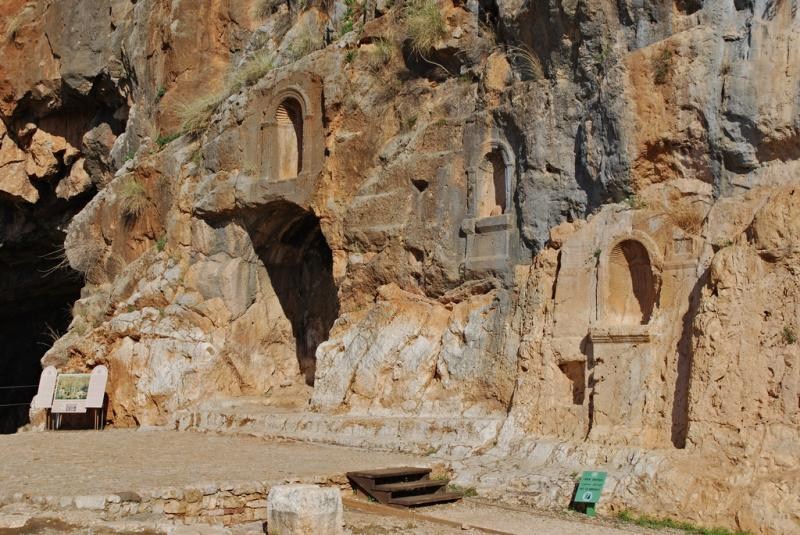
Caesarea-Philippi 3

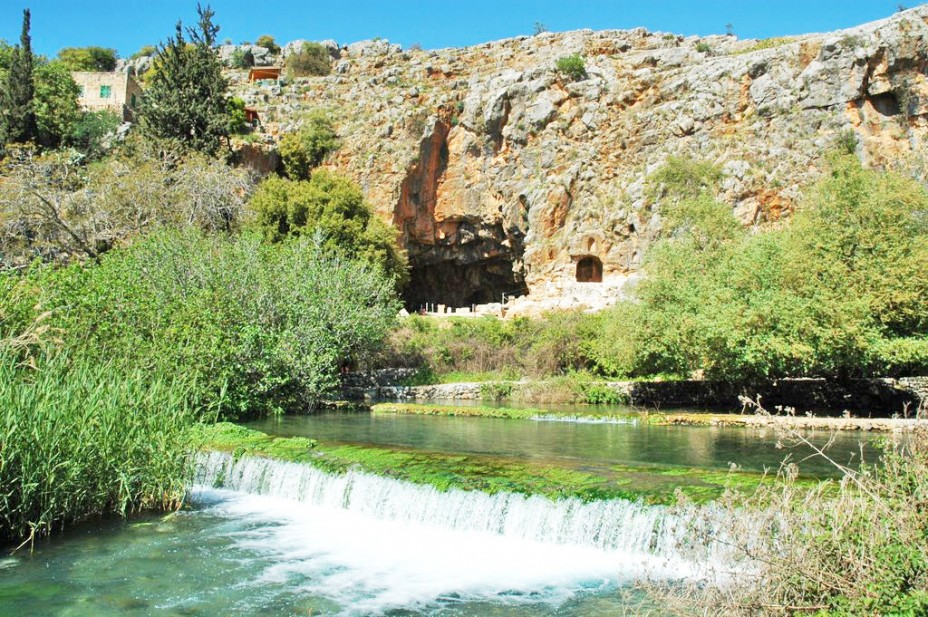
(Photo: Ruins of the Temple of Pan in Caesarea Philippi)

Wednesday of Holy Week, March 27, 2018

Now Jesus asks them directly, “But who do you say that I am?” In this unavoidable, face-to-face situation with Christ, there is no “perhaps,” no “some say,” no opinions anymore, but only silence, or else the one answer that Peter now gives: “You are the Messiah, the Son of the Living God.” Here in the midst of the whirl of human opinions and perspectives, something truly new is visible. Here the name of God has been named; the name of the Eternal has been spoken; the mystery has been brought to light. This is no longer human thinking but rather the very opposite; this is divine revelation and confession of faith. “Blessed are you, Simon son of Jonah! For flesh and blood has not revealed this to you, but my Father in heaven…you are Peter, the rock, and on this rock I will build my church.”

-from The Collected Sermons of Dietrich Bonhoeffer, Volume 1, pgs. 83-84

Lent with Bonhoeffer: The Decisive Question

Caesarea philippi 2

(Photo: Ruins of the Temple of Pan in Caesarea Philippi)

Tuesday in Holy Week, March 27, 2018

Jesus himself asks the decisive question, for which the disciples must have been waiting for some time, “Who do people say that the Son of Man is?” The answer of the disciples  is: “Some say you are John the Baptist, but others say you are Elijah, and still others say your are Jeremiah or one of the prophets.” Opinions, nothing but people’s opinions. The list of them could be extended as long as one wants…. Some say you are a great man, other, that you are an idealist, others, that you are a religious genius, others, that you are a hero, the greatest of leaders. Opinion, more or less serious opinions–but Christ does not want to build his church on opinions.

Christ builds his church on revelation.

-from The Collected Sermons of Dietrich Bonhoeffer, Volume 1, pgs. 83-84

Lent with Bonhoeffer: In the Face of Death

caesarea philippi

(Photo: Ruins of the Temple of Pan in Caesarea Philippi)

Monday of Holy Week, March 26, 2018

“Now when Jesus came into the district of Caesarea Philippi, he asked his disciples, “Who do people say that the Son of Man is?” And they said, “Some say John the Baptist, others say Elijah, and others Jeremiah or one of the prophets.” He said to them, “But who do you say that I am?” Simon Peter replied, “You are the Christ, the Son of the living God.” And Jesus answered him, “Blessed are you, Simon Bar-Jonah! For flesh and blood has not revealed this to you, but my Father who is in heaven. And I tell you, you are Peter, and on this rock I will build my church, and the gates of hell shall not prevail against it.”   (Matthew 16:13-18, ESV)

It is a lonely place where Christ has gone with his disciples, on the edge of a heathen region, where he can be alone with them. This is the place where, for the first time, he promises them, as his legacy, his eternal church. Not in the midst of the people, not at the visible climax of his ministry, but rather out here far away from the right-thinking scribes and the Pharisees, from the crowds who will sing “Hosanna” to him on Palm Sunday and then on Good Friday shout, “Crucify him,” he speaks to his disciples about the mystery and the future of his church. Evidently he meant that the building of this church could not begin with the scribes, the priests, or the crowds, but it was rather this little group of disciples, his followers, who were called to do it. Evidently he also did not consider Jerusalem, the city of the temple and the center of the people’s life, as the right place for it, but instead he went to a quiet place where he could not hope for his announcement to make waves in any outward, visible way. And finally, he did not consider any great day of celebration as the proper time to speak about his church. Instead, he gave the promise of his church in the face of death, immediately before his first foretelling of his passion. So it is a church of a little flock, a church far out in a quiet place, a church in the face of death, about which we must be speaking here.

-from The Collected Sermons of Dietrich Bonhoeffer, Volume 1, pg. 83