Blog

Advent with Barth: Revelation of the Mystery

Saturday, December 8. 2018

It is the mystery of revelation that our dogma describes.

If revelation is a mystery and is understood as such, then it is at least possible in principle for the necessity of it to begin shining through.

But now we must emphasize the fact that it is the description of this mystery that is the purpose of the dogma.

Objections might, of course, be raised to what we have said up till now.

Is acknowledgment and confession of this mystery of the divine origin of the person of Jesus Christ completely tied up with acknowledgment and confession of the Virgin birth in particular?

Is the form in which we speak here of this mystery as if it were the content of it inseparable from this content, or this content from this form?

Must it not be left to Christian liberty or even to the historical judgment of the individual whether he can and will acknowledge and confess this content in precisely this form?

To this the answer is that the doctrine of the Virgin birth is merely the description and therefore the form by and in which the mystery is spoken of in the New Testament and in the creeds.

Similarly we might say that so far as the New Testament witness to Easter is the account of the empty grave, it merely describes the mystery, or the revelation of the mystery, “Christ is risen.”

It describes it by pointing to this external fact.

No one will dream of claiming that this external fact in itself and as such had the power to unveil for the disciples the veiled fact that, “God was in Christ.”

But was it revealed to them otherwise than by the sign of this external fact?

Will there be real faith in the resurrection of the Lord as revealing His mystery, as unveiling His divine glory, where the account of the empty grave is thought to be excisable as the mere form of the content in question, or where it can be left to Christian liberty to confess seriously and decisively the content alone?

With this form are we not also bound in fact to lose the specific content of the Easter message for some other truth about the resurrection?

Sign and thing signified, the outward and the inward, are, as a rule, strictly distinguished in the Bible, and certainly in other connections we cannot lay sufficient stress upon the distinction.

But they are never separated in such a (“liberal”) way that according to preference the one may be easily retained without the other.

from Karl Barth, “The Miracle of Christmas”, Church Dogmatics I.2, page 178-179

DAILY DEVOTIONAL, 12/8/18

Saturday, 1st Week of Advent

Opening Prayer

Oh Lord, open my lips
And my mouth shall proclaim your praise. (Ps. 51:15)

(from The Book of Common Worship)
Eternal God,
you taught us that the night is far spent
and the day is at hand.
Keep us awake and alert, watching for your kingdom,
and make us strong in faith,
so that when Christ comes in glory to judge the earth,
we may joyfully give him praise;
who lives and reigns with you and the Holy Spirit,
one God, now and forever.
Amen.

Morning Psalm, Psalm 90

From Everlasting to Everlasting
A Prayer of Moses, the man of God.

90:1 Lord, you have been our dwelling place
    in all generations.
Before the mountains were brought forth,
    or ever you had formed the earth and the world,
    from everlasting to everlasting you are God.
You return man to dust
    and say, “Return, O children of man!”
For a thousand years in your sight
    are but as yesterday when it is past,
    or as a watch in the night.
You sweep them away as with a flood; they are like a dream,
    like grass that is renewed in the morning:
in the morning it flourishes and is renewed;
    in the evening it fades and withers.
For we are brought to an end by your anger;
    by your wrath we are dismayed.
You have set our iniquities before you,
    our secret sins in the light of your presence.
For all our days pass away under your wrath;
    we bring our years to an end like a sigh.
10 The years of our life are seventy,
    or even by reason of strength eighty;
yet their span is but toil and trouble;
    they are soon gone, and we fly away.
11 Who considers the power of your anger,
    and your wrath according to the fear of you?
12 So teach us to number our days
    that we may get a heart of wisdom.
13 Return, O Lord! How long?
    Have pity on your servants!
14 Satisfy us in the morning with your steadfast love,
    that we may rejoice and be glad all our days.
15 Make us glad for as many days as you have afflicted us,
    and for as many years as we have seen evil.
16 Let your work be shown to your servants,
    and your glorious power to their children.
17 Let the favor[d of the Lord our God be upon us,
    and establish the work of our hands upon us;
    yes, establish the work of our hands!

Prayer:
(from The Book of Common Worship)
Eternal God,
you alone are constant in this changing world.
Grant us true wisdom of heart
and guide us in serving you all the days of our life;
through Jesus Christ our Lord.
Amen.

Psalm of Praise, Psalm 149

Sing to the Lord a New Song

149:1 Praise the Lord!
Sing to the Lord a new song,
    his praise in the assembly of the godly!
Let Israel be glad in his Maker;
    let the children of Zion rejoice in their King!
Let them praise his name with dancing,
    making melody to him with tambourine and lyre!
For the Lord takes pleasure in his people;
    he adorns the humble with salvation.
Let the godly exult in glory;
    let them sing for joy on their beds.
Let the high praises of God be in their throats
    and two-edged swords in their hands,
to execute vengeance on the nations
    and punishments on the peoples,
to bind their kings with chains
    and their nobles with fetters of iron,
to execute on them the judgment written!
    This is honor for all his godly ones.
Praise the Lord!

Prayer:
(from The Book of Common Worship)
God our Maker,
you crown the humble with honor
and exalt the faithful who gather in your name.
Because you have favored us with life,
we dance before you in our joy
and praise you with unending song
for Jesus Christ our Lord.
Amen.

Old Testament Reading, Isaiah 4:2-6

The Branch of the Lord Glorified

4:2 In that day the branch of the Lord shall be beautiful and glorious, and the fruit of the land shall be the pride and honor of the survivors of Israel. And he who is left in Zion and remains in Jerusalem will be called holy, everyone who has been recorded for life in Jerusalem, when the Lord shall have washed away the filth of the daughters of Zion and cleansed the bloodstains of Jerusalem from its midst by a spirit of judgment and by a spirit of burning. Then the Lord will create over the whole site of Mount Zion and over her assemblies a cloud by day, and smoke and the shining of a flaming fire by night; for over all the glory there will be a canopy.There will be a booth for shade by day from the heat, and for a refuge and a shelter from the storm and rain.

Epistle Reading, 1 Thessalonians 4:13-18

The Coming of the Lord

4:13 But we do not want you to be uninformed, brothers, about those who are asleep, that you may not grieve as others do who have no hope. 14 For since we believe that Jesus died and rose again, even so, through Jesus, God will bring with him those who have fallen asleep. 15 For this we declare to you by a word from the Lord, that we who are alive, who are left until the coming of the Lord, will not precede those who have fallen asleep. 16 For the Lord himself will descend from heaven with a cry of command, with the voice of an archangel, and with the sound of the trumpet of God. And the dead in Christ will rise first. 17 Then we who are alive, who are left, will be caught up together with them in the clouds to meet the Lord in the air, and so we will always be with the Lord. 18 Therefore encourage one another with these words.

Gospel Reading, Luke 21:5-19

Jesus Foretells Destruction of the Temple

2:5 And while some were speaking of the temple, how it was adorned with noble stones and offerings, he said, “As for these things that you see, the days will come when there will not be left here one stone upon another that will not be thrown down.” And they asked him, “Teacher, when will these things be, and what will be the sign when these things are about to take place?” And he said, “See that you are not led astray. For many will come in my name, saying, ‘I am he!’ and, ‘The time is at hand!’ Do not go after them. And when you hear of wars and tumults, do not be terrified, for these things must first take place, but the end will not be at once.”

Jesus Foretells Wars and Persecution

10 Then he said to them, “Nation will rise against nation, and kingdom against kingdom. 11 There will be great earthquakes, and in various places famines and pestilences. And there will be terrors and great signs from heaven. 12 But before all this they will lay their hands on you and persecute you, delivering you up to the synagogues and prisons, and you will be brought before kings and governors for my name’s sake. 13 This will be your opportunity to bear witness. 14 Settle it therefore in your minds not to meditate beforehand how to answer, 15 for I will give you a mouth and wisdom, which none of your adversaries will be able to withstand or contradict. 16 You will be delivered up even by parents and brothers and relatives and friends, and some of you they will put to death. 17 You will be hated by all for my name’s sake. 18 But not a hair of your head will perish. 19 By your endurance you will gain your lives.

REFLECTION FOR THE DAY

“We Hope for What We Do Not See”
from “A Treatise on the Value of Patience” by
Athanasius of Alexandria (4th Century)
as reprinted in The Liturgy of the Hours

Patience is a precept for salvation given us by our Lord our teacher: “Whoever endures to the end will be saved.” And again: “If you persevere in my word, you will truly be my disciples”; “you will know the truth, and the truth will set you free.”

Dear brethren, we must endure and persevere if we are to attain the truth and freedom we have been allowed to hope for; faith and hope are the very meaning of our being Christians, but if faith and hope are to bear their fruit, patience is necessary.

We do not seek glory now, in the present, but we look for future glory, as Saint Paul instructs us when he says: By hope we were saved. Now hope which is seen is not hope; how can a man hope for what he sees? But if we hope for what we do not see, we wait for it in patience. Patient waiting is necessary if we are to be perfected in what we have begun to be, and if we are to receive from God what we hope for and believe.

In another place the same Apostle instructs and teaches the just, and those active in good works, and those who store up for themselves treasures in heaven through the reward God gives them. They are to be patient also, for he says: Therefore while we have time, let us do good to all, but especially to those who are of the household of the faith. But let us not grow weary in doing good, for we shall reap our reward in due season.

Paul warns us not to grow weary in good works through impatience, not to be distracted or overcome by temptations and so give up in the midst of our pilgrimage of praise and glory, and allow our past good deeds to count for nothing because what was begun falls short of completion.

Finally the Apostle, speaking of charity, unites it with endurance and patience. Charity, he says, is always patient and kind; it is not jealous, is not boastful, is not given to anger, does not think evil, loves all things, believes all things, hopes all things, endures all things. He shows that charity can be steadfast and persevering because it has learned how to endure all things.

And in another place he says: Bear with one another lovingly, striving to keep the unity of the Spirit in the bond of peace. He shows that neither unity nor peace can be maintained unless the brethren cherish each other with mutual forbearance and preserve the bond of harmony by means of patience  

Prayer for the Day

Take time to reflect and pray. Pray for those listed on our prayer list from worship. If you’d like to use it, here is a prayer to guide you:

(from The Book of Common Worship)
God of glory, we praise you for your presence in our lives, and for all goodness that you shower upon your children in Jesus Christ. Especially we thank you for

promises kept and hope for tomorrow . . .
the enjoyment of friends . . .
the wonders of your creation . . .
love from our parents, our sisters and brothers, our spouses and children . . .
pleasures of living. . . .

God of grace, we are one with all your children, for we are sisters and brothers of Jesus Christ, and we offer our prayers for all whom we love. Especially we pray for

those we too often forget . . .
people who have lost hope . . .
victims of tragedy and disaster . . .
those who suffer mental anguish . . .
ecumenical councils and church agencies. . . .

Amen.

Closing Prayer

(from The Liturgy of the Hours)
O God, who sent your Only Begotten Son into this world
to free the human race from its ancient enslavement,
bestow on those who devoutly await him
the grace of your compassion from on high,
that we may attain the prize of true freedom.
Through our Lord Jesus Christ, your Son,
who lives and reigns with you in the unity of the Holy Spirit,
one God, for ever and ever. 

Let us praise the Lord.
– And give him thanks. 
Amen.
Advent with Barth: God’s Own Work is Seen in God’s Own Light

Friday, December 7, 2018

In order to reach the dogmatic a posteriori understanding (understanding from experience) in view, it is, above all, necessary to realize that the dogma of the Virgin birth, in fact the New Testament basis of the dogma, is of a different kind, and lies, as it were, on a different level of testimony from the dogma or New Testament knowledge of the true divinity and true humanity of Jesus Christ.

It denotes not so much the Christological reality of revelation as the mystery of that reality, the inconceivability of it, its character as a fact in which God has acted solely through God. 

The dogma of the Virgin birth is not, then, a repetition or description of the vere Deus vere homo (very God and very Man), although in its own way it also expresses, explains and throws light upon it. 

As a formal dogma, as it were, which is required to explain the material, it states that when the event indicated by the name Emmanuel takes place, when God comes to us as one of ourselves to be our own, to be ourselves in our place, as very God and very Man, this is a real event accomplished in space and time as history within history. 

In it God’s revelation comes to us, in it our reconciliation takes place; yet it is such an event that to every Why? and Whence? and How? we can only answer that here God does it all himself. 

The dogma of the Virgin birth is thus the confession of the boundless hiddenness of the vere Deus vere homo and of the boundless amazement of awe and thankfulness called forth in us by this vere Deus vere homo.

It eliminates the last surviving possibility of understanding the vere Deus vere homo intellectually, as an idea or an arbitrary interpretation in the sense of docetic (the belief that Jesus seemed to be fully human but was not fully human) or ebionite (the belief that Jesus was the Messiah but not God) Christology.

It leaves only the spiritual understanding of the vere Deus vere homo, i.e., the understanding in which God’s own work is seen in God’s own light.

from Karl Barth, “The Miracle of Christmas”, Church Dogmatics I.2, page 177

DAILY DEVOTIONAL, 12/7/18

Friday, 1st Week of Advent

Opening Prayer

Oh Lord, open my lips
And my mouth shall proclaim your praise. (Ps. 51:15)

(from The Book of Common Worship)
Eternal God,
through long generations you prepared a way
for the coming of your Son,
and by your Spirit
you still bring light to illumine our paths.
Renew us in faith and hope
that we may welcome Christ to rule our thoughts
and claim our love,
as Lord of lords and King of kings,
to whom be glory always.
Amen.

Morning Psalm, Psalm 102

Do Not Hide Your Face from Me
A Prayer of one afflicted, when he is faint and pours out his complaint before the Lord.

102:1 Hear my prayer, O Lord;
let my cry come to you!
Do not hide your face from me
    in the day of my distress!
Incline your ear to me;
    answer me speedily in the day when I call!
For my days pass away like smoke,
    and my bones burn like a furnace.
My heart is struck down like grass and has withered;
    I forget to eat my bread.
Because of my loud groaning
    my bones cling to my flesh.
I am like a desert owl of the wilderness,
    like an owl[a of the waste places;
I lie awake;
    I am like a lonely sparrow on the housetop.
All the day my enemies taunt me;
    those who deride me use my name for a curse.
For I eat ashes like bread
    and mingle tears with my drink,
10 because of your indignation and anger;
    for you have taken me up and thrown me down.
11 My days are like an evening shadow;
    I wither away like grass.
12 But you, O Lord, are enthroned forever;
    you are remembered throughout all generations.
13 You will arise and have pity on Zion;
    it is the time to favor her;
    the appointed time has come.
14 For your servants hold her stones dear
    and have pity on her dust.
15 Nations will fear the name of the Lord,
    and all the kings of the earth will fear your glory.
16 For the Lord builds up Zion;
    he appears in his glory;
17 he regards the prayer of the destitute
    and does not despise their prayer.
18 Let this be recorded for a generation to come,
    so that a people yet to be created may praise the Lord:
19 that he looked down from his holy height;
    from heaven the Lord looked at the earth,
20 to hear the groans of the prisoners,
    to set free those who were doomed to die,
21 that they may declare in Zion the name of the Lord,
    and in Jerusalem his praise,
22 when peoples gather together,
    and kingdoms, to worship the Lord.
23 He has broken my strength in midcourse;
    he has shortened my days.
24 “O my God,” I say, “take me not away
    in the midst of my days—
you whose years endure
    throughout all generations!”
25 Of old you laid the foundation of the earth,
    and the heavens are the work of your hands.
26 They will perish, but you will remain;
    they will all wear out like a garment.
You will change them like a robe, and they will pass away,
27     but you are the same, and your years have no end.
28 The children of your servants shall dwell secure;
    their offspring shall be established before you.

Prayer:
(from The Book of Common Worship)
Lord, while our days vanish like shadows
and our lives wear out like a garment,
you are eternal.
Although our earthly lives come to an end,
help us to live in Christ’s endless life
and at length attain our home,
the heavenly Jerusalem,
where he lives and reigns with you and the Holy Spirit,
now and forever.
Amen.

Psalm of Praise, Psalm 148

Praise the Name of the Lord

148:1 Praise the Lord!
Praise the Lord from the heavens;
    praise him in the heights!
Praise him, all his angels;
    praise him, all his hosts!
Praise him, sun and moon,
    praise him, all you shining stars!
Praise him, you highest heavens,
    and you waters above the heavens!
Let them praise the name of the Lord!
    For he commanded and they were created.
And he established them forever and ever;
    he gave a decree, and it shall not pass away.[a
Praise the Lord from the earth,
    you great sea creatures and all deeps,
fire and hail, snow and mist,
    stormy wind fulfilling his word!
Mountains and all hills,
    fruit trees and all cedars!
10 Beasts and all livestock,
    creeping things and flying birds!
11 Kings of the earth and all peoples,
    princes and all rulers of the earth!
12 Young men and maidens together,
    old men and children!
13 Let them praise the name of the Lord,
    for his name alone is exalted;
    his majesty is above earth and heaven.
14 He has raised up a horn for his people,
    praise for all his saints,
    for the people of Israel who are near to him.
Praise the Lord!

Prayer:
(from The Book of Common Worship)
God Most High,
by your Word you created a wondrous universe,
and through your Spirit
you breathed into it the breath of life.
Accept creation’s hymn of praise from our lips,
and let the praise that is sung in heaven
resound in the heart of every creature on earth,
to the glory of the Father, and the Son, and the Holy Spirit,
now and forever.
Amen.

Old Testament Reading, Isaiah 2:5-22

Judgment on Judah and Jerusalem

3:1 For behold, the Lord God of hosts
    is taking away from Jerusalem and from Judah
support and supply,
    all support of bread,
    and all support of water;
the mighty man and the soldier,
    the judge and the prophet,
    the diviner and the elder,
the captain of fifty
    and the man of rank,
the counselor and the skillful magician
    and the expert in charms.
And I will make boys their princes,
    and infants shall rule over them.
And the people will oppress one another,
    every one his fellow
    and every one his neighbor;
the youth will be insolent to the elder,
    and the despised to the honorable.

For a man will take hold of his brother
    in the house of his father, saying:
“You have a cloak;
    you shall be our leader,
and this heap of ruins
    shall be under your rule”;
in that day he will speak out, saying:
“I will not be a healer;
    in my house there is neither bread nor cloak;
you shall not make me
    leader of the people.”
For Jerusalem has stumbled,
    and Judah has fallen,
because their speech and their deeds are against the Lord,
    defying his glorious presence.

For the look on their faces bears witness against them;
    they proclaim their sin like Sodom;
    they do not hide it.
Woe to them!
    For they have brought evil on themselves.
10 Tell the righteous that it shall be well with them,
    for they shall eat the fruit of their deeds.
11 Woe to the wicked! It shall be ill with him,
    for what his hands have dealt out shall be done to him.
12 My people—infants are their oppressors,
    and women rule over them.
O my people, your guides mislead you
    and they have swallowed up the course of your paths.

13 The Lord has taken his place to contend;
    he stands to judge peoples.
14 The Lord will enter into judgment
    with the elders and princes of his people:
“It is you who have devoured[f the vineyard,
    the spoil of the poor is in your houses.
15 What do you mean by crushing my people,
    by grinding the face of the poor?”
declares the Lord God of hosts.

16 The Lord said:
Because the daughters of Zion are haughty
    and walk with outstretched necks,
    glancing wantonly with their eyes,
mincing along as they go,
    tinkling with their feet,
17 therefore the Lord will strike with a scab
    the heads of the daughters of Zion,
    and the Lord will lay bare their secret parts.

18 In that day the Lord will take away the finery of the anklets, the headbands, and the crescents; 19 the pendants, the bracelets, and the scarves; 20 the headdresses, the armlets, the sashes, the perfume boxes, and the amulets; 21 the signet rings and nose rings; 22 the festal robes, the mantles, the cloaks, and the handbags;23 the mirrors, the linen garments, the turbans, and the veils.

24 Instead of perfume there will be rottenness;
    and instead of a belt, a rope;
and instead of well-set hair, baldness;
    and instead of a rich robe, a skirt of sackcloth;
    and branding instead of beauty.
25 Your men shall fall by the sword
    and your mighty men in battle.
26 And her gates shall lament and mourn;
    empty, she shall sit on the ground.

4:1 And seven women shall take hold of one man in that day, saying, “We will eat our own bread and wear our own clothes, only let us be called by your name; take away our reproach.”

Epistle Reading, 1 Thessalonians 3:1-13

A Life Pleasing to God

Finally, then, brothers, we ask and urge you in the Lord Jesus, that as you received from us how you ought to walk and to please God, just as you are doing, that you do so more and more. For you know what instructions we gave you through the Lord Jesus. For this is the will of God, your sanctification: that you abstain from sexual immorality; that each one of you know how to control his own body[c in holiness and honor, not in the passion of lust like the Gentiles who do not know God; that no one transgress and wrong his brother in this matter, because the Lord is an avenger in all these things, as we told you beforehand and solemnly warned you. For God has not called us for impurity, but in holiness.Therefore whoever disregards this, disregards not man but God, who gives his Holy Spirit to you.

Now concerning brotherly love you have no need for anyone to write to you, for you yourselves have been taught by God to love one another, 10 for that indeed is what you are doing to all the brothers throughout Macedonia. But we urge you, brothers, to do this more and more, 11 and to aspire to live quietly, and to mind your own affairs, and to work with your hands, as we instructed you, 12 so that you may walk properly before outsiders and be dependent on no one.

Gospel Reading, Luke 20:27-40

Whose Son Is the Christ?

41 But he said to them, “How can they say that the Christ is David’s son? 42 For David himself says in the Book of Psalms,

“‘The Lord said to my Lord,
“Sit at my right hand,
43until I make your enemies your footstool.”’

44 David thus calls him Lord, so how is he his son?”

Beware of the Scribes

45 And in the hearing of all the people he said to his disciples, 46 “Beware of the scribes, who like to walk around in long robes, and love greetings in the marketplaces and the best seats in the synagogues and the places of honor at feasts, 47 who devour widows’ houses and for a pretense make long prayers. They will receive the greater condemnation.”

The Widow’s Offering

21 Jesus looked up and saw the rich putting their gifts into the offering box,and he saw a poor widow put in two small copper coins.[b And he said, “Truly, I tell you, this poor widow has put in more than all of them. For they all contributed out of their abundance, but she out of her poverty put in all she had to live on.”

REFLECTION FOR THE DAY

“The Word Creates a Divine Harmony in Creation”
from Discourse Against the Pagans by
Athanasius of Alexandria (4th Century)
as reprinted in The Liturgy of the Hours

“In the beginning was the Word, and the Word was with God, and the Word was God. All things were made through him, and without him nothing was made” (John 1:1-3). In these words John the theologian teaches that nothing exists or remains in being except in and through the Word.

Think of a musician tuning his lyre. By his skill he adjusts high notes to low and intermediate notes to the rest, and produces a series of harmonies. So too the wisdom of God holds the world like a lyre and joins things in the air to those on earth, and things in heaven to those in the air, and brings each part into harmony with the whole. By his decree and will he regulates them all to produce the beauty and harmony of a single, well-ordered universe. While remaining unchanged with his Father, he moves all creation by his unchanging nature, according to the Fathers will. To everything he gives existence and life in accordance with its nature, and so creates a wonderful and truly divine harmony.

To illustrate this profound mystery, let us take the example of a choir of many singers. A choir is composed of a variety of men, women and children, of both old and young. Under the direction of one conductor, each sings in the way that is natural for him: men with men’s voices, boys with boys’ voices, old people with old voices, young people with young voices Yet all of them produce a single harmony. Or consider the example of our soul. It moves our senses according to their several functions so that in the presence of a single object they all act simultaneously: the eye sees, the ear hears, the hand touches, the nose smells, the tongue tastes, and often the other parts of the body act as well as, for example, the feet may walk.

Although this is only a poor comparison, it gives some idea of how the whole universe is governed. The Word of God has but to give a gesture of command and everything falls into place; each creature performs its own proper function, and all together constitute one single harmonious order. 

Prayer for the Day

Take time to reflect and pray. Pray for those listed on our prayer list from worship. If you’d like to use it, here is a prayer to guide you:

(from The Book of Common Worship)
Merciful God, we praise you that you give strength for every weakness, forgiveness for our failures, and new beginnings in Jesus Christ. Especially we thank you for

the guidance of your spirit through this day . . .
signs of new life and hope . . .
people who have helped us . . .
those who struggle for justice . . .
expressions of love unexpected or undeserved. . . .

Almighty God, you know all needs before we speak our prayers, yet you welcome our concerns for others in Jesus Christ. Especially we pray for

those who keep watch over the sick and dying . . .
those who weep with the grieving . . .
those who are without faith and cannot accept your love . . .
the aged who are lonely, distressed or weak . . .
Reformed, Presbyterian, and Lutheran churches. . . .
Amen.

Closing Prayer

(from The Liturgy of the Hours)
Attend to the pleas of your people with heavenly care, 
O Lord, we pray, 
that they may see what must be done 
and gain strength to do what they have seen. 
Through our Lord Jesus Christ, your Son,
who lives and reigns with you in the unity of the Holy Spirit,
one God, for ever and ever. 

Let us praise the Lord.
– And give him thanks. 
Amen.

Advent with Barth: The Compelling Light of Revelation

Thursday, December 6, 2018

It certainly was not their age and source-value that brought the narratives of the Virgin birth in the text of the Gospels and out of this text into the creed.

But a certain inward, essential rightness and importance in their connection with the person of Jesus Christ first admitted them to a share in the Gospel witness. 

At first this was announced with great reserve but in the last resort quite definitely, and then admitted also to a share in the Church confession and dogma in contrast to some other elements in this testimony which outwardly (and apparently inwardly too) were much more distinctive.

The question to which we must address ourselves here and give a serious answer is, whether this rightness and importance, which they must have had at the rise of the canonical New Testament, and then again at the framing of dogma, are so compellingly illuminated for us that we, too, must acknowledge the essential rightness and importance of the narratives of the Virgin birth.

By putting the question in this way we shall be quite clear that in answering it we are concerned only with an a posteriori understanding (understanding from experience) of the rightness and importance which belong to this matter in revelation itself, for only in so far as the rightness and importance arise out of revelation can they shine upon us with compelling light.

Behind literary as behind dogmatic investigation there arises the quaestio facti (question of fact), which cannot be answered either by literary or by dogmatic investigation. 

It is fitting, however, that in the realm of theology literary and dogmatic investigation should both be undertaken in the first instance (i.e., until the utter impossibility of this procedure is demonstrated) sub conditione facti (In consideration of the facts.)

from Karl Barth, “The Miracle of Christmas”, Church Dogmatics I.2, page 176-177

DAILY DEVOTIONAL, 12/6/18

Thursday, 1st Week of Advent

Opening Prayer

Oh Lord, open my lips
And my mouth shall proclaim your praise. (Ps. 51:15)

(from The Book of Common Worship)
Faithful God,
your promises stand unshaken through all generations.
Renew us in hope,
that we may be awake and alert
watching for the glorious return of Jesus Christ,
our judge and savior,
who lives and reigns with you in the unity of the Holy Spirit,
one God, forever and ever.
Amen.

Morning Psalm, Psalm 18:1-20

The Lord Is My Rock and My Fortress
To the choirmaster. A Psalm of David, the servant of the Lord, who addressed the words of this song to the Lord on the day when the Lord delivered him from the hand of all his enemies, and from the hand of Saul. He said:

18 I love you, O Lord, my strength.
The Lord is my rock and my fortress and my deliverer,
    my God, my rock, in whom I take refuge,
    my shield, and the horn of my salvation, my stronghold.
I call upon the Lord, who is worthy to be praised,
    and I am saved from my enemies.
The cords of death encompassed me;
    the torrents of destruction assailed me;
the cords of Sheol entangled me;
    the snares of death confronted me.
In my distress I called upon the Lord;
    to my God I cried for help.
From his temple he heard my voice,
    and my cry to him reached his ears.
Then the earth reeled and rocked;
    the foundations also of the mountains trembled
    and quaked, because he was angry.
Smoke went up from his nostrils,[b
    and devouring fire from his mouth;
    glowing coals flamed forth from him.
He bowed the heavens and came down;
    thick darkness was under his feet.
10 He rode on a cherub and flew;
    he came swiftly on the wings of the wind.
11 He made darkness his covering, his canopy around him,
    thick clouds dark with water.
12 Out of the brightness before him
    hailstones and coals of fire broke through his clouds.
13 The Lord also thundered in the heavens,
    and the Most High uttered his voice,
    hailstones and coals of fire.
14 And he sent out his arrows and scattered them;
    he flashed forth lightnings and routed them.
15 Then the channels of the sea were seen,
    and the foundations of the world were laid bare
at your rebuke, O Lord,
    at the blast of the breath of your nostrils.
16 He sent from on high, he took me;
    he drew me out of many waters.
17 He rescued me from my strong enemy
    and from those who hated me,
    for they were too mighty for me.
18 They confronted me in the day of my calamity,
    but the Lord was my support.
19 He brought me out into a broad place;
    he rescued me, because he delighted in me.
20 The Lord dealt with me according to my righteousness;
    according to the cleanness of my hands he rewarded me.

Prayer:
(from The Book of Common Worship)
Praise to you, God of our salvation.
You come to our help and set us free.
May your strength be our shield
and your word, our lamp,
that we may serve you with pure hearts
and find deliverance in Jesus Christ, our Savior.
Amen.

Psalm of Praise, Psalm 147:12-20

He Heals the Brokenhearted

147:12 Praise the Lord, O Jerusalem!
    Praise your God, O Zion!
13 For he strengthens the bars of your gates;
    he blesses your children within you.
14 He makes peace in your borders;
    he fills you with the finest of the wheat.
15 He sends out his command to the earth;
    his word runs swiftly.
16 He gives snow like wool;
    he scatters frost like ashes.
17 He hurls down his crystals of ice like crumbs;
    who can stand before his cold?
18 He sends out his word, and melts them;
    he makes his wind blow and the waters flow.
19 He declares his word to Jacob,
    his statutes and rules to Israel.
20 He has not dealt thus with any other nation;
    they do not know his rules.[b
Praise the Lord!

Prayer:
(from The Book of Common Worship)
O Lord,
marvelous is your might
by which you cast down the proud
and lift up the humble.
Restore and rebuild your church.
Gather your scattered sheep
and nourish us by your holy Word,
that we may follow your will
and come at last to the heritage
prepared for us in Christ Jesus.
Amen.

Old Testament Reading, Isaiah 2:5-22

2:5 O house of Jacob,
    come, let us walk
    in the light of the Lord.

The Day of the Lord

For you have rejected your people,
    the house of Jacob,
because they are full of things from the east
    and of fortune-tellers like the Philistines,
    and they strike hands with the children of foreigners.
Their land is filled with silver and gold,
    and there is no end to their treasures;
their land is filled with horses,
    and there is no end to their chariots.
Their land is filled with idols;
    they bow down to the work of their hands,
    to what their own fingers have made.
So man is humbled,
    and each one is brought low—
    do not forgive them!
10 Enter into the rock
    and hide in the dust
from before the terror of the Lord,
    and from the splendor of his majesty.
11 The haughty looks of man shall be brought low,
    and the lofty pride of men shall be humbled,
and the Lord alone will be exalted in that day.
12 For the Lord of hosts has a day
    against all that is proud and lofty,
    against all that is lifted up—and it shall be brought low;
13 against all the cedars of Lebanon,
    lofty and lifted up;
    and against all the oaks of Bashan;
14 against all the lofty mountains,
    and against all the uplifted hills;
15 against every high tower,
    and against every fortified wall;
16 against all the ships of Tarshish,
    and against all the beautiful craft.
17 And the haughtiness of man shall be humbled,
    and the lofty pride of men shall be brought low,
    and the Lord alone will be exalted in that day.
18 And the idols shall utterly pass away.
19 And people shall enter the caves of the rocks
    and the holes of the ground,[a
from before the terror of the Lord,
    and from the splendor of his majesty,
    when he rises to terrify the earth.
20 In that day mankind will cast away
    their idols of silver and their idols of gold,
which they made for themselves to worship,
    to the moles and to the bats,
21 to enter the caverns of the rocks
    and the clefts of the cliffs,
from before the terror of the Lord,
    and from the splendor of his majesty,
    when he rises to terrify the earth.
22 Stop regarding man
    in whose nostrils is breath,
    for of what account is he?

Epistle Reading, 1 Thessalonians 3:1-13

3:1 Therefore when we could bear it no longer, we were willing to be left behind at Athens alone, and we sent Timothy, our brother and God’s coworker in the gospel of Christ, to establish and exhort you in your faith, that no one be moved by these afflictions. For you yourselves know that we are destined for this. For when we were with you, we kept telling you beforehand that we were to suffer affliction, just as it has come to pass, and just as you know. For this reason, when I could bear it no longer, I sent to learn about your faith, for fear that somehow the tempter had tempted you and our labor would be in vain.

Timothy’s Encouraging Report

But now that Timothy has come to us from you, and has brought us the good news of your faith and love and reported that you always remember us kindly and long to see us, as we long to see you— for this reason, brothers,[b in all our distress and affliction we have been comforted about you through your faith. For now we live, if you are standing fast in the Lord. For what thanksgiving can we return to God for you, for all the joy that we feel for your sake before our God, 10 as we pray most earnestly night and day that we may see you face to face and supply what is lacking in your faith?

11 Now may our God and Father himself, and our Lord Jesus, direct our way to you, 12 and may the Lord make you increase and abound in love for one another and for all, as we do for you, 13 so that he may establish your hearts blameless in holiness before our God and Father, at the coming of our Lord Jesus with all his saints.

Gospel Reading, Luke 20:27-40

Sadducees Ask About the Resurrection

20:27 There came to him some Sadducees, those who deny that there is a resurrection, 28 and they asked him a question, saying, “Teacher, Moses wrote for us that if a man’s brother dies, having a wife but no children, the man must take the widow and raise up offspring for his brother. 29 Now there were seven brothers. The first took a wife, and died without children. 30 And the second 31 and the third took her, and likewise all seven left no children and died. 32 Afterward the woman also died. 33 In the resurrection, therefore, whose wife will the woman be? For the seven had her as wife.”

34 And Jesus said to them, “The sons of this age marry and are given in marriage,35 but those who are considered worthy to attain to that age and to the resurrection from the dead neither marry nor are given in marriage, 36 for they cannot die anymore, because they are equal to angels and are sons of God, being sons[b of the resurrection. 37 But that the dead are raised, even Moses showed, in the passage about the bush, where he calls the Lord the God of Abraham and the God of Isaac and the God of Jacob. 38 Now he is not God of the dead, but of the living, for all live to him.” 39 Then some of the scribes answered, “Teacher, you have spoken well.” 40 For they no longer dared to ask him any question.

REFLECTION FOR THE DAY

from Commentary on the Diatessaron by
Ephrem the Syrian (4th Century)
as reprinted in The Liturgy of the Hours

To prevent his disciples from asking the time of his coming, Christ said: “About that hour no one knows, neither the angels nor the Son. It is not for you to know times or moments.” He has kept those things hidden so that we may keep watch, each of us thinking that he will come in our own day. If he had revealed the time of his coming, his coming would have lost its savour: it would no longer be an object of yearning for the nations and the age in which it will be revealed. He promised that he would come but did not say when he would come, and so all generations and ages await him eagerly.

Though the Lord has established the signs of his coming, the time of their fulfilment has not been plainly revealed. These signs have come and gone with a multiplicity of change; more than that, they are still present. His final coming is like his first. As holy men and prophets waited for him, thinking that he would reveal himself in their own day, so today each of the faithful longs to welcome him in his own day, because Christ has not made plain the day of his coming.

He has not made it plain for this reason especially, that no one may think that he whose power and dominion rule all numbers and times is ruled by fate and time. He described the signs of his coming; how could what he has himself decided be hidden from him? Therefore, he used these words to increase respect for the signs of his coming, so that from that day forward all generations and ages might think that he would come again in their own day.

Keep watch; when the body is asleep nature takes control of us, and what is done is not done by our will but by force, by the impulse of nature. When deep listlessness takes possession of the soul, for example, faint-heartedness or melancholy, the enemy overpowers it and makes it do what it does not will. The force of nature, the enemy of the soul, is in control.

When the Lord commanded us to be vigilant, he meant vigilance in both parts of man: in the body, against the tendency to sleep; in the soul, against lethargy and timidity. As Scripture says: “Wake up, you just,” and “I have risen, and am still with you;” and again, “Do not lose heart. Therefore, having this ministry, we do not lose heart.” 

Prayer for the Day

Take time to reflect and pray. Pray for those listed on our prayer list from worship. If you’d like to use it, here is a prayer to guide you:

(from The Book of Common Worship)
We give you our praise and thanks, O God, for all gifts of love we have received from you, and for your persistent mercy in Jesus Christ. Especially we thank you for

work we have accomplished pleasing to you . . .
the faithful witness of Christian people . . .
the example of righteousness we see in parents and teachers . . .
the innocence and openness we see in children . . .
all works of Christian compassion. . . .

We give you our cares and concerns, O God, because we know you are kind and
care for your children in every circumstance. Especially we pray for

those who struggle with doubt and despair . . .
people afflicted with disease . . .
those called to special ministries . . .
people neglected or abused . . .
Baptist, Disciples of Christ, and other free churches. . . .
Amen.

Closing Prayer

(from The Liturgy of the Hours)
Stir up your power, O Lord,
and come to our help with mighty strength,
that what our sins impede
the grace of your mercy may hasten.
Through our Lord Jesus Christ, your Son,
who lives and reigns with you in the unity of the Holy Spirit,
one God, for ever and ever. 

Let us praise the Lord.
– And give him thanks. 
Amen.

Advent with Barth: Revelation and Dogma

word-made-flesh

Wednesday, December 5, 2018

It is this mystery of Christmas which is indicated in Scripture in church dogma by reference to the miracle of Christmas.

This miracle is the conception of Jesus Christ by the Holy Ghost or His birth of the Virgin Mary.

By taking up this reference and so making confession of this dogma as a statement grounded in Holy Scripture, we do not by any means show disinterested respect for the fact that it is a dogma after all, and that up to the present day it has been a dogma which Catholics and Protestants have on the whole believed and taught unanimously as a matter of course.

The respect paid in the Church to this dogma cannot be sufficient reason in itself for us to adopt it as our own.

In dogma as such we hear merely the voice of the Church and not revelation itself.

If we make it our own and affirm it as the correct Church interpretation of revelation, this can be done only because we realize its necessity, and this realization will have to be substantiated in an attempt to understand it.

As regards the necessity of the dogma, we must begin with the admission that both in extent and form the grounds for the dogma in the statements of Holy Scripture are not at first sight so strong or so clear as one might wish for such a dogma in the strict sense of the term.

Decision as to the necessity of the dogma cannot ultimately be made on the ground where such questions are to be raised and answered.

No one can dispute the existence of a biblical testimony to the Virgin birth.

The questions to be raised and answered are literary questions; they are concerned with the tradition, the age and the source-value of this testimony.

The final and proper decision is whether in accordance with the demands of Church dogma this testimony is to be heard, and heard as the emphatic statement of the New Testament message, or whether in defiance of Church dogma it is not be heard, i.e., only to be heard as a sub-statement of the New Testament message which is not binding.

This decision can be supported by answering the literary questions in one sense or the other.

But it does not stand or fall with the answer to these questions.

from Karl Barth, “The Miracle of Christmas”, Church Dogmatics I.2, page 173-174, 176

DAILY DEVOTIONAL, 12/5/18

Wednesday, 1st Week of Advent

Opening Prayer

Oh Lord, open my lips
And my mouth shall proclaim your praise. (Ps. 51:15)

(from The Book of Common Worship)
Eternal God,
you taught us that the night is far spent
and the day is at hand.
Keep us awake and alert, watching for your kingdom,
and make us strong in faith,
so that when Christ comes in glory to judge the earth,
we may joyfully give him praise;
who lives and reigns with you and the Holy Spirit,
one God, now and forever.
Amen.

Morning Psalm, Psalm 50

God Himself Is Judge
A Psalm of Asaph.

50:1 The Mighty One, God the Lord,
    speaks and summons the earth
    from the rising of the sun to its setting.
Out of Zion, the perfection of beauty,
    God shines forth.
Our God comes; he does not keep silence;
    before him is a devouring fire,
    around him a mighty tempest.
He calls to the heavens above
    and to the earth, that he may judge his people:
“Gather to me my faithful ones,
    who made a covenant with me by sacrifice!”
The heavens declare his righteousness,
    for God himself is judge! Selah
“Hear, O my people, and I will speak;
    O Israel, I will testify against you.
    I am God, your God.
Not for your sacrifices do I rebuke you;
    your burnt offerings are continually before me.
I will not accept a bull from your house
    or goats from your folds.
10 For every beast of the forest is mine,
    the cattle on a thousand hills.
11 I know all the birds of the hills,
    and all that moves in the field is mine.
12 “If I were hungry, I would not tell you,
    for the world and its fullness are mine.
13 Do I eat the flesh of bulls
    or drink the blood of goats?
14 Offer to God a sacrifice of thanksgiving,
    and perform your vows to the Most High,
15 and call upon me in the day of trouble;
    I will deliver you, and you shall glorify me.”
16 But to the wicked God says:
    “What right have you to recite my statutes
    or take my covenant on your lips?
17 For you hate discipline,
    and you cast my words behind you.
18 If you see a thief, you are pleased with him,
    and you keep company with adulterers.
19 “You give your mouth free rein for evil,
    and your tongue frames deceit.
20 You sit and speak against your brother;
    you slander your own mother’s son.
21 These things you have done, and I have been silent;
    you thought that I[c was one like yourself.
But now I rebuke you and lay the charge before you.
22 “Mark this, then, you who forget God,
    lest I tear you apart, and there be none to deliver!
23 The one who offers thanksgiving as his sacrifice glorifies me;
    to one who orders his way rightly
    I will show the salvation of God!”

Prayer:
(from The Book of Common Worship)
Almighty God,
because Jesus your servant became obedient to death,
his sacrifice was greater than all the sacrifices of old.
Accept our offering of praise,
and help us to do your will,
until our whole life becomes worship in spirit and truth;
through Jesus Christ our Lord.
Amen.

Psalm of Praise, Psalm 147:1-11

He Heals the Brokenhearted

147:1 Praise the Lord!
For it is good to sing praises to our God;
    for it is pleasant, and a song of praise is fitting.
The Lord builds up Jerusalem;
    he gathers the outcasts of Israel.
He heals the brokenhearted
    and binds up their wounds.
He determines the number of the stars;
    he gives to all of them their names.
Great is our Lord, and abundant in power;
    his understanding is beyond measure.
The Lord lifts up the humble;[b
    he casts the wicked to the ground.
Sing to the Lord with thanksgiving;
    make melody to our God on the lyre!
He covers the heavens with clouds;
    he prepares rain for the earth;
    he makes grass grow on the hills.
He gives to the beasts their food,
    and to the young ravens that cry.
10 His delight is not in the strength of the horse,
    nor his pleasure in the legs of a man,
11 but the Lord takes pleasure in those who fear him,
    in those who hope in his steadfast love.

Prayer:
(from The Book of Common Worship)
Loving God,
great builder of the heavenly Jerusalem,
you know the number of the stars
and call them by name.
Heal hearts that are broken,
gather those who have been scattered,
and enrich us all from the fullness of your eternal wisdom,
Jesus Christ our Lord.
Amen.

Old Testament Reading, Isaiah 2:1-4

The Mountain of the LORD

2:1 The word that Isaiah the son of Amoz saw concerning Judah and Jerusalem.
It shall come to pass in the latter days
    that the mountain of the house of the Lord
shall be established as the highest of the mountains,
    and shall be lifted up above the hills;
and all the nations shall flow to it,
    and many peoples shall come, and say:
“Come, let us go up to the mountain of the Lord,
    to the house of the God of Jacob,
that he may teach us his ways
    and that we may walk in his paths.”
For out of Zion shall go forth the law,[a
    and the word of the Lord from Jerusalem.
He shall judge between the nations,
    and shall decide disputes for many peoples;
and they shall beat their swords into plowshares,
    and their spears into pruning hooks;
nation shall not lift up sword against nation,
    neither shall they learn war anymore.

Epistle Reading, 1 Thessalonians 2:13-20

2:13 And we also thank God constantly for this, that when you received the word of God, which you heard from us, you accepted it not as the word of men but as what it really is, the word of God, which is at work in you believers. 14 For you, brothers, became imitators of the churches of God in Christ Jesus that are in Judea. For you suffered the same things from your own countrymen as they did from the Jews, 15 who killed both the Lord Jesus and the prophets, and drove us out, and displease God and oppose all mankind 16 by hindering us from speaking to the Gentiles that they might be saved—so as always to fill up the measure of their sins. But wrath has come upon them at last![d

Paul’s Longing to See Them Again

17 But since we were torn away from you, brothers, for a short time, in person not in heart, we endeavored the more eagerly and with great desire to see you face to face, 18 because we wanted to come to you—I, Paul, again and again—but Satan hindered us. 19 For what is our hope or joy or crown of boasting before our Lord Jesus at his coming? Is it not you? 20 For you are our glory and joy.

Gospel Reading, Luke 20:19-26

Paying Taxes to Caesar

20:19 The scribes and the chief priests sought to lay hands on him at that very hour, for they perceived that he had told this parable against them, but they feared the people. 20 So they watched him and sent spies, who pretended to be sincere, that they might catch him in something he said, so as to deliver him up to the authority and jurisdiction of the governor. 21 So they asked him, “Teacher, we know that you speak and teach rightly, and show no partiality, but truly teach the way of God.22 Is it lawful for us to give tribute to Caesar, or not?” 23 But he perceived their craftiness, and said to them, 24 “Show me a denarius.[b Whose likeness and inscription does it have?” They said, “Caesar’s.” 25 He said to them, “Then render to Caesar the things that are Caesar’s, and to God the things that are God’s.”26 And they were not able in the presence of the people to catch him in what he said, but marveling at his answer they became silent.

REFLECTION FOR THE DAY

from “Against Heresies” by
Irenaeus (2nd Century)
as reprinted in The Liturgy of the Hours

No one can know the Father apart from God’s Word, that is, unless the Son reveals him, and no one can know the Son unless the Father so wills. Now the Son fulfills the Father’s good pleasure: the Father sends, the Son is sent, and he comes.

The Father is beyond our sight and comprehension; but he is known by his Word, who tells us of him who surpasses all telling. In turn, the Father alone has knowledge of his Word. And the Lord has revealed both truths. Therefore, the Son reveals the knowledge of the Father by his revelation of himself. Knowledge of the Father consists in the self-revelation of the Son, for all is revealed through the Word.

The Father’s purpose in revealing the Son was to make himself known to us all and so to welcome into eternal rest those who believe in him, establishing them in justice, preserving them from death. To believe in him means to do his will.

Through creation itself the Word reveals God the Creator. Through the world he reveals the Lord who made the world. Through all that is fashioned he reveals the craftsman who fashioned it all. Through the Son the Word reveals the Father who begot him as Son. All speak of these things in the same language, but they do not believe them in the same way. Through the law and the prophets the Word revealed himself and his Father in the same way, and though all the people equally heard the message not all equally believed it. Through the Word, made visible and palpable, the Father was revealed, though not all equally believed in him, But all saw the Father in the Son, for the Father of the Son cannot be seen, but the Son of the Father can be seen.
The Son performs everything as a ministry to the Father, from beginning to end, and without the Son no one can know God. The way to know the Father is the Son. Knowledge of the Son is in the Father, and is revealed through the Son. For this reason the Lord said: No one knows the Son except the Father; and no one knows the Father except the Son, and those to whom the Son has revealed him. The word “revealed” refers not only to the future, as though the Word began to reveal the Father only when he was born of Mary; it refers equally to all time. From the beginning the Son is present to creation, reveals the Father to all, to those the Father chooses, when the Father chooses, and as the Father chooses. So, there is in all and through all one God the Father, one Word and Son, and one Spirit, and one salvation for all who believe in him. 

Prayer for the Day

Take time to reflect and pray. Pray for those listed on our prayer list from worship. If you’d like to use it, here is a prayer to guide you:

(from The Book of Common Worship)
Give us your peace, O God, that we may rejoice in your goodness to us and to all your children, and be thankful for your love revealed in Jesus Christ. Especially we thank you for

people who reveal your truth and righteousness . . .
courage to be bold disciples . . .
those who show hospitality . . .
surprises that have blessed us . . .
the unity of the church of Jesus Christ. . . .

Give us your peace, O God, that we may be confident of your care for us and all your children, as we remember the needs of others. Especially we pray for

friends and relatives who are far away . . .
neighbors in special need . . .
those who suffer hunger and thirst . . .
those who work at night while others sleep . . .
Episcopal and Methodist churches. . . .

Amen.

Closing Prayer

(from The Liturgy of the Hours)
Attend to the pleas of your people with heavenly care, 
O Lord, we pray, 
that they may see what must be done 
and gain strength to do what they have seen. 
Through our Lord Jesus Christ, your Son,
who lives and reigns with you in the unity of the Holy Spirit,
one God, for ever and ever. 

Let us praise the Lord.
– And give him thanks. 
Amen.

Advent with Barth: Revelation and Reconciliation (A Brief Reflection on God’s Revelation of Jesus Christ)

“Everyone marries a stranger.”

As I prepare to perform my first marriage in April, the words of my friend and fellow pastor, Tom Cannon, haunt me. He’s right, of course. I think most couples who’ve been married, even for a little bit, know this. You don’t really know who you’ve married until you’re married.

So how do you counsel two strangers who have made the decision to spend the rest of their lives together? How can two people decide to become one flesh in the first place?

If we can know so little about our spouses before we marry them, if our spouses can remain mysteries to us even years after our weddings, then how can we claim to know God? My spouse is at least another human. I’ve spent more time with her than anyone else. Yet if I don’t even know her as well as I think I should, how can I know the God of the universe? Of course, whatever I know about my spouse is by what she shows me. And what we know about God is what God shows us. This is revelation. But this revelation does not happen haphazardly (as is often the case with learning about our spouses). God does not give us bits of data that we can contemplate and place into neat categories. God’s revelation is a gift, something imparted to us.

Indeed, God’s revelation is Someone who comes to us. We cannot master this Someone who comes to us; we must be mastered by him.

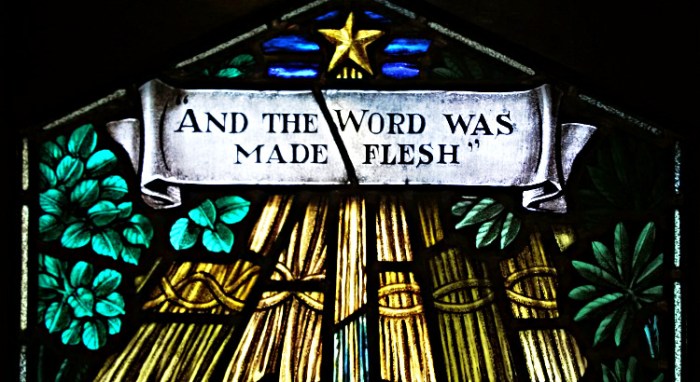
This Someone is Jesus Christ. Holy Scripture attests to this revelation of God as the Word (John 1:1-14), specifically the Word that was made flesh, the incarnation of his Word. For Barth, the incarnation of God’s Word is the objective reality of God’s revelation. God is always the Subject of his own revelation – it is his revelation, by him and about him, not us. The Holy Spirit in us is the subjective reality of this revelation – God is at work in us to fulfill his revelation.

 But Jesus as the objective realityof God’s revelation stands outside of us. As such, we are always talking about a mystery, what Barth calls “the prime mystery.” Jesus Christ cannot be pinned down by us. We are dominated by this Someone who is above us.

And yet, he is one of us. The Creator of this world is a member of this world. The Maker of human beings has become a human being. In Jesus Christ, God is both revelation to us and our reconciliation with him. God shows us who he is by becoming one of us, and in becoming one of us, he restores us to relationship with him.

Even in this relationship, we cannot say that we know him (like we might be bold enough to say about our spouses after a few years). The best we can do is acknowledge him; we confess him as very God and very man. The prime mystery of God’s revelation remains a mystery to us. But the miracle of Christmas is that he is no longer a stranger. He is our Bridegroom. Amen.

Advent with Barth: Revelation and Reconciliation

incarnation-of-the-word

Tuesday, December 4, 2018

“Incarnation of the Word” asserts the presence of God in our world and as a member of this world, as a Man among men.

It is thus God’s revelation to us, and our reconciliation with Him.

That this revelation and reconciliation has already taken place is the content of the Christmas message.

But even in the very act of knowing this reality and listening to the Christmas message, we have to describe the meeting of God and world, of God and man in the person of Jesus Christ — and not only their meeting but their becoming one–as inconceivable.

This reality is not given nor is it accessible elsewhere.

It does not allow us to acknowledge that it is true on the ground of general considerations.

Our experience no less than our thought will rather make constant reference to the remoteness of the world from God and of God from the world, to God’s majesty and to man’s misery.

If in knowledge of the incarnation of the Word, in knowledge of the person of Jesus Christ we are speaking of something really other, if the object of Christology, “very God and very Man,” is objectively real for us, then all that we can arrive at by our experience and our thought is the realization that they are delimited, determined and dominated here by something wholly outside or above us.

Knowledge in this case means acknowledgment.

And the utterance or expression of this knowledge is termed confession.

Only in acknowledgment or confession can we say that Jesus Christ is very God and very Man.

In acknowledgment and confession of the inconceivableness of this reality we describe it as the act of God Himself, of God completely and solely.

If we speak of it in any other way, if we deny its inconceivability, if we think that by our statements we are speaking of something within the competence of our experience and thought which we can encounter and master, we are speaking of something different from the dogma and from the Scripture expounded in the dogma.

We are not understanding or describing revelation as God’s act in the strict and exclusive sense.

We are speaking of something other than God’s revelation.

In the very act of acknowledgment and confession we must always acknowledge and confess together both the distance of the world from God and the distance of God from the world, both the majesty of God and the misery of man.

It is the antithesis between these that turns their unity in Christ into a mystery.

Thus we must ever acknowledge and confess the inconceivability of this unity.


from Karl Barth, “The Miracle of Christmas”, Church Dogmatics I.2, page 173