The Resurrected God: Jesus Prays for Us

resurrection-jesus-christ-image-1

John 17:6-19

Lutheran theologian Walter Obare Omwanza has stated that “the unity of the church is given by God and not an achievement of human beings.” No human action can create the true unity that humanity desires. Omwanza echoes the prayer of Jesus in John 17. In John 17, while in the Gethsemane, Jesus prayed for unity of the disciples. This unity was not to be for the sake of unity alone, but it has deep theological significance for the world. The unity of the followers of Christ will provide a witness to the world that Jesus is the Messiah, the Son of God, the One who has defeated sin and death for all time. Unity is not a wish dream nor is it an ideal. It is a reality found only in the Triune God that communicates the gospel in a mighty way.

Jesus prays for our unity within the church because unity is naturally formed between two forces that at one point in time were opposed. As we read in Paul’s writings, there were tensions between Jewish Christians and Gentile Christians. There were tensions within congregations between families and friends. When the people of God are conflicted with one another and struggling to be together, we obstruct the purpose for our being. Jesus tells us this in John 17. In his body, he has brought together the Holy God and sinful humanity. That is considered impossible, but Jesus did it. And if he can do that, he can unify the body of his disciples whatever their differences. We should rejoice and be encouraged by this news!

 
In Ephesians 1:1-2, Paul opens his letter by addressing the people of Ephesus as saints. Many times, we do not think of ourselves as saints. We often think that a saint is a perfect person who does most everything correctly. However, the Bible teaches us that everyone who trusts Jesus Christ as Lord and Savior, even though we are imperfect, are God’s saints. These folks in Ephesus were faithful to Christ and that is the only requirement to be considered a saint. Therefore, in Christ, fallen humanity has hope and assurance that we are all saints with a purpose to glorify God.

As we consider all that Christ has done for us, may we always remember that he has prayed and continues to pray for us. He prays for the unity of his saints. If we follow Jesus, we are his saints in this world and we have been reconciled to God and one another. May we live always to fulfill his prayer in our world. May we live in the truth that Jesus is God’s Son who came to save the world from its sins. Amen.
The Resurrected God: He Knows His Own

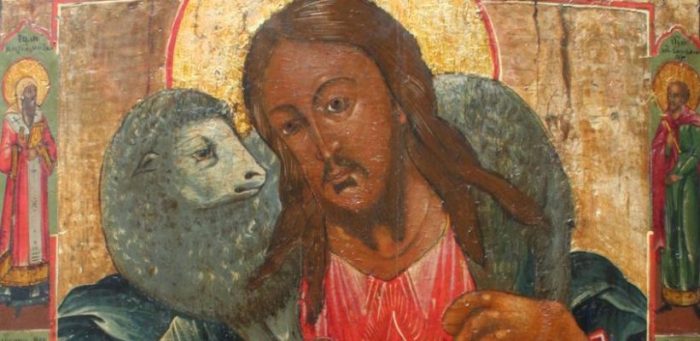
Good-Shepherd-e1507592580739-820x400

John 10:11-18

It happens about once a week when I will meet someone, and as we talk, we realize we have a common acquaintance. The conversation will then turn to how we know the person, and then there will be that moment when we realize that there is something special happening. What had begun as a brief conversation that perhaps wouldn’t have normally turned into a sacred moment actually became meaningful. All because we have a common friend.

In John 10, Jesus tells his disciples about himself. He uses the opportunity to clarify who he is in relation to others. The hinge of Jesus’s words to his disciples is his knowledge of them. He is the Good Shepherd. He genuinely cares for those entrusted to him. He isn’t a hired hand. He isn’t clocking his work as just any shepherd. He isn’t spending his time just making sure he has the same number of sheep that began with. No, he actually cares and knows those entrusted to him. Not only that, but those entrusted to his care know him as well. This relationship is special. It is authentically one of concern and love. And the ultimate reality of this concern and love is the fact that Jesus will give his entire life to save those he knows and loves.

As Jesus’s disciples in the reality of the resurrection, we have certainty that Jesus knows us and loves us. We know beyond a shadow of a doubt that when we feel alone and lost, that Jesus is with us. But this knowledge isn’t for us to hoard all to ourselves. We are to share it. Because we know Jesus and he knows us, we have the great opportunity to connect with those around us. It is actually the unifying force (at least it should be) when we meet people in our everyday living.

Perhaps our conversations with others should be marked more with the understanding that we know Jesus and when we meet a stranger, we introduce others to him. Because we have been saved, we share the love of Jesus with all we meet. Then, when we meet one another, we can all share that blessed moment when we have what we think is a coincidental conversation and it becomes a moment of true worship when we realize that Christ is the common bond between neighbors and strangers. Jesus truly is the Good Shepherd that brings those who are entrusted to him together into a beautiful communion built upon God’s covenant love in Christ, our common, yet holy, friend. Amen.

The Resurrected God: Believing What Our Eyes See

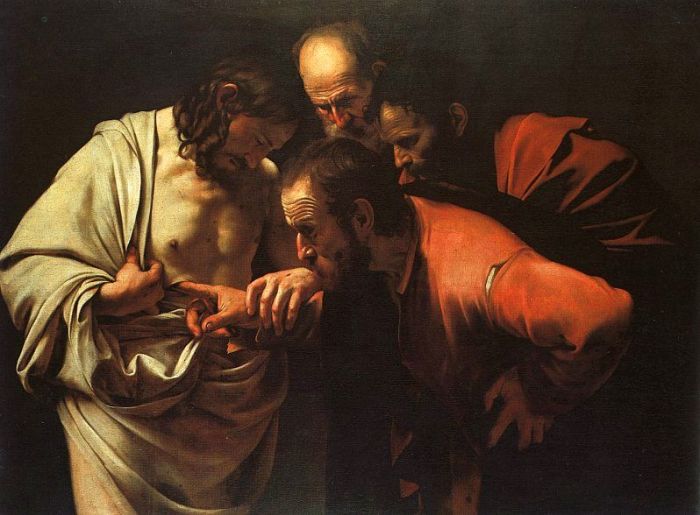
IMG_0179

Luke 24:36-48

You are a witness to the resurrection of Jesus Christ.

 
In our Gospel reading, the disciples are reeling from the events they have just witnessed. After they witnessed Jesus crucified and buried, they saw the empty tomb. In the chaos of trying to understand what was happening, word begins to spread that Jesus is appearing to disciples far and wide. Disciples on the road to Emmaus unknowingly share a conversation and meal with the risen Jesus. Other disciples are hiding in fear behind locked doors waiting for some assurance that what they were experiencing was real and if it was safe for them to live public lives. Amid the chaos, in that chamber of fear and confusion, Jesus appears and calms the storm in their lives.

 
“Peace to you!”, are the words of Jesus. These words are followed by two questions: “Why are you troubled and why do you doubt?” These questions may appear to be naïve, especially to those enduring the uncertainties of life. But Jesus is far from naïve. He is sovereign. He has everything under control. What looked like his final fate in this world was nothing but victory for all of eternity. The disciples encounter the risen Jesus and have their fears vanquished and their hearts encouraged. The tomb was not the end of the relationship between the disciples and Jesus. Instead, the empty tomb was the proclamation that things on earth would be forever changed. And Jesus was not finished with his disciples—there was work to be done.

 
We are witnesses along with these disciples. Their task is our task. To go and proclaim the forgiveness of sins in the name of Jesus to all nations. Regardless of our struggles, fears, anxieties, or doubts, Jesus is alive. He has set us free from the chains of bondage to sin and death. We are witnesses to this miracle and, thus, we must testify. For because Christ is risen, all have the hope of eternal life. Amen.

Easter Sunday: The Gates of Hell Shall Not Prevail Against You

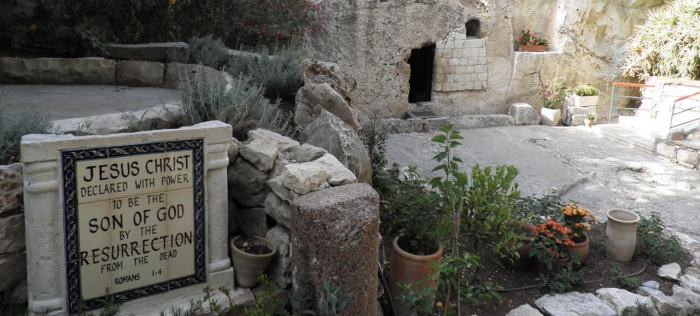
garden-tomb

(Photo: The Garden Tomb in Jerusalem)

Easter Sunday, April 1, 2018

Christ is building.

And the gates of hell shall not prevail against you.

Death is the great inheritor of everything that exists. This is as far as death goes. Right by the abyss of the valley of death is the foundation of the church, the church that confesses Christ as its life. The church has eternal life precisely there where death is reaching out for it, and death is reaching out for it precisely because it has eternal life. The church that confesses is the eternal church, for Christ is its protector. Its eternity is not visible to this world. It is not subject to challenge by the world, though the waves wash up over it and sometimes it looks completely covered over and lost. But victory belongs to the church, because Christ its Lord is with it and has overcome the world of death. Don’t ask whether you can see victory but believe in the victory, for it is yours.

In the name of the Father, Son, and Holy Spirit. Amen.

-from The Collected Sermons of Dietrich Bonhoeffer, Volume 1, pg. 86

Lent with Bonhoeffer: Confess, Confess, Confess

church of holy sepulchre tomb

(Photo: The Tomb of Jesus at the Church of the Holy Sepulchre in Jerusalem)

Holy Saturday, March 31, 2018

It’s really shaky ground. But it is still the rock, this ground; for this Peter, this reed bending in the wind, is called by God, taken prisoner by God, held fast by God. “You are Peter…” We are all Peter; not this person or that person, but all of us who are just living by our confession of Christ, as fearful, disloyal persons of little faith, but who are held fast by God.

Yet it is not we who are to build, but God. No human being builds the church, but Christ alone. Anyone who proposes to build the church is certainly already on the way to destroying it, because it will turn out to be a temple of idolatry, though the builder does not intend that or know it. We are to confess, while God builds. We are to preach, while God builds. We are to pray to God, while God builds. We do not know God’s plan. We cannot see whether God is building up or taking down. It could be that the times that human beings judge to be times for knocking down structures would be, for God, times to do a lot of building, or that the great moments of the church from a human viewpoint are, for God, times for pulling it down. It is a great comfort that Christ gives to the church: You confess, preach, bear witness to me, but I alone will do the building, wherever I am pleased to do so. Don’t interfere with my orders. Church, if you do your own part right, then that is enough. But make sure you do it right. Don’t look for anyone’s opinion; don’t ask them what they think. Don’t keep calculating; don’t look around for support from others. Not only must church remain church, but you, my church, confess, confess, confess…. Christ alone is your Lord; by his grace alone you live, just as you are. Christ is building.

-from The Collected Sermons of Dietrich Bonhoeffer, Volume 1, pgs. 85-86

Lent with Bonhoeffer: Divine Sorrow Leading to Joy

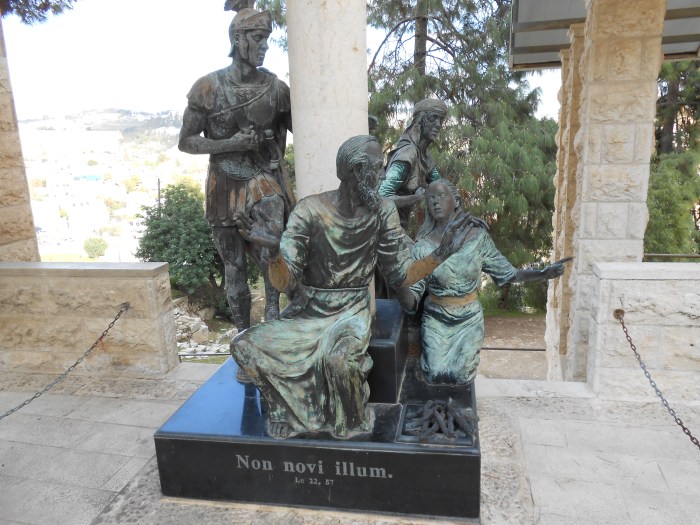
peter denies christ

(Photo: Sculpture of Peter denying Jesus at the Church of St. Peter in Gallicantu at the House of Caiaphus in Jerusalem)

Good Friday, March 30, 2018

Being the church of Peter is not only something to be claimed with unalloyed pride. Peter, the confessing, believing disciple, denied his Lord on the same night in which Judas betrayed him; Peter stood there by the fire that night and was ashamed, while Christ was standing before the high priest. Peter was the fearful one of little faith who sank into the sea. He was the disciple to whom Jesus said, “Get behind me, Satan!” (Matthew 16:23). Even after that, he was the one who kept faltering, kept denying and falling down, a weak vacillator, subject to the whim of the moment. The church of Peter is the church that shares his weakness, the church that also keeps denying Christ and falling down, being disloyal, of little faith, fearful, a church that again and again looks away from its mission and toward the world and its opinions. The church of Peter is the church of all those who are ashamed of their Lord, at the very moment when they should be standing up for him….

But Peter is also the one of whom it is said that he went out and wept bitterly. Of Judas, who also betrayed his Lord, it is said that he went out and took his own life. That is the difference. Peter went out and wept bitterly (Matthew 26:75). The church of Peter is the church that can not only confess, not only deny; it is the church that can also weep. By the rivers of Babylon–there we sat down and there we wept when we remembered Zion (Psalm 137). That is being church, for what does this weeping mean, if not that we have found the way back, that we are on our way home, that we are the prodigal son who falls weeping on his knees before his father (Luke 15). The church of Peter is the church of divine sorrow, which leads to joy.

-from The Collected Sermons of Dietrich Bonhoeffer, Volume 1, pgs. 84-85

Lent with Bonhoeffer: The Church of Confessing Christ

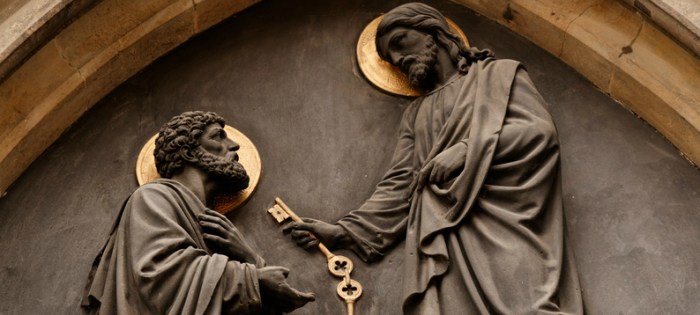
peter confesses christ

Maundy Thursday, March 29, 2018

What is the difference between Peter and the others? Does he have such a heroic nature that he rises head and shoulders above them? He does not. Does he have unmatched strength of character? He does not. Does he have such unshakable loyalty? He does not. Peter is nobody really, nobody but a person who confesses, a person who has met Christ standing in his path and has recognized him, and who now confesses his faith in Christ. And this Peter, this confessing person, is now named as the rock on which Christ will build his church.

The church of Peter–that means the church on the rock, the church of confessing Christ. The church of Peter is not the church of opinions and views but rather the church of revelation; not the church that talks about “what people say” but the church in which Peter’s confession is always being made and spoken anew, the church that does nothing else but always and only make this confession, whether in singing, praying, preaching, or action. It is the church that only stands on the rock as long as it keeps doing this, but becomes the house built on sand (Matthew 7:26-27) that the wind blows down if it dares to think of going another way, for whatever reason, or even to look away for a moment.

-from The Collected Sermons of Dietrich Bonhoeffer, Volume 1, pg. 84

Lent with Bonhoeffer: There is No Perhaps

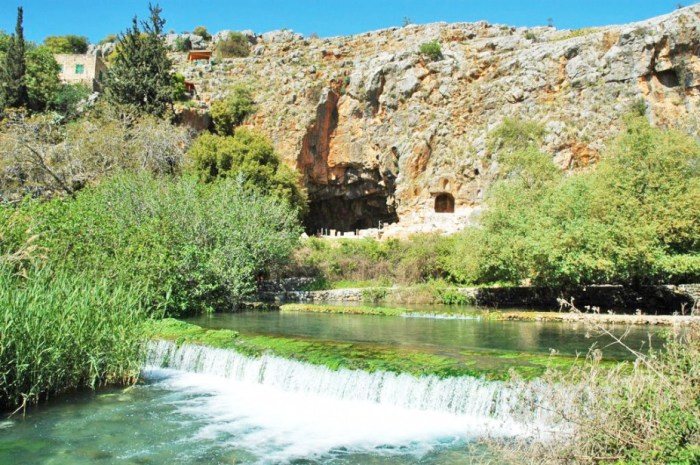
Caesarea-Philippi 3

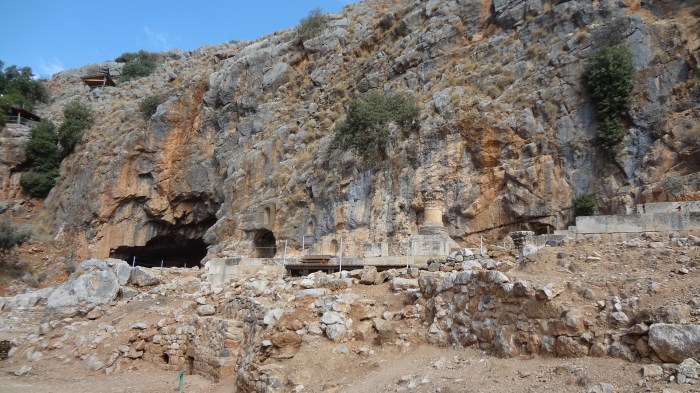
(Photo: Ruins of the Temple of Pan in Caesarea Philippi)

Wednesday of Holy Week, March 27, 2018

Now Jesus asks them directly, “But who do you say that I am?” In this unavoidable, face-to-face situation with Christ, there is no “perhaps,” no “some say,” no opinions anymore, but only silence, or else the one answer that Peter now gives: “You are the Messiah, the Son of the Living God.” Here in the midst of the whirl of human opinions and perspectives, something truly new is visible. Here the name of God has been named; the name of the Eternal has been spoken; the mystery has been brought to light. This is no longer human thinking but rather the very opposite; this is divine revelation and confession of faith. “Blessed are you, Simon son of Jonah! For flesh and blood has not revealed this to you, but my Father in heaven…you are Peter, the rock, and on this rock I will build my church.”

-from The Collected Sermons of Dietrich Bonhoeffer, Volume 1, pgs. 83-84

Lent with Bonhoeffer: The Decisive Question

Caesarea philippi 2

(Photo: Ruins of the Temple of Pan in Caesarea Philippi)

Tuesday in Holy Week, March 27, 2018

Jesus himself asks the decisive question, for which the disciples must have been waiting for some time, “Who do people say that the Son of Man is?” The answer of the disciples  is: “Some say you are John the Baptist, but others say you are Elijah, and still others say your are Jeremiah or one of the prophets.” Opinions, nothing but people’s opinions. The list of them could be extended as long as one wants…. Some say you are a great man, other, that you are an idealist, others, that you are a religious genius, others, that you are a hero, the greatest of leaders. Opinion, more or less serious opinions–but Christ does not want to build his church on opinions.

Christ builds his church on revelation.

-from The Collected Sermons of Dietrich Bonhoeffer, Volume 1, pgs. 83-84

Lent with Bonhoeffer: In the Face of Death

caesarea philippi

(Photo: Ruins of the Temple of Pan in Caesarea Philippi)

Monday of Holy Week, March 26, 2018

“Now when Jesus came into the district of Caesarea Philippi, he asked his disciples, “Who do people say that the Son of Man is?” And they said, “Some say John the Baptist, others say Elijah, and others Jeremiah or one of the prophets.” He said to them, “But who do you say that I am?” Simon Peter replied, “You are the Christ, the Son of the living God.” And Jesus answered him, “Blessed are you, Simon Bar-Jonah! For flesh and blood has not revealed this to you, but my Father who is in heaven. And I tell you, you are Peter, and on this rock I will build my church, and the gates of hell shall not prevail against it.”   (Matthew 16:13-18, ESV)

It is a lonely place where Christ has gone with his disciples, on the edge of a heathen region, where he can be alone with them. This is the place where, for the first time, he promises them, as his legacy, his eternal church. Not in the midst of the people, not at the visible climax of his ministry, but rather out here far away from the right-thinking scribes and the Pharisees, from the crowds who will sing “Hosanna” to him on Palm Sunday and then on Good Friday shout, “Crucify him,” he speaks to his disciples about the mystery and the future of his church. Evidently he meant that the building of this church could not begin with the scribes, the priests, or the crowds, but it was rather this little group of disciples, his followers, who were called to do it. Evidently he also did not consider Jerusalem, the city of the temple and the center of the people’s life, as the right place for it, but instead he went to a quiet place where he could not hope for his announcement to make waves in any outward, visible way. And finally, he did not consider any great day of celebration as the proper time to speak about his church. Instead, he gave the promise of his church in the face of death, immediately before his first foretelling of his passion. So it is a church of a little flock, a church far out in a quiet place, a church in the face of death, about which we must be speaking here.

-from The Collected Sermons of Dietrich Bonhoeffer, Volume 1, pg. 83