Blog

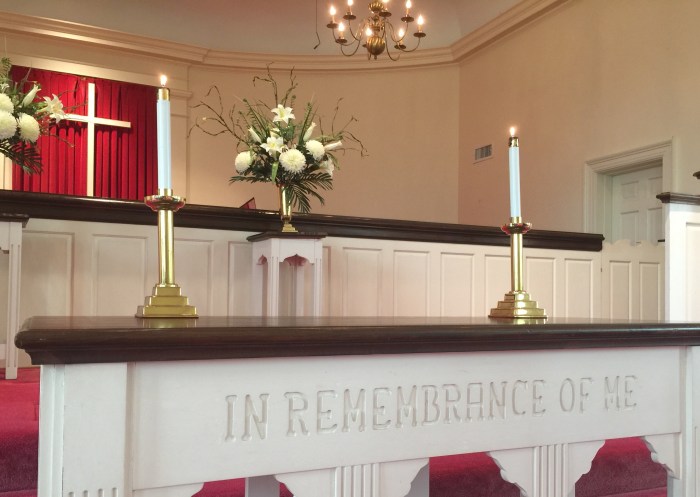
Sacred Spaces: The Table

The center of fellowship within a home is at the table. Amy and I bought our first house last year, and we began having guests over regularly again (after a certain baby and his accouterments had made entertaining in a cramped apartment impossible!). For invited friends, I’ll spend days preparing and long hours barbecuing a meal to serve them at our table. An unexpected guest or a friend who can “only stay a few minutes” – I’ll invite into my living room. I’ll bring them coffee or tea or water, and we might talk, casually (and superficially) for a while. Though my living room has a fireplace, it’s no longer appropriate to call it a hearth; unlike a century or more ago, no one cooks there anymore.

When we eat with one another, we participate in an intimately human act. The necessity for food is a reminder of common creatureliness. When the food is good, we are reminded of the good provisions that meet our need. When families eat at the table – and distractions are set aside – love for one another deepens through real conversation.

Our Great Shepherd, Jesus Christ, sets a table for us at the center of worship. The Bread of Life provides his own body to be our bread. The True Vine provides his own blood to be our wine. Just as our physical bodies are nourished by the tactile, common elements of bread and juice, we are nourished spiritually by the spiritual reality of Jesus’ intimate presence. My body requires something outside of itself for nourishment; my spirit is no different. And Christ provides for my whole soul by feeding me completely.

Years ago, our Pastor Emeritus very wisely moved the pulpit so that the table would be in the center of our sanctuary. Whether we celebrate it on a particular Sunday or not, the Lord’s Supper is the climax and center of our worship. The opening sentences of scripture and prayers call us to the table. The prayers of confession and declaration of forgiveness wash us up for supper. The reading of Scripture and the proclamation of gospel from the pulpit lead us – through both conviction and comfort – to the meal. The hymns keep us joyful as go; the prayers keep us thankfully dependent on our host.

In recent weeks, our Senior Pastor and I have moved our table forward and down to the same level as the congregation. Too often, a communion table in a church will be cluttered with ceremonial items and pushed out of the way. In becoming this, it no longer symbolizes the simple, intimate fellowship of a meal at a family table. It becomes the sanctimonious china cabinet that children dare not touch.

Jesus invites us to touch – and feel and taste. His call to his table goes out to his whole family, young and old. His provision of his body and blood for our food rejects anyone who thinks that they can bring anything to the table he needs. But for the humble, his welcome greets even those who are far off.

FELLOWSHIP IN THE SPIRIT

The following is the sermon manuscript I used on June 18, 2017, the Second Sunday after Pentecost. It will vary in places from the actual sermon preached.

For more on this series, see our Introduction

Sermon Text – Acts 2:1-47

There is no Christian life that is not life in the Spirit of God. There is no Christian proclamation, no Christian witness, that is not the proclamation of the Spirit of God about Jesus Christ. There is no Christian Church growth that is not done by the Spirit and the Spirit alone. There is no Christian fellowship that is not fellowship in the Spirit of God.

Of course, as Christians, I doubt any of us would think these words aren’t true. At least, I hope not. We talk about the need for the Spirit. We nod our heads. We read passages in Scripture about the work and the importance of the Spirit; we hear a sermon or are reminded in the liturgy about the movement of the Spirit. For a time, we are briefly moved. Then we go back to whatever it was we wanted to do in the first place.

Because if we’re honest with ourselves – and I’m no different than any of you in this respect – we live most of our lives with only a passing acknowledgment of God’s passionate intimacy with us through the Spirit. I say I have a Christian life, but so often it’s a life in and for myself – not a life in the Spirit. You say you have a Christian witness, but most often the central proclamation of your life is about yourself! We say that Church growth comes only by the working of the Spirit of God – then we go back to planning our strategies as if everything depended on us. We say we have Christian fellowship, but little do we recognize that much of our fellowship doesn’t look all that different from any generic community organization – we have a common interest, a decent amount of concern for one another, and we generally enjoy each other’s company. Christian community was first founded when the Spirit descended on the Apostles in tongues of fire – we settle lukewarm. We fail to look at our brother or our sister and say, “The Spirit of God lives here!” We still look to a building to be the Temple of the Lord; we neglect to look at one another as the very place where God dwells on earth by his Spirit.

And that’s why we need to hear Acts 2 over and over again. We believe – or at least we act like – the Church was founded by us and is about us! Sisters and brothers, we need Acts 2 because we need to know that the Church – including this church here at Homewood Cumberland Presbyterian – was founded by the Holy Spirit and is about Jesus Christ.

Derek and I are preaching through Acts because we need to be reminded of this truth, too. Chapter one, which we heard last week, is the prologue for book. It sets the scene after Jesus’ resurrection and serves as the narrative transition from when Jesus walked the earth with the disciples to when the Holy Spirit founds the Church with the Apostles. Acts 2 is the lens through which the rest of the book must be read. The Apostles do many mighty acts. That’s why our tradition has named this book, “The Acts of the Apostles.” But even the Apostles would tell you they aren’t the main character. Luke, the author who wrote this as a sequel to his Gospel, doesn’t portray any one of them – or even them collectively – as the main character. No, the Holy Spirit is central to this narrative just as he is central to the life of the Church in all times and in all ages.

And that is why we are calling this sermon series “The Act of the Holy Spirit.” There are many movements of the Spirit in the actions of the Apostles throughout this book. If you’re keeping count with Derek and me, this chapter covers four, five, and six of eighty-five. (Those numbers aren’t inspired, so you don’t have to keep count. We calculated them through the highly technical process of counting the section headings in your ESV pew Bibles – you can just look at the ESV headings, and that will probably be easier!) Derek and I are operating under the premise that these eighty-five movements are all part of the one Act of the Holy Spirit – the establishment of Christ’s Church. It’s an Act that continues to this day and into this very place. And in order to begin to understand how the Spirit is moving in this time and place – in our movement here at Homewood – we must look to how the Act began.

And it began with the Spirit’s action. Take a look at the first movement we’ll be looking at today in verses 1-13 under the ESV heading, “The Coming of the Holy Spirit.” The Disciples are all sitting in the same room together in Jerusalem. But they’re not just twiddling their thumbs wondering what to next. Let’s remember that the Disciples have been told to wait by the resurrected Jesus in chapter 1. They are not held captive by indecision – they have made the deliberate decision to wait.

It is Father’s Day. And if being a father of a three-year-old has taught me anything, it’s that it’s not comfortable for us to wait. Will is appropriately named because his namesake characteristic is pretty strong in him. He’s going to let you know what he wants to do and exactly when he wants to do it. “Not right now,” is something he has little patience for, and “later” is concept he only vaguely understands.

But in truth, toddlers are better at waiting than us because they at least sometimes acknowledge that they’re not in control! They know they’re dependent on adults to provide for their every need or desire – that’s why they get so upset when they don’t get something! We have a more pernicious and deadly problem. We can sometimes trick ourselves into believing that we’re not dependent. What’s worse, we often slip into the false belief – either directly or tacitly – that God is dependent on us to get anything done in the Church. Jesus is off away somewhere, and we must be his hands and feet to get anything done in the world.

The truth of Pentecost – and the joyous freedom that comes from this truth – is that God doesn’t depend on any of us! God is going to accomplish what God is going to accomplish, and while we are invited to participate – indeed, commanded to participate – success or failure does not depend on our human action.

The disciples, for all their failures to understand what Jesus was saying in the Gospels, at least get this part right. They obey Jesus in this act of waiting. My good friend Adam Borneman – sage of practical theology and baseball that he is – gave me this wisdom as part of his charge to me when I was ordained, “Do not lead without first being led by the Spirit.” The path towards life is through Christ, and the path through Christ is led by the Holy Spirit. All other roads lead to death. Our churches are no exception to this rule.

It is true, and will always be true, that the Spirit of God is always ahead of us, leading us forward. In many churches that have seen decline, there is a frantic effort to find out where the Spirit has gone. New programs, new worship styles, new ways of appealing to the culture, new acceptance of old sins, a new preacher, a new youth director, a new worship leader – these are all appealing ways to find some quick fix for a dying church. Often in search of the new fix to old death, the dying church will say that it’s following the “new thing” God is doing in the Spirit. This kind of thinking ignores the truth that while the Spirit is indeed always ahead of us, urging us forward, the Spirit is also beside us and within us, telling us that the “new thing” Isaiah prophesied about is not an event but a person – Jesus Christ. The very Spirit of God speaks to us!

And the very Spirit of God speaks to us in our own language. When the Spirit comes in a mighty way to the Apostles, Jews from all across the world were in one place. They were there for the feast of Pentecost, a harvest feast fifty days after the Passover when Jesus had his Last Supper. And after the Spirit appears following a mighty wind and with fire, the narrative shifts –without any explicit description – from the tiny room where the Apostles were gathered to outdoors where the Jews and proselytes from many nations had gathered. And the very first thing the Apostles do when they are filled with the Spirit is proclaim the mighty works of God to people in their own languages.

There is a lot that can be said about the miracle of speaking in tongues here, but I know we all have Father’s Day lunches to get to, so I’ll keep a simple emphasis here: by a miracle of the Holy Spirit, the disciples speak in other languages, and the effect is that the people who hear do so in ways that they can understand clearly and intimately.

There is much benefit to learning another language. But hearing the truth of God spoken in the same accent your mother used when she sang you to sleep – that is deeply intimate. If you’ve ever travelled to a foreign country (whether you spoke the language and could get around or not) there’s something special about hearing someone speak your native tongue. For those of you who haven’t traveled abroad, you might have gotten a similar sense of what I’m talking about if you’ve been to a place like New York and, in the midst of the crowd, heard an Alabama accent. There is an instant bond, a feeling that someone knows something about you – or at least knows you in ways the other people around you don’t – even if you’ve just met.

“What does all of this mean?” the crowd asks the Apostles. The miracle of tongues at Pentecost is that God is intimate with us and tells us of his mighty works in ways that we can understand. He speaks to us in our own language. Have we ever paused to consider how miraculous it is that we can read the very words of God, inspired by the Spirit, in our native tongue simply by picking up a copy of Scripture! This is not common in the history of the world, but we have it here in our hands because of the movement of the Spirit in Church history! Like a nurse to a baby, God lisps to us, John Calvin says. God condescends to us, God comes down to us, to himself known. The Spirit indeed goes ahead of us, calling us outdoors toward proclamation, but never in way that leaves us lost! God does not play hide and seek with his Will, a mutual professor of both your pastors would say. God makes his will known, and God makes God’s will known in the words of Scripture and in the Word of God, Jesus Christ.

And as Peter proclaimed in his first sermon, God’s will is that we follow Christ. Look at the next movement of the Spirit in verses 14-41 under the ESV heading, “Peter’s Sermon at Pentecost.” We won’t have time to cover it all in detail and – in truth, who am I to add to the preached words of an Apostle preached on the day the Church was founded! But take a look at the subject matter – it’s all about God’s gracious action in Jesus Christ. What’s happening with the Apostles is spectacular – it’s so spectacular some are saying they’re drunk! Peter starts with a defense: “How can we be drunk, it’s 9 in the morning?!” Then he shifts his discussion to the might work of God. These are the last days, the days when God has poured out God’s Spirit. And the Spirit is not simply poured out on kings or prophets. The Spirit has been poured out on men and women, young and old.

People of God, you are prophets! You are not prophets in the sense that you can predict lottery numbers or the outcome of football games. But if you have been filled by the Spirit of God then you will prophesy. You will proclaim the truth of God to a world that’s not eager to hear it! You will pronounce the truth that God is acting in the world. You will proclaim future things – that God will set all things right.

You prophesy in the Spirit the same way Peter does. You prophesy – oh people of God filled by the Holy Spirit – by talking about Jesus. This Jesus, whom you and I crucified, is the same Jesus who has triumphed over death. This Jesus, whose death is the result of our sin, has been lifted up above all creation, sits at the right hand of God the Father in power, and is coming again to judge the living and the dead.

And to those gathered at Pentecost, that is a terrifying reality! The crowd asked, “What does this mean?” – and they got their answer. Make no mistake, whether the people in the crowd were present before Pilate and shouted, “Crucify him,” or not, Peter is implicating all of them in Jesus’ death. What would you do if the man you crucified was just declared King of all Kings and was coming back?

To start, you might ask the same question the crowd asked, “What shall we do?” How can killers – and we are, even though Christ willingly laid down his life – find pardon and grace and peace?

The crowd asks this question of Peter, and Peter responds not with judgment, but with grace. “Repent and be baptized.” Too often, we look at repentance as something we’d rather avoid. It’s like a new diet or an exercise plan – we know it’s good for us, but it’s too arduous to take up right now. Repentance here is pure joy. It’s walking down a dark trail, lost in the woods at night, and turning around to see the light of a fire that leads you back to camp. Luke has already talked extensively about repentance in his Gospel. In Luke 15, Jesus says that repentance is like the one lost sheep out of ninety-nine who is found by the shepherd. Repentance is like the one lost coin out of ten being found by a woman desperately searching for it. Repentance is like one lost, frivolous, and wicked son out of two being found by a Father who rushes out while he is a long way off not to chastise him but to welcome him in to a feast.

Repentance is about responding in faith to God, but it’s primary emphasis is on the God who finds. With blood still on our hands from the torture and death of God’s own Son, God finds us, washes our hands in the waters of our baptism, and fills us with his very Spirit. And not only that, God tells us that the promise for us is also the promise for our children. The promise for us is the promise for all who are far off, everyone whom the Lord our God calls to himself. We are called into community.

And that is where the final movement takes us – to community – in verses 42-47 under the ESV heading, “The Fellowship of the Belivers.” This chapter begins and ends in community. There is no Spirit-filled life without community, and there is no true community without the Spirit. The repentance Peter proclaims is a repentance away from self and into community! The baptism Peter prescribes is a baptism that is the entrance into a community. Despite what you may have heard – baptism not about the individual being baptized. It is about God’s gracious action on behalf of the individual within the communion of saints.

And the community to which we are called is not a community manufactured, grown, or sustained by our human design. It is a community of love in and through the Holy Spirit. The community that comes out of the Pentecost sermon is a community so filled with love in the Spirit that they give to one another without compulsion. It is a community that recognizes their time, talents, finances, gifts, and everything that they have is not their own but belongs to a gracious God who offers provision for all.

This is the fellowship of the Spirit, the fellowship that is brought about by the proclamation of the Spirit in our own language, that communicates the mighty works of God in Jesus Christ, that prompts our joyful repentance, and that gives us entrance into fellowship with one another through baptism. This is where the loving and powerful Spirit of God leads us. Amen.

Called: Ephesians 1:1-14

IMG_0089

Ephesians is a rich letter from the Apostle Paul to his brothers and sisters in Ephesus. Written around 60 AD, Paul gives us a beautiful look at how orthodoxy (right faith) leads to orthopraxy (right living). The operative phrase in the entire book is “in Christ” (or some formulation of that phrase). Ephesians leaves us zero doubt that sanctification (being made holy by God) and justification (being declared righteous) is only in Jesus Christ. One way to remember this is by paying attention to how many times Paul uses some form of “in Christ” in his letter. He wants the reader to never forget that it is only in the person of Jesus Christ that we have any hope for relationship with God. Our relationship with others flows from this restoration we have to the Father by Christ Jesus. There is nothing we can do, say, or think that can get us into right relationship with God. The late Adrian Rogers once said in a sermon, “I wouldn’t trust my best fifteen minutes on earth to get me into heaven.” It is only in Christ alone that we have any hope to defeat sin and death.

In. Christ. Alone.

Lutheran theologian Walter Obare Omwanza has stated that “the unity of the church is given by God and not an achievement of human beings.” Omwanza rightly identifies that Paul is proclaiming that unity of faith is only possible in Christ Jesus. No human action can create the true unity that humanity desires. Omwanza echoes the prayer of Jesus in John 17. In John 17, while in the Gethsemane, Jesus prayed for unity of the disciples. This unity was not to be for the sake of unity alone, but it has deep theological significance for the world. The unity of the followers of Christ will provide a witness to the world that Jesus is the Messiah, the Son of God, the One who has defeated sin and death for all time. Unity is not a wish dream nor is it an ideal. It is a reality found only in the Triune God that communicates the gospel in a mighty way.

In verses 1 and 2, Paul opens his letter by addressing the people of Ephesus as saints. Many times we do not think of ourselves as saints. We often times think that a saint is a perfect person who does most everything correctly. However, the Bible teaches us that everyone who trusts Jesus Christ as Lord and Savior, even though we are imperfect, are God’s saints. These folks in Ephesus were faithful to Christ and that is the only requirement to be considered a saint. Therefore, in Christ, fallen humanity has hope and assurance that we are all saints with a purpose to glorify God.

In verses 3-14, Paul then instructs us on the all encompassing work of God in Christ
Jesus. Verse three begins with worship as Paul blesses God the Father because of the work of Jesus Christ. The Father of Christ has blessed us in Christ with every spiritual blessing. In verse four, we learn that God chose us in Christ before the foundation of the world. Also in verse four we are implored to to be “holy and blameless” before God. This is an impossibility apart from Jesus Christ. We are clothed in Christ and when God sees us he no longer sees enemies, but rather his children. The love of God has predestined us for adoption as children of God. It is for God’s purposes alone that this is done. God has blessed us in his grace in Christ. We have redemption in Christ and forgiveness of our sins. In the person of Christ, God has lavished all wisdom, grace, and insight upon us. Christ is the assurance for all time that we have been reconciled to the Father in heaven.

Not only have we this assurance, but we also have an eternal inheritance in Christ Jesus. All these blessings we have in Christ ought to cause us to worship and serve God with faithful hearts. It is the Holy Spirit of God–the same Spirit that raised Christ from the dead–that inhabits all of the children of God and creates within them the faith that leads us to Christ again and again and again.

These opening verses reveal the foundation of our lives in Christ Jesus. No matter where we are or when we are, we have reason to worship the Triune God. This is better than good news–it is the Gospel.

I would be remiss if I didn’t take a moment to address the elephant in the room–election. The concept of God choosing and predestining his people for these eternal blessings cannot be ignored. What does he election mean?

The Cumberland Presbyterian Church was formed because our first ministers rejected the idea of election and double-predestination. As I see it, we cannot avoid predestination as Cumberland Presbyterians because the Bible uses those words and teaches those truths. However, we have to understand what it means for God to elect his people for salvation. Forgive the brevity and simplification of the next two paragraphs as the doctrine of election is a deeply nuanced doctrine.

One explanation of election focuses on the decree of God. Briefly, this explanation teaches that God has determined and decreed who will specifically be saved. God has predetermined his elect and it will be done.

An alternative to this view of predestination by decree is that God has predestined his people in Jesus Christ. Karl Barth tells us in his Dogmatics II.2, that Jesus Christ is both electing God and elected man. And because of this reality of Jesus, he has the final word over the fate of his creation. This makes the central question of election not “Who are God’s elect? but rather, it is the very question Jesus asks his disciples in Mark 8–“Who do people say that I am?” Election and predestination is in Christ alone. Therefore, whenever God’s elect is asked the question “Who is Jesus?”, their answer is this: The Son of the Living God; the Messiah; the Savior of the World; the Lamb who takes away the sin of the World; the image of the invisible God. Those in Christ’s flock know his voice. His is the voice of our Lord and Savior. Who do YOU say Jesus is?

These first fourteen verses prepare us for an encounter in which we can understand the truth of our God. Jesus Christ is the foundation of our being. Unless we recognize the truth of who we are in Christ, we will never find the promised rest our hearts so desire. Amen.

The Act of the Holy Spirit, Sermon 1: The Living Church

IMG_0087

Acts is a book filled with the miraculous transformative power of the Holy Spirit. We see people who are working beyond human explanation. For example, Peter, who was once scolded by Jesus for not keeping his eyes on the things of God, is shown to be filled with the things of God and proclaiming with great authority the Gospel of Jesus Christ.

As the disciples are gathered together following the resurrection of Jesus, we see the first three movements of the Holy Spirit. These movements show us how the Holy Spirit gathers together the Living Church of Christ and empowers it to be witnesses of Jesus Christ to the world.

Movement 1: The Promise of the Holy Spirit
In John 14 and 16, when Jesus is talking with his disciples, he promises them that he will send a comforter. This promised comforter is the Holy Spirit. The first movement of the Holy Spirit is God’s promise to be in our lives. God never forsakes his promises to his people. God is trustworthy. What he says, he will fulfill. When Jesus promises the Holy Spirit to us, it is God assuring us that he will always be with us. When we confess Jesus as Lord and Savior, this is a sign of the Holy Spirit working in our lives. The Apostle Paul in 1 Corinthians 12:3 tells us that no one can say “Jesus is Lord” except in the Holy Spirit. So, as you live your life, know that if you confess that Jesus is the Lord of your life, that the Holy Spirit has empowered you to do so and, therefore, you have had the promise of the Holy Spirit active in your life. The Holy Spirit is with you and is God present in your life.

Acts 1:1-5 demonstrates to us how we are to abide in the Holy Spirit. In every way, we are commanded to wait upon the Lord. God’s timing is not our timing. Our lives ought not be dictated by our plans and our aspirations. We await God. We await his will to be done. As we await, may we remember his promise for us. But we do not do nothing while we await. We pray. We serve. We welcome. We faithfully live to the glory of God. May we know that he is with us. May we not be distracted by the things of this world, but instead, may we see ourselves as God’s disciples and faithfully prepare ourselves for the work Christ has in store for us.

Movement 2: The Mission of the Holy Spirit
In Acts 1:6-11 we see Jesus proclaim to us that the work of the Holy Spirit is different than we expect. In our lives, we have to fight our urges to always be in control. We have to fight our urges to know every detail worked out in front of us prior to us demonstrating faithfulness to God. The disciples ask Jesus a question about the ultimate fulfillment of God’s plan for his people. Instead of giving them the specific answer about when the restoration of God’s Kingdom will occur, Jesus responds with the ultimate “Don’t worry about it!” God the Father has fixed the time and season for his restoration of the Kingdom, but we do not need to be concerned with that information. Why would Jesus respond this way? Well, certainly Jesus wants us to trust God and know that it is his mission that we are on, but I can’t help but think about what those disciples would have done with that information. I was thinking the other day about this very point and wondering what I would do if I knew the exact time when Jesus will return. In a much more less important example, every year Cindy and I talk about how we need to be better prepared for Christmas. We talk about doing shopping early so we don’t run out of time, but every year we find ourselves running around on December 23 looking for presents for someone. We put off the work we said we should be doing and instead use the deadline of Christmas as a comfort. We say that we will have time to do it later. I asked myself, “If I knew when Jesus was going to return, would I put off what I should be doing? Would I procrastinate?” Jesus, in his words to his disciples, tells them and us to be about the work we’ve been given to do. The only thing we need to worry about as followers of Jesus is being a witness to Jesus Christ in the “Jerusalems, Judeas, and Samarias” in which we live. That is our task and vision.

A final statement on the second movement of the Holy Spirit–notice how the disciples have to be prompted to get busy with the mission of God. As the disciples watch Jesus ascend into heaven they stand amazed. I imagine that they are taking in everything about that moment. They didn’t want to miss a thing. But they stood amazed a bit too long. Notice in verse 11 how two angels had to ask them, “Why are you standing here? GET TO WORK!” We cannot allow the past glory that we have witnessed to prevent us from faithfully following Jesus where he leads us. We can become very comfortable with where we’ve been. We can take a great deal of pride in what God has done in our lives. And if we aren’t careful, this can distract us from what God is calling us to do now. God, have mercy on us when we allow the glory days of our past to cause us to live lazily in the present. May we be present in the mission of the Holy Spirit every day.

Movement 3: The Strengthening by the Holy Spirit
The Holy Spirit strengthens the disciples in Acts 1:12-26. The troubling actions of Judas Iscariot undoubtedly scarred the fellowship of disciples. Jesus selected twelve disciples to train for the purposes of living the mission of God. We know that Jesus had sent the disciples out two-by-two to preach in various cities in Israel. The void left by Judas was not ignored or over-looked. As the disciples were abiding together, they were consumed in prayer awaiting the fulfillment of the promise of the Holy Spirit. As these disciples prayed together, the Holy Spirit strengthens them by filling the vacancy left by the death of Judas.*

The community of God is a community knit together by God. God brings his people together and equips them to do the ministry he has given them. Many times we can think that we decide to go to church. We often times forget that God has brought us together as a church. Perhaps my favorite understanding of the church is that it is a community of people who never would have ordinarily come together if it were not for the action of Jesus. The relationships I have with the people at Homewood CPC have no other foundation than the foundation of Jesus Christ. Because of Jesus, I serve Homewood CPC. Because of Jesus, our session works together. Because of Jesus, we exist on Columbiana Road. Our being as a church is grounded in the foundation of Jesus Christ. Which makes the selection of Matthias as the twelfth disciple so important. The Holy Spirit strengthens the community of disciples by stitching together the family of faith. Matthias has always been there in the midst of the disciples, but now, it’s time for him to work.

We as a church have to always be ready to be strengthened by the Holy Spirit. God strengthens his church by bringing his people together. It is by the work of the Holy Spirit that God’s church grows. This leads us to understand that anyone who enters the church of God has a place in the mission of God. How welcoming are we toward our new neighbors and those who have found their way into our church each week? Do we see these lives as the Holy Spirit strengthening his people, or do we reject the strengthening of the Holy Spirit and neglect those God sends into his house? May we enlarge our understanding of who we are as a church and know that without God and his Holy Spirit, we are just another social club with no authority or purpose.

These movements of the Holy Spirit are important for us to see as they should drive us to prayer. Notice that in 1:14 that the disciples had devoted themselves prayer together as they were obediently awaiting the Holy Spirit. How do we fill our time during the “unexciting” times of life? Prayer is terribly absent in our current Christendom in America. I am not saying we don’t pray, but I am saying that the devotion to prayer in the church is severely lacking. Prayer is the language of faith. It is the understanding that we are not the final word or authority for what happens to us. It is the appeal and dependence on the God of the universe, who moves within his people in mighty ways. As Jesus taught us, may we ever be in prayer, seeking not our will for our lives or our will for what we think the church should be, but that God’s will be done on earth as it is in heaven. May we be faithful to God as he moves within his church. Amen.

*(Not to spend too much time discussing the details given in Acts about Judas’s death, but we must understand that there was nothing honorable about Judas’s actions in betraying Jesus nor in his death. In recent years, much attention has been given to the discovery of “The Gospel of Judas” and the message within it that implies that Judas was only being faithful to Jesus in his betrayal. One thing is clear in this recounting of Judas’s fate, it is that his actions, both betraying Jesus and in his taking of his life, are not honorable nor are they admirable.)

Sacred Spaces: The Candles

IMG_0036

A few weeks ago during one of the strong storms that passed through our area, the electricity at our house went out. Ava, Braden, and Drew scrambled to find flashlights, lanterns, torches, or anything to make a bonfire. It didn’t matter to them, they just wanted the frightening darkness to go away. Ever heroic, Cindy and I lit candles and as the warm glow filled the room, our three children rejoiced knowing the light protected them from whatever they thought lurked in the darkness. The presence of light made all the difference to them.

We all relate to the fear associated with darkness. We tremble at reports in the news of the darkness in our world. Violence, disease, war, terrorism, political turmoil, suffering, pain, and death bring us tidings of discomfort and fear. We fear whatever it is lurking in the darkness we can and cannot see. However, in the midst of the darkness, the presence of the True Light, Jesus Christ, makes all the difference in the world for us.

In the beginning, God’s Spirit hovered over the waters of chaos (Genesis 1). He began to bring order to the chaos with a simple command: “Let there be light”. John explains to us in John 1:1-9 that Jesus is the true light that cannot be extinguished by darkness.

The light of Jesus, then, illumines us as we live in this world of darkness. We may first scramble around like Ava, Braden, and Drew when the power outage left us in darkness, but the end of our search for the light in our world begins and ends in Jesus. And because Jesus is the light, he makes us lights in the world around us. In Matthew 5:14, Jesus tells his disciples that they, because they are his disciples, are the light in this dark world. Paul would later say that, “it is no longer I who lives, but Christ who lives in me” (Galatians 2:20). Therefore, we are “to let our light shine before others” so that, ultimately, God the Father in heaven is glorified by all. We all need to be reminded of this command of Jesus as we live in our world each day as the city set on the hill that cannot be hidden.

To help us remember this truth, our acolytes bring forth the light to the Lord’s Table each week during worship. Yes, the same little children who are often scared of the dark proclaim the truth of Jesus Christ! The deeply symbolic act of lighting two candles on the Lord’s Table reminds us of who God is, where God is, and who we are because of God. The little children who bring this light proclaim that Jesus Christ is the light of the world and is present in our lives every minute of every day. They proclaim that Jesus is fully human and fully divine. They proclaim that Jesus has conquered the powers of darkness and will not be defeated by any evil. They proclaim that Jesus Christ has entered each of our lives and set us up as a city on a hill to the glory of God the Father. These are but a few of the proclamations made by the acolytes each Sunday.

Then, at the conclusion of each service, those same acolytes return to take the light from the Lord’s Table into the world. We do not leave church under our own power. We do not leave with no travel plans. Jesus leads, we follow. Jesus is the light of the world and wherever he leads us is the mission field of God. It is in these mission fields where we let our light shine. We follow Jesus with the confidence that the light cannot be overcome by darkness. Paul says in Romans 8:37 that we are “more than conquerors through him who loved us.” Therefore, we do not leave our “Sunday-selves” behind in the sanctuary after worship. We carry our worship into the dark world and prayerfully allow the light of Christ to shine through us as we serve God each day with faith to know Christ has conquered every enemy we will face.

The next time you see the acolytes bring forth the light into the sanctuary and take forth the light from it, may you be filled with the confidence that Christ is in our presence always (or better, we are in Christ’s presence always). May you know that he has brought an end to all things that threaten to harm you. May you have faith that in him you are able to triumphantly enter the world and do all things despite the attacks of Satan. May you victoriously carry with you the light of the Gospel of Jesus Christ: God is with us; God loves us; God is for us (and if God is for us, who could be against us?). We have this with all certainty in Jesus Christ, our Lord and Savior. Amen.

The Act of the Holy Spirit: A Sermon Series Introduction

The Acts of the Holy Spirit?

The main character of the Acts of the Apostles isn’t one of the apostles. The apostles preach, baptize, travel, heal the sick, and raise the dead. They are beaten, stoned, imprisoned, shipwrecked, and martyred. We must learn from them. We rightly hold them in esteem for their faithful witness – often unto death. But this story isn’t about them.

This is the story of how the Holy Spirit founded the Church of Jesus Christ.

This is the story of how the very Spirit of God, the same Spirit who hovered over the waters at creation, spread the good news of Jesus Christ “in Jerusalem and in all Judea and Samaria, and to the end of the earth.”

Derek and I will be preaching through Acts this season after Pentecost. We hope to show you that the many spectacular movements of the apostles are one act of God by the Holy Spirit to spread the gospel of Jesus Christ to the whole world.

We hope you will join us. We hope you will learn from the example of the faithful apostles. But most of all – we pray that you will be empowered by the Holy Spirit to proclaim Jesus Christ in everything that you do and everywhere that you go.


Some Notes First

Below, you’ll find what was the planned outline of our series in full. Reality changed it a bit. Before we get to that, it’s helpful to clarify a few things.

  1. This is the raw outline Derek and I developed for our use. We thought we’d share it with you, and we hope you’ll find it accessible enough. If you don’t, please comment, and we’ll try to clarify. (NOTE: This is not a historical record. Some special services were deleted. Most of the readings were shortened. Sometimes, chapters were combined. The preaching schedule was adjusted. We are leaving this here because it still serves as a good overview of this series, but it is not accurate in all of its details.)
  2. We highly recommend the new commentary by Willie James Jennings. We like it so much, it’s formed much of the structure of this outline, and you’ll see sections from Jennings below. In addition to reading Acts in between sermons, we highly encourage you to read Jennings along with us. (No, you don’t have to have a seminary degree to do it! He’s easy to read, relatively short, and powerful in his witness.)
  3. Derek and I identified 85 movements in the book of Acts that are part of the one act of the Holy Spirit. We did this through the highly scientific process of counting ESV section headings. These movements will form the basic outlines of our sermons. If you follow along with the sermons in HCPC’s pew Bibles (or any ESV Bible), you already have the movements written out for you.
  4. In addition to Sunday mornings, we’ll have three special times of worship in conjunction with our fellowship meals. These will happen about every other month starting in July.
  5. We’ll be posting sermon transcripts, manuscripts, and notes on this blog  in case you want to review (or if you miss a sermon). Why are we posting something written instead of a recording or a video? Well, the answer to that probably deserves its own post! The short answer? Derek and I believe that sermons are occasional acts. That doesn’t mean we believe that sermons should be done every once in a while! It means that there is something special about the occasion when the sermon is preached. The Holy Spirit is at work in a unique way on Sunday mornings when the faithful are gathered in community to hear the Word of God proclaimed. As helpful as they are – and Derek and I watch recordings of other preachers a lot! – recordings can’t replace the real thing. We hope that written records will help you recall what was said (or catch up) with the reminder that these aren’t substitutes for the real thing.

Series Outline – The Act of the Holy Spirit

(Trinity Sunday, 6/11 – Reign of Christ, 11/26)


Jennings: 1:1-4:37 “THE REVOLUTION IS HERE!”


Sunday, June 11 – Trinity Sunday 

(1st S.A. Pentecost; 10th S.I. OT)

  • Preacher – Derek
  • Sermon Text – Acts 1:1-26
  • Sections in Jennings:
    • 1:1-12: “The Death of Nationalist Fantasy” (pp. 13-23)
    • 1:13-26: “Grasping for the New” (pp. 24-26)
  • Movements 1-3
    • Movement 1 (1:1-5) “The Promise of the Holy Spirit”
    • Movement 2 (1:6-11) “The Ascension”
    • Movement 3 (1:12-26) “Matthias Chosen to Replace Judas”


Sunday, June 18

(2nd S.A. Pentecost; Proper 6 (11); 11th S.I. OT)

  • Preacher – Sherrad
  • Sermon Text – Acts 2:1-47
  • Sections in Jennings:
    • 2:1-13: “The Sound of Intimacy” (pp. 27-32)
    • 2:14-36: “Speaking in the Spirit” (pp. 33-35)
    • 2:37-41: “A New Response” (pp. 36-37)
    • 2:41-47: “A New Reality of Giving” (pp. 38-39)
  • Movements 4-6
    • Movement 4 (2:1-13) “The Coming of the Holy Spirit”
    • Movement 5 (2:14-41) “Peter’s Sermon at Pentecost”
    • Movement 6 (2:42-47) “The Fellowship of the Believers”


Sunday, June 25

(3rd S.A. Pentecost; Proper 7 (12); 12th S.I. OT)

  • Preacher – Derek
  • Sermon Text – Acts 3:1-26
  • Sections in Jennings:
    • 3:1-11: “A New Gaze” (pp. 40-41)
    • 3:12-26: “History in the Making” (pp. 42-44)
  • Movements 7-8
    • Movement 7 (3:1-10) “The Lame Beggar Healed”
    • Movement 8 (3:11-26) “Peter Speaks in Solomon’s Portico”


Sunday, July 2 – Communion

(4th S.A. Pentecost; Proper 8 (13); 13th S.I. OT)

  • Preacher – Derek
  • Sermon Text – Acts 4:1-37
  • Sections in Jennings:
    • 4:1-37: “The Criminal Disciple Emerges!” (pp. 45-51)
  • Movements 9-11
    • Movement 9 (4:1-22) “Peter and John Before the Council”
    • Movement 10 (4:23-31) “The Believers Pray for Boldness”
    • Movement 11 (4:32-37) “They Had Everything in Common”


Jennings: 5:1-9:43 “THE STRUGGLE OF DIASPORA”


Sunday, July 9

(5th S.A. Pentecost; Proper 9 (14); 14th S.I. OT)

  • Preacher – Derek
  • Sermon Text – Acts 5:1-42
  • Sections in Jennings:
    • 5:1-17: “The Death of the Sovereign Couple” (pp. 52-60)
    • 5:18-42: “The Unity of Suffering” (pp. 61-63)
  • Movements 12-14
    • Movement 12 (5:1-11) “Ananias and Sapphira”
    • Movement 13 (5:12-16) “Many Signs and Wonders Done”
    • Movement 14 (5:17-42) “The Apostles Arrested and Freed”


Wednesday, July 12 – Fellowship Dinner

  • Preacher – Sherrad
  • Sermon Text – Acts 6:1-15
  • Sections in Jennings:
    • 6:1-15: “The Pain of Diaspora” (pp. 64-67)
  • Movements 15-16
    • Movement 15 (6:1-7) “Seven Chosen to Serve”
    • Movement 16 (6:8-15) “Stephen Is Seized”


Sunday, July 16

(6th S.A. Pentecost; Proper 10 (15); 15th S.I. OT)

  • Preacher – Derek
  • Sermon Text – Acts 7:1-8:3
  • Sections in Jennings:
    • 7:1-8:2: “A New Storyteller” (pp. 68-74)
    • 8:3 (3-25): “The Scattering and the Saving” (pp. 75-76)
  • Movements 17-19
    • Movement 17 (7:1-53) “Stephen’s Speech”
    • Movement 18 (7:54-60) “The Stoning of Stephen”
    • Movement 19 (8:1-3) “Saul Ravages the Church”


Sunday, July 23

(7th S.A. Pentecost; Proper 11 (16); 16th S.I. OT)

  • Preacher – Derek
  • Sermon Text – Acts 8:4-40
  • Sections in Jennings:
    • (Cont.) 8:4-25 (3-25: “The Scattering and the Saving” (pp. 76-80)
    • 8:26-40: “A New Sight of Love” (pp. 81-89)
  • Movements 20-22
    • Movement 20 (8:4-8) “Philip Proclaims Christ in Samaria”
    • Movement 21 (8:9-25) “Simon the Magician Believes”
    • Movement 22 (8:26-40) “Philip and the Ethiopian Eunuch”


Sunday, July 30

(8th S.A. Pentecost; Proper 12 (17); 17th S.I. OT)

  • Preacher – Sherrad
  • Sermon Text – Acts 9:1-43
  • Sections in Jennings:
    • 9:1-19a: “Disrupting Life” (pp. 90-94)
    • 9:19b-30: “The Diaspora in Faith and Fear” (pp. 95-97)
    • 9:31-43: “The Repetition of Jesus” (pp. 98-101)
  • Movements 23-28
    • Movement 23 (9:1-19a) “The Conversion of Saul”
    • Movement 24 (9:19b-22) “Saul Proclaims Jesus in Synagogues”
    • Movement 25 (9:23-25) “Saul Escapes from Damascus”
    • Movement 26 (9:26-31) “Saul in Jerusalem”
    • Movement 27 (9:32-35) “The Healing of Aeneas”
    • Movement 28 (9:36-43) “Dorcas Restored to Life”


Sunday, August 6 – Communion

(9th S.A. Pentecost; Proper 13 (18); 18th S.I. OT)

  • Preacher – Derek
  • Sermon Text – Acts 10:1-48
  • Sections in Jennings:
    • 10:1-23a: “The Revolution Comes to Us” (pp. 102-108)
    • 10:23b-48: “This Is What Intimacy Sounds Like” (pp. 109-114)
  • Movements 29-32
    • Movement 29 (10:1-8) “Peter and Cornelius”
    • Movement 30 (10:9-33) “Peter’s Vision”
    • Movement 31 (10:34-43) “Gentiles Hear the Good News”
    • Movement 32 (10:44-48) “The Holy Spirit Falls on the Gentiles”


Jennings: 10:1-15:41 “THE DESIRE OF GOD EXPOSED”


Sunday, August 13

(10th S.A. Pentecost; Proper 14 (19); 19th S.I. OT)

  • Preacher – Sherrad
  • Sermon Text – Acts 11:1-30
  • Sections in Jennings:
    • 11:1-18: “The Transgressing God” (pp. 115-120)
    • 11:19-30: “The World according to Antioch” (pp. 121-124)
  • Movements 33-34
    • Movement 33 (11:1-18) “Peter Reports to the Church”
    • Movement 34 (11:19-30) “The Church in Antioch”


Sunday, August 20

(11th S.A. Pentecost; Proper 15 (20); 20th S.I. OT)

  • Preacher – Derek
  • Sermon Text – Acts 12:1-25
  • Sections in Jennings:
    • 12:1-25: “The Prison Returns” (pp. 125-131)
  • Movements 35-37
    • Movement 35 (12:1-5) “James Killed and Peter Imprisoned”
    • Movement 36 (12:6-19) “Peter Is Rescued”
    • Movement 37 (12:20-25) “The Death of Herod”


Sunday, August 27

(12th S.A. Pentecost; Proper 16 (21); 21st S.I. OT)

  • Preacher – Sherrad
  • Sermon Text – Acts 13:1-52
  • Sections in Jennings:
    • 13:1-12: “The Unambiguous Spirit” (pp. 132-133)
    • 13:13-52: “Between Diaspora and Antioch: The Christian Cosmopolitan” (pp. 134-135)
  • Movements 38-40
    • Movement 38 (13:1-3) “Barnabas and Saul Sent Off”
    • Movement 39 (13:4-12) “Barnabas and Saul on Cyprus”
    • Movement 40 (13:13-52) “Paul and Barnabas at Antioch in Pisidia”


Sunday, September 3 – Communion

(13th S.A. Pentecost; Proper 17 (22); 22nd S.I. OT)

  • Preacher – Derek
  • Sermon Text – Acts 14:1-28
  • Sections in Jennings:
    • 14:1-18: “The Threat of Loss and the Promise of New Life” (pp. 136-137)
    • 14:19-28: “The Victory over Violence” (pp. 138-139)
  • Movements 41-44
    • Movement 41 (14:1-7) “Paul and Barnabas at Iconium”
    • Movement 42 (14:8-18) “Paul and Barnabas at Lystra”
    • Movement 43 (14:19-23) “Paul Stoned at Lystra”
    • Movement 44 (14:24-28) “Paul and Barnabas Return to Antioch in Syria”


Sunday, September 10 

(14th S.A. Pentecost; Proper 18 (23); 23rd S.I. OT)

  • Preacher – Derek
  • Sermon Text – Acts 15:1-41
  • Sections in Jennings:
    • 15:1-33: “The Antiochene Body and the Jewish Body” (pp. 140-148)
    • 15:34-41: “The Risk of Trust” (pp. 149-151)
  • Movements 45-47
    • Movement 45 (15:1-21) “The Jerusalem Council”
    • Movement 46 (15:22-35) “The Council’s Letter to Gentile Believers”
    • Movement 47 (15:36-41) “Paul and Barnabas Separate”


Thursday, September 14 – Communion; Holy Cross

  • Preacher – Derek
  • Sermon Text – Acts 16:1-40
  • Sections in Jennings:
    • 16:1-8: “The In-Between Disciple” (pp. 152-156)
    • 16:9-19a: “A Tale of Two Women” (pp. 157-160)
    • 16:19b-24: “Ownership and Discipleship” (pp. 161-162)
    • 16:25-40: “Shaking the Prison Foundations” (pp. 163-168)
  • Movements 48-52
    • Movement 48 (16:1-5) “Timothy Joins Paul and Silas”
    • Movement 49 (16:6-10) “The Macedonian Call”
    • Movement 50 (16:11-15) “The Conversion of Lydia”
    • Movement 51 (16:16-24) “Paul and Silas in Prison”
    • Movement 52 (16:25-40) “The Philippian Jailer Converted”


Jennings: 16:1-21:40 “THE SPIRIT AND THE END OF SEGREGATION”


Sunday, September 17

(15th S.A. Pentecost; Proper 19 (24); 24th S.I. OT)

  • Preacher – Sherrad
  • Se Sermon Text – Acts 17:1-34
  • Sections in Jennings:
    • 17:1-15: “The Struggle between Text and Life” (pp. 169-174)
    • 17:16-34: “A Rhetoric of Desire” (pp. 175-177)
  • Movements 53-56
    • Movement 53 (17:1-9) “Paul and Silas in Thessalonica”
    • Movement 54 (17:10-15) “Paul and Silas in Berea”
    • Movement 55 (17:16-21) “Paul in Athens”
    • Movement 56 (17:22-34) “Paul Addresses the Areopagus”


Sunday, September 24

(16th S.A. Pentecost; Proper 20 (25); 25th S.I. OT)

  • Preacher – Derek
  • Sermon Text – Acts 18:1-28
  • Sections in Jennings:
    • 18:1-11: “A Community in the Double Bind” (pp. 178-180)
    • 18:12-28: “A New Kind of Couple” (pp. 181-182)
  • Movements 57-59
    • Movement 57 (18:1-17) “Paul in Corinth”
    • Movement 58 (18:18-23) “Paul Returns to Antioch”
    • Movement 59 (18:24-28) “Apollos Speaks Boldly in Ephesus”


Sunday, October 1 – Communion

(17th S.A. Pentecost; Proper 21 (26); 26th S.I. OT)

  • Preacher – Sherrad
  • Sermon Text – Acts 19:1-41
  • Sections in Jennings:
    • 19:1-20: “By Water and Touch” (pp. 183-187)
    • 19:21-41: “The City is Shaken” (pp. 188-189)
  • Movements 60-62
    • Movement 60 (19:1-10) “Paul in Ephesus”
    • Movement 61 (19:11-20) “The Sons of Sceva”
    • Movement 62 (19:21-41) “A Riot at Ephesus”


Sunday, October 8

(18th S.A. Pentecost; Proper 22 (27); 27th S.I. OT)

  • Preacher – Derek
  • Sermon Text – Acts 20:1-38
  • Sections in Jennings:
    • 20:1-16: “The Journey of Jesus, Again” (p. 190)
    • 20:17-38: “Communion or Counterfeit” (pp. 191-195)
  • Movements 63-65
    • Movement 63 (20:1-6) “Paul in Macedonia and Greece”
    • Movement 64 (20:7-16) “Eutychus Raised from the Dead”
    • Movement 65 (20:17-38) “Paul Speaks to the Ephesian Elders”


Sunday, October 15

(19th S.A. Pentecost; Proper 23 (28); 28th S.I. OT)

  • Preacher – Derek
  • Sermon Text – Acts 21:1-36
  • Sections in Jennings:
    • 21:1-14: “A Jerusalem State of Mind” (pp. 196-197)
    • 21:15-36 (15-40): “The Anguish of Diaspora” (pp. 198-201)
  • Movements 66-68
    • Movement 66 (21:1-16) “Paul Goes to Jerusalem”
    • Movement 67 (21:17-26) “Paul Visits James”
    • Movement 68 (21:27-36) “Paul Arrested in the Temple”


Sunday, October 22

(20th S.A. Pentecost; Proper 24 (29); 29th S.I. OT)

  • Preacher – Sherrad
  • Sermon Text – Acts 21:37-22:29
  • Sections in Jennings:
    • (Cont.) 21:36-40 (15-40): “The Anguish of Diaspora” (pp. 201-202)
    • 22:1-29: “Dangerous Speech” (pp. 203-205)
  • Movements 69-70
    • Movement 69 (21:37-22:21) “Paul Speaks to the People”
    • Movement 70 (22:22-29) “Paul and the Roman Tribune”


Sunday, October 29 – Reformation Sunday

(21st S.A. Pentecost; Proper 25 (30); 30th S.I. OT)

  • Preacher – Derek
  • Sermon Text – Acts 22:30-23:35
  • Sections in Jennings:
    • 22:30-23:35: “Between Rocks and Hard Places” (pp. 206-211)
  • Movements 71-73
    • Movement 71 (22:30-23:11) “Paul Before the Council”
    • Movement 72 (23:12-22) “A Plot to Kill Paul”
    • Movement 73 (23:23-35) “Paul Sent to Felix the Governor”


Jennings: 22:1-28:31 “THE DISCIPLE-CITIZEN”


Wednesday, November 1 – Communion; All Saints Day

  • Preacher – Derek
  • Sermon Text – Acts 24:1-27
  • Sections in Jennings:
    • 24:1-23: “The Political is the Theological” (pp. 212-214)
    • 24:24-27: “The Assimilated Couple” (pp. 215-218)
  • Movements 74-75
    • Movement 74 (24:1-21) “Paul Before Felix at Caesarea”
    • Movement 75 (24:22-27) “Paul Kept in Custody”


Sunday, November 5 – Communion

(22nd S.A. Pentecost; Proper 26 (31); 31st S.I. OT)

  • Preacher – Derek
  • Sermon Text – Acts 25:1-27
  • Sections in Jennings:
    • 25:1-27: “The Citizen-Disciple” (pp. 219-225)
  • Movements 76-77
    • Movement 76 (25:1-12) “Paul Appeals to Caesar”
    • Movement 77 (25:13-27) “Paul Before Agrippa and Bernice”


Sunday, November 12 

(23rd S.A. Pentecost; Proper 27 (32); 32nd S.I. OT)

  • Preacher – Sherrad
  • Sermon Text – Acts 26:1-32
  • Sections in Jennings:
    • 26:1-32: “The King and I” (pp. 226-232)
  • Movements 78-79
    • Movement 78 (26:1-11) “Paul’s Defense Before Agrippa”
    • Movement 79 (26:12-32) “Paul Tells of His Conversion”


Sunday, November 19

(24th S.A. Pentecost; Proper 28 (33); 33rd S.I. OT)

  • Preacher – Derek
  • Sermon Text – Acts 27:1-44
  • Sections in Jennings:
    • 27:1-44: “A Common Journey and a Singular Faith” (pp. 233-238)
  • Movements 80-82
    • Movement 80 (27:1-12) “Paul Sails for Rome”
    • Movement 81 (27:13-38) “The Storm at Sea”
    • Movement 82 (27:39-44) “The Shipwreck”


Sunday, November 26 – Communion; Christ the King

(25th S.A. Pentecost; Proper 29 (34); 34th S.I. OT)

  • Preacher – Derek
  • Sermon Text – Acts 28:1-31
  • Sections in Jennings:
    • 28:1-15: “The Gift of Hospitality” (pp. 239-241)
    • 28:16-31: “The Calling of Hospitality” (pp. 242-252)
  • Movements 83-85
    • Movement 83 (28:1-10) “Paul on Malta”
    • Movement 84 (28:11-16) “Paul Arrives at Rome”
    • Movement 85 (28:17-31) “Paul in Rome”


Abbreviations


S.A. – Sunday After

S.I. – Sunday In

OT – Ordinary Time


SACRED SPACES: THE CROSS

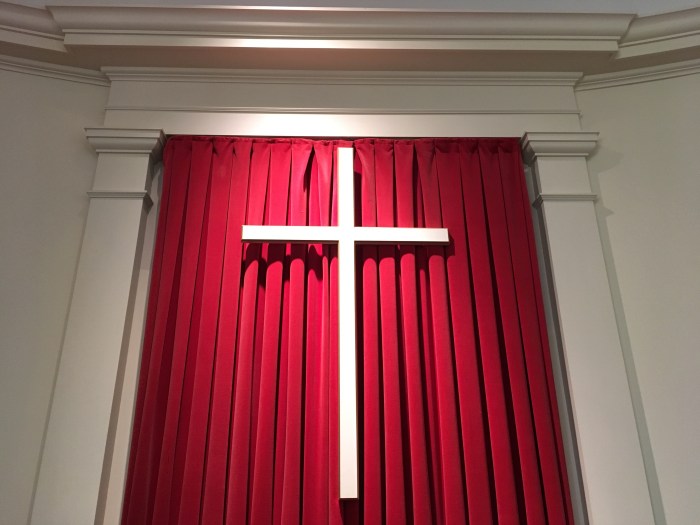
“He hurt!” Three-year-old Will stared at the print of the crucifixion by Matthias Grünewald I had purchased for my office. “That’s Jesus,” I said. As Will struggled to understand, his face contorted like the fingers in the painting. Jesus is the one who “loves Will,” who “loves everybody!” Who is this man who hurts? Will’s sullen mouth gave voice to the inevitable confession – “Jesus…hurt.”

The cross remains an enduring symbol of God’s love because it communicates, even to a toddler, that God’s love is not sanitized. The love poured out for us in Christ is dirty, naked, bruised, ripped open, and bloodied. It is a love that sympathizes with us in our weakness because it is a love that willingly endured our common weakness – death. God’s love hurts for us and with us.

The cross in our sanctuary is our reminder of this love that hurts. It inoculates us against the false perception that the ultimate cause of our hurt is God. When we look at the cross, we see the reflection of the cause – “for the wages of sin is death.” The cross reminds us that hurt and death were not original to God’s “very good” creation.

Hurt and death are our creations. Our sin is their crooked mold; our rebellion, their forge. “But God demonstrates his own love for us in this: While we were still sinners,” Jesus Christ crushed the mold with his broken body and doused the flames with his blood. The cross of Christ reminds us that the spear we created to pierce God’s side, God has beaten into a pruning hook. The cross reminds us that with his tears, Christ wipes away every tear; with his death, Christ makes death no more.

For the former things have passed away.” This love that hurts transforms our worship and our lives. The cross in our sanctuary stands in judgment over the false belief that our Sunday morning hour is simply about trying to “do better.” It mocks our vain attempt to say that our worship corresponds to any worldly wisdom. It suffocates our aspirations of power and might; it proclaims that God’s “power is made perfect in weakness.”

We comprehend that weakness in understanding that when Christ says, “Follow me,” he is leading us to the cross. And when Christ says, “take up your cross,” he does not bid us to come as spectator. We come as participants. Every Sunday, the cross in our sanctuary proclaims the promise of our baptism, “I have been crucified with Christ. It is no longer I who live, but Christ who lives in me.”

The way of the cross – despite its original intention – is the way toward life. When I showed Will the print of Grünewald’s resurrection, Will completed his confession: “Now Jesus feel much better!” The cross in our sanctuary proclaims this “much better” hope to us each Sunday: “For those who lose their life for my sake, and for the sake of the gospel, will save it.” Amen.

Sacred Spaces: Introduction

unnamed

A sanctuary is a sacred space. It is set apart for holy and life giving purposes. The psalmists often yearn to enter the sanctuary to worship God in his holy presence (Psalm 122). While Jonah is in the belly of the great fish—as he is attempting to flee God’s presence—he ironically sets his heart upon the sanctuary of God and finds comfort in the rest associated with being in God’s presence (Jonah 2).

The sanctuary is a place where people enter and experience something greater than the world has to offer. The sanctuary offers what no restaurant, state park, concert hall, pub, or even one’s own home could ever offer. Not even the baseball stadium can provide what the sanctuary of God offers. Though the Bible tells us that there is no place on earth we can go and escape the presence of God (Psalm 139), God’s people regularly enter into the sanctuary to pray, worship, hear the gospel, participate in receiving the gifts of communion and baptism, and to encourage fellow saints as we live in communio sanctorum.

The sanctuary is more than just a room with pews, a table, a few instruments, and lecterns. It is a dwelling place that tells the larger story of God’s activity in the world. The sanctuary gives a lens by which we see the world. As we observe the grace of God in sunrises and sunsets, by seeing majestic mountain ranges and breathtaking ocean fronts, in everywhere and every time in between, it is the sanctuary of God where we are reminded of the one who made the beauty of the world. It is the place where—during times of conflict, tragedy, and uncertainty—we are reminded of the ever-present and never-forsaking God and his sovereign providence over all creation.

When we enter the sanctuary, we must be focused on the promise of God for us. As Paul asks in Romans 8, “If God is for us, who could be against us?” From the wooden pew to the communion table, from the baptismal font to the pulpit, we are called to see the Word made flesh in Jesus. We are called to witness the salvation given us in Christ by faithfully pointing others to him.

Over the next few weeks, Pastor Sherrad and I will be reflecting on the various features of our sanctuary at Homewood CPC. Hopefully, these reflections will remind each of us of the ever-present and never-failing God who acted in Jesus Christ to bring us salvation and faith in every season of our lives. May we rejoice together. May we be reminded of the promise of God to us in Jesus Christ that nothing can ever separate us from the love of God in Christ Jesus (Romans 8). May we know we are forgiven in Christ alone. May we live boldly in the service of our Lord and Savior Jesus Christ. And may we rejoice when we see others come to know Christ and worship alongside the communio sanctorum in this sacred space. Amen.

Together in Christ,

Pastor Derek

Worship Christ. Grow in Christ. Serve Christ.

Welcome to the HCPC Blog!

As part of the teaching ministry at Homewood Cumberland Presbyterian Church, Rev. Derek Jacks and Rev. Sherrad Hayes provide short articles, sermon manuscripts, and essays to help deepen your study of Scripture and your relationship with Christ. In addition to baseball, Derek and Sherrad are interested worship, biblical and systematic theology, justice issues, and the redeemed messiness of life together in Christian Community.


Check back soon for a series on Sacred Spaces!