Blog

What is Your Name?

(For more information on this series, see the Introduction.)

Below is the manuscript of a sermon I preached on August 6, 2017 at Coker Cumberland Presbyterian Church in Coker, AL, just west of Tuscaloosa. (As with all the manuscripts I post, the actual sermon varied in places.) I had the privilege of preaching here several times last year as they are currently without a pastor. I had not been back since December, and it was very good to worship with this faithful congregation again.

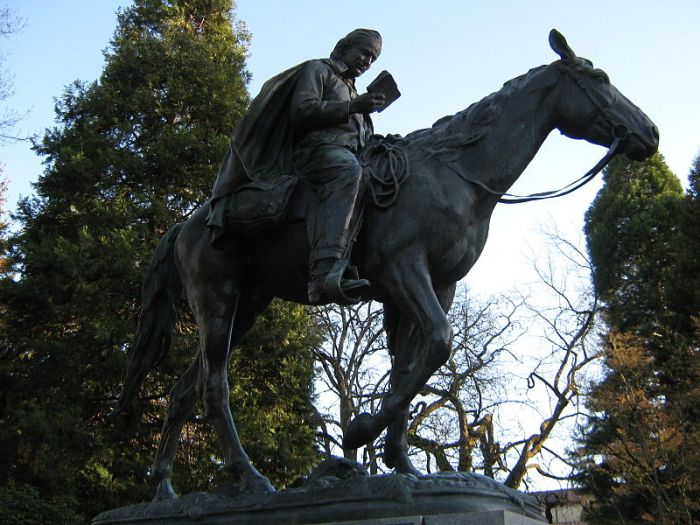
Image credit: Edward Knippers


“What is Your Name?”

Sermon Text: Genesis 32:22-32

Have you ever had a “dark night of the soul”? I’m sure for some of you, the question itself instantly takes you to a vivid memory of a particular time in your life. Maybe it happened for a whole season of your life. Maybe it was an actual night of your life, a night filled with anything and everything but sleep, a night where the dawn never seemed to come.

I’ve known a few nights like this – and, yes, pastors are by no means immune! There’s one night in particular I remember (and I won’t belabor the details now) from my time in Afghanistan as a company commander that I felt particularly anxious, and depressed, and completely alone. Those of us who have been around long enough have had one in some form or another. Maybe it was a long night spent at a hospital with a family member or a friend. Maybe it was a particular time when some sins you had kept secret finally caught up with you – and you were about to have to face some consequences. Maybe it was the night before a particular trial you kew you had to face the next day. Maybe it was a particular moment of doubt or frustration or even anger at God for some circumstance or other you had found yourself.

At the beginning of our passage today, Jacob is experiencing a dark night of the soul. It’s a night that begins with him full of anxiety, fearful that the consequences of his past actions will come to destroy him and his family. It’s a night that begins with him nervous about a particular event that he knew would happen the next day or at least very soon. It’s a night that begins with the stinging pain over a broken relationship with a family member – his own brother! – and the fear that comes with the uncertainty of how this relationship could possibly be restored – if it could be restored at all.

It is a night that ends with Jacob limping; he is permanently wounded from what would take place this night. But it is also a night that ends with Jacob receiving a blessing from God. It is a night that ends in triumph, not over God but with God. It is a night that ends in survival. And it is a night that ends with Jacob receiving a better name, a name that would mark the people of God forever.

Before his new name, Jacob was a trickster, even from birth. His mother, Rebekah, was giving birth to twins and Jacob’s brother, Esau, was coming out first. But Jacob reached out and grabbed his brother by the heel. And that’s what his name literally means, “he takes by the heel,” an idiom that means, “he deceives.” He supplants. He cheats! And almost every Genesis story of Jacob’s life in from his birth up to the scene in our text for today is about how he is able to trick or outsmart someone else, especially to the disadvantage of his brother, Esau. Even though they were twins and Jacob pulled him back, Esau was the older brother and heir since he was coming out of the womb first. But Jacob tricks Esau into selling his birthright for “a bowl of pottage” – some plain lintel stew. Later, Jacob tricks his own father, Isaac, on his deathbed! He pretends to be Esau in order to receive a blessing from his dying father and gain the inheritance that should be Esau’s.

After this episode, Esau is understandably upset! On the advice of his mother, Jacob flees to work for his uncle (and future father-in-law), Laban. Laban tricks Jacob, Jacob tricks Laban, and Jacob has to flee again. Though Laban does overtake Jacob on the road and they are able to be reconciled as family, there is one looming problem Jacob knows he must face as he journeys back home.

Esau is waiting for him.

Esau is waiting for him with a small army. And Jacob does not know if Esau – even years later – is still mad enough to kill him. And it’s not just Jacob alone anymore; it’s Jacob and his wives and his children and the great amount of wealth he’s acquired by working for Laban. Jacob devises one of his tricks to try to persuade Esau to forgive him, or at least spare him. But even Jacob knows this is not enough. He prays to the God of his father, the one true God, who has promised to bless him and who has made a covenant with Jacob (the continuation of the same covenant God made with Jacob’s father, Isaac, and grandfather, Abraham). Jacob prays to the only One who can help him in his time of anxiety, the One who would meet him in his “dark night of the soul”:

O God of my father Abraham and God of my father Isaac, O LORD who said to me, ‘Return to your country and to your kindred, that I may do you good,’ I am not worthy of the least of all the deeds of steadfast love and all the faithfulness that you have shown to your servant, for with only my staff I crossed this Jordan, and now I have become two camps. Please deliver me from the hand of my brother, from the hand of Esau, for I fear him, that he may come and attack me, the mothers with the children. But you said, ‘I will surely do you good, and make your offspring as the sand of the sea, which cannot be numbered for multitude.’”

Jacob sends his family on ahead of him, and he remains there to pray. Alone.

And God answers his prayer by wrestling with him!

It’s okay for us to point out strangeness of this passage we’re looking at today. There are certainly some aspects of this passage that will make us ask questions, questions for which it is very hard to get satisfactory answers. Here God acts in ways I don’t think many of us expect him to act. We often talk about how God acts in mysterious ways – ways we can’t comprehend or know or understand – but in this passage, God acts very strangely. One of the things that’s particularly frustrating in our dark nights of the soul is our lack of understanding of what in the world God is doing! Why is God doing what he is doing or allowing what he is allowing? Why does God seem to be fighting me?

The strangeness of passages like this are reminders of the strangeness of God himself. The word we have for that is “holy.” God is completely other. God is God and we are not. (Thank God!) And while the knowledge that God is holy may not be comforting in and of itself . . . (Quite the opposite, actually! Jacob is amazed that he sees God face to face – and lives!) . . . when we put this knowledge that God is holy up against something else that we know, the result is deeply comforting. God is indeed completely other, completely holy. But God in Jesus Christ is completely human as well. God is holy, but God is for us. And if God is for us, who can be against us? Indeed, even in the things God does that seem strange to us, can only be for our benefit. Because God in Jesus Christ has shown us that God does not look at our dark nights of the soul from a distance, like a dad watching his kid’s wrestling match from the bleachers. In Jesus Christ God meets us, gets dirty with us, endures suffering and trials with us…

…And even wrestles with us!

For Jacob this is quite literal. Even though the text is written in the third person, the perspective is not from some narrator. The scene unfolds as if we, the readers, are Jacob. Completely alone, this mysterious man approaches Jacob, and starts fighting him! They fight all night long, which is a bout of endurance and stamina that would put Rocky Balboa to shame! The man sees that he cannot prevail – Jacob is too stubborn to give in. So the man, whom we will soon learn is God in some mysterious way, touches Jacob’s hip and puts it out of socket. He does not strike – the word here doesn’t mean that. He touches. It could even be translated, “he barely touches.” The man could not overcome Jacob, but the man could displace a hip with his finger! Yet, even injured, Jacob continues the fight. He will not let go of the man. This mysterious man wants his identity to remain a secret, so he demands to be let go before the rising sun can show his face. And Jacob, knowing that he is fighting a man who is somehow more than a man, asks for a blessing.

In the narrative of Genesis, this makes perfect sense, but to us this might seem like a strange thing to ask. In the time of Genesis, a blessing meant something. (Now, it’s a hashtag on social media!) In the time of Genesis, to receive a blessing – always from someone superior to you – meant some type of material or spiritual gain for you. And in the context of this passage, that meaning might seem a little pretentious for some of us – I confess it does a little for me. In a lot of our churches we react so strongly (and rightly) against the prosperity gospel, so strongly against things that proclaim only the “good news” of health and wealth, that the idea of asking someone – especially God! – for a blessing seems maybe a little self-centered.

But here it is a marker of Jacob’s faith.

Jacob does not give up, he does not turn away, but continues to wrestle this man – continues to wrestle with God! – until he receives the blessing. The blessing he receives is not what the health and wealth gospel preaches. It is a blessing of life-long obedience that requires persistent faith. It’s a kind of faith that Eugene Peterson would call, as he does in his book on discipleship, “a long obedience in the same direction.” It is what we Cumberland Presbyterians – and other members of the Reformed tradition – call the perseverance of the saints.

Anyone who has ever participated in some kind of fighting sport – or even been in a real fight! – can tell you that only a few minutes of fighting are exhausting. That’s why these sports separate these confrontations into rounds with breaks in between. Jacob fought all night long and still did not turn aside. How is it Jacob prevailed over God? He did not abandon God but stayed tightly latched to God – even in the pain of a dislocated hip.

And in a strange way, I am convinced that the only way he could do this was because God was with him. They were fighting, certainly with one another, but the fight was also a fight together. The circumstances of Jacob’s worry, the prospect of Esau coming to kill him, faded away in the midst of this wrestling match with God.

The psalms are prayers to God that say some things that would make a good Christian blush. They express the depths of human anger, worry, depression, anxiety, and fear in a profoundly blunt way. And they are inspired by the exact same Holy Spirit that inspired the rest of Scripture. When in the depths of our human suffering it does us no good to pretend, to hide our emotions, and to act like everything is fine. That is a recipe for self-destruction. The psalms teach us – and even Jacob’s fight with God teach us – that we must turn those emotions upward and trust that God is strong enough to take it! Because he is. And though it may seem like we are struggling with God, God is not angry at us, but remains for us.

Because the real wrestling match between God and human beings was finished by the fully-human, fully-God Jesus Christ. He is God in the flesh, come to earth to help us in the dark night with the consequences of our sin came riding toward us like Esau’s army. And when we fought him and tried to kill him, he laid down his life for us willingly.

And he rose for us triumphantly.

When Jacob fought God and prevailed through his persistence, he was blessed. He was no longer named Jacob – “he deceives.” He was named Israel, “he struggles with God.” The place is renamed Peniel, “the face of God.” Because Jacob had seen God face to face and lived.

Brothers and sisters, we have seen the holy God face to face in Jesus Christ – and lived. Like Jacob, he has given us a new name. The spelling of our names may be the same, but Jesus Christ has changed forever who we are. In Jesus Christ, because of Jesus Christ, this holy God calls us, “Child!” In Jesus Christ, because of Jesus Christ, and by the power of the Holy Spirit of God himself in us we cry out, “Abba! Father!”

When the dark nights come, we can cry to our Father out of the depths. He has given us new hearts, new selves, new names. And though we may walk with a limp after those dark nights (and, indeed, may never lose our limps in this lifetime) we know that we are faster limping with God than we are sprinting on our own strength.

And when the dark nights come, we know that Jesus Christ, our savior and our Lord, has limped there ahead of us. Even in triumph over the grave, he still shows the wounds and scares of his wrestling with humanity. And if he names us his friend, and he does, we can know that no night – no matter how dark – will last forever. He remains here beside us, strengthening us to endure, so that we can see the blessing he has promised to give us in the morning. Amen.  
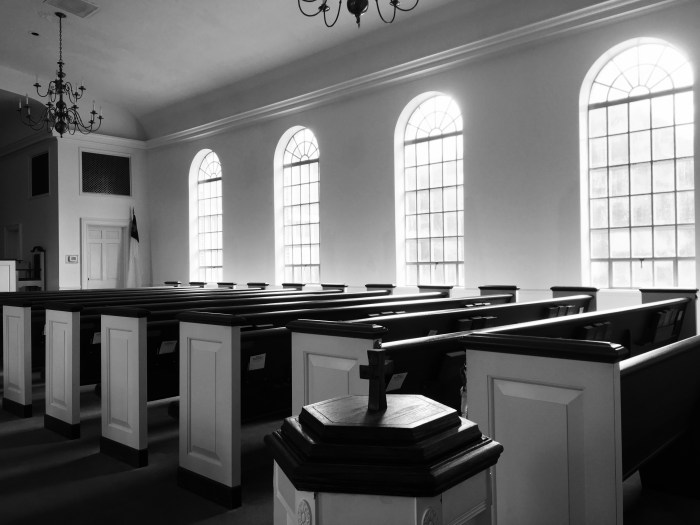
Sacred Spaces: The Windows

Almost every day when Will and I leave the house, I hear the same cheer from the backseat of my car: “The sun came up!” As the sunlight shines on him through the windows of our car, warming his bright smile, he continues his celebration of the new day. He invites me to participate. “Daddy, look!”

“I see! God made the sun come up!”

“Thank you, God,” he says, and our liturgy is complete.

Three-year-olds are experts at seeing the miraculous in the mundane. In this series, Derek and I have already covered the parts of our sanctuary you might describe as the most significant: the cross, the candles, the table, the bible, and the pulpit. The rest of our series (with one exception) now shifts decidedly to the common: some flowers, windows, wood, books of music, a gathering space, doors. Early on, the Reformed church rooted out any hints of idolatry in its worship spaces. The result is simplicity. I find worshipful joy in the majesty of Catholic cathedrals, the icons of Orthodox churches, and even the fine altars of fellow Protestants whose traditions chose not to strip their sanctuaries.

But there is beauty in the simple, too. Our God is God of the common. As we say in our confession: “God exercises providential care over all creatures, peoples, nations, and things…. God ordinarily exercises providence through the events of nature and history.” (1.13 & 1.14) God’s sovereign, providential care over all creation – even those acts we see as common, everyday occurrences – are still miraculous works of God’s abundant grace. It is common grace, poured out on all humanity, by God who “makes his sun rise on the evil and on the good.” When we worship, the sunlight that passes through our windows to warm our faces is the reminder that God is God of the whole world. And he cares for the whole world.

But the windows are not made of one-way glass. Even greater than this common grace we see in the rising sun is the grace extended to us by the resurrection of the Son of God, Jesus Christ. This grace is greater, but it is not for us only. It is for the whole world. When Christ died, the curtain in the temple that separated the common people (and even most priests!) from gazing directly into God’s holy presence was torn in two.

Our windows are tall, unstained, and the natural light of God’s common grace shines in on us during worship – just as it does on the whole world. But our light – the light given to us in the grace of Jesus Christ and for his glory – radiates outward as well. We cannot hide Christ’s light under the bushel of the chapel! As we worship, and as we leave worship, we proclaim – with Will’s enthusiasm – the words of the psalmist: “This is the day that the LORD has made; let us rejoice and be glad in it.

Wish You Were Here


This morning as I was driving to the church I heard a song that I had heard many times in my life, but it was like this morning was the first time I REALLY listened to the song. The band Incubus is a hard rock band that I am sure most of you have never heard of, but their song “Wish You Were Here” intrigued me for some reason. 

When I arrived at the office and opened my Bible to read the sermon text for this coming Sunday (we will be in Acts 10 for those interested). Acts 10 tells us the story of Jesus correcting Peter about matters of cleanliness and gospel proclamation. As I read this text, that song that I listened to anew as if for the first time earlier echoed in my mind. And then I decided to look up an explaination of the meaning and the context of that song by Incubus. Vocalist Brandon Boyd told MTV.com several years ago that the song “was about (him) acknowledging a very brief moment in (his) life and in (the shared) experiences with (his band) as they made their (“Morning View”) album.” He further said, “I wish that I had somebody to (say), ‘I love you, man.’ I was wishing that there was someone there to share that moment with.”

Boyd longed for a connected community with substantive friendships that celebrated their time together making that album. He was reflecting what so many people desire: joy-filled hope within a community of people with shared experiences and life together.

As we prepare for Sunday, know that God will be placing you this week in places surrounded by people who long for a genuine relationship. The Holy Spirit stirred within Cornelius a desire to belong in the fellowship of God. Had Peter maintained his stubbornness about who was worthy of hearing the Gospel, Cornelius and other Gentiles in Caesarea Maritima may never had heard the Gospel (or maybe they would have, who knows?). But it is not a question we have to answer because Peter was obedient to God’s call and faithfully went where the Lord led him to carry the Gospel to all the world. As a result, people were added to the family of the Lord and all had the community gifted to them by God so that they could all share the joy-filled hope of Christ Jesus.

Are you obeying the call of Christ and faithfully pointing those entrusted to you by God himself to know Christ and enjoy him forever?  

If you are reading this and are looking for a genuine community of faith, we wish you were here. We have a place for you at Homewood CPC!

Sacred Spaces: The Flowers

“And which of you by being anxious can add a single hour to his span of life? And why are you anxious about clothing? Consider the lilies of the field, how they grow: they neither toil nor spin, yet I tell you, even Solomon in all his glory was not arrayed like one of these. But if God clothes the grass of the field, which today is alive and tomorrow is thrown into the oven, while he not much more clothe you, O you of little faith? Seek first the kingdom of God and his righteousness, and all these things will be added to you.” Matthew 6:27-30, 33

Nothing can suffocate like anxiety. Even though Jesus tells his followers to not be anxious, good, faithful Christians battle anxiety. Are these Christians being disobedient? Is their faith weak? The answer to both these questions is a resounding “NO”. Anxiety is a natural part of life. When we encounter unknown situations with unknown realities, we will have feelings of caution and concern converge within the soul and create a tension that can be incredibly intense and frightening to an individual. We all handle anxiety differently. But we should all hear the words of Christ about anxiety the same. We ought to trust God.

One enemy to the people of faith is forgetfulness. How many times in the Scriptures do we see God’s people forget his grace and mercy for their lives. From the Garden of Eden to the Exodus wilderness to the shores of the Sea of Galilee to the remote island of Patmos, Holy Scripture tells us of how life will throw so much at us that we will forget the still small voice of the Spirit of God. We must not forget the promise of God to us in Jesus Christ: “I will never leave nor forsake you.”

Allow me to pull the curtain back on my life for a moment. I am no stranger to anxiety. It is a reality for my life. I don’t understand it. I cannot control it. The only thing I know is that when anxiety strikes, it hits hard. Some may think less of a pastor because he or she has anxiety, but friends, know that more pastors have to fight against anxiety than you realize. My battle with anxiety began over a decade ago when a good friend of mine was diagnosed with cancer. I had family members diagnosed with cancer before, but when my friend was diagnosed, something about that was different. I had a hard time understanding why this friend and his family had to endure this disease. For perhaps the first time in my life, I had to deal with the tough questions of suffering in the world. And the only thing I knew to do was look to Jesus in prayer, worship, and faith. This led me to Matthew 6 and our Savior’s words about being anxious.

He talks about birds and flowers. He calls our attention to beauty and splendor of God’s creation. Jesus reminds us that God takes care of animals and flowers with such great attention that we should take note and rejoice. Even though there are storms and dangers to the natural world, God still nurtures. He grows. He clothes. He blesses. This is our God. He is so intimately involved in his creation that neither storm nor fury can separate us from him. How often do we forget this?

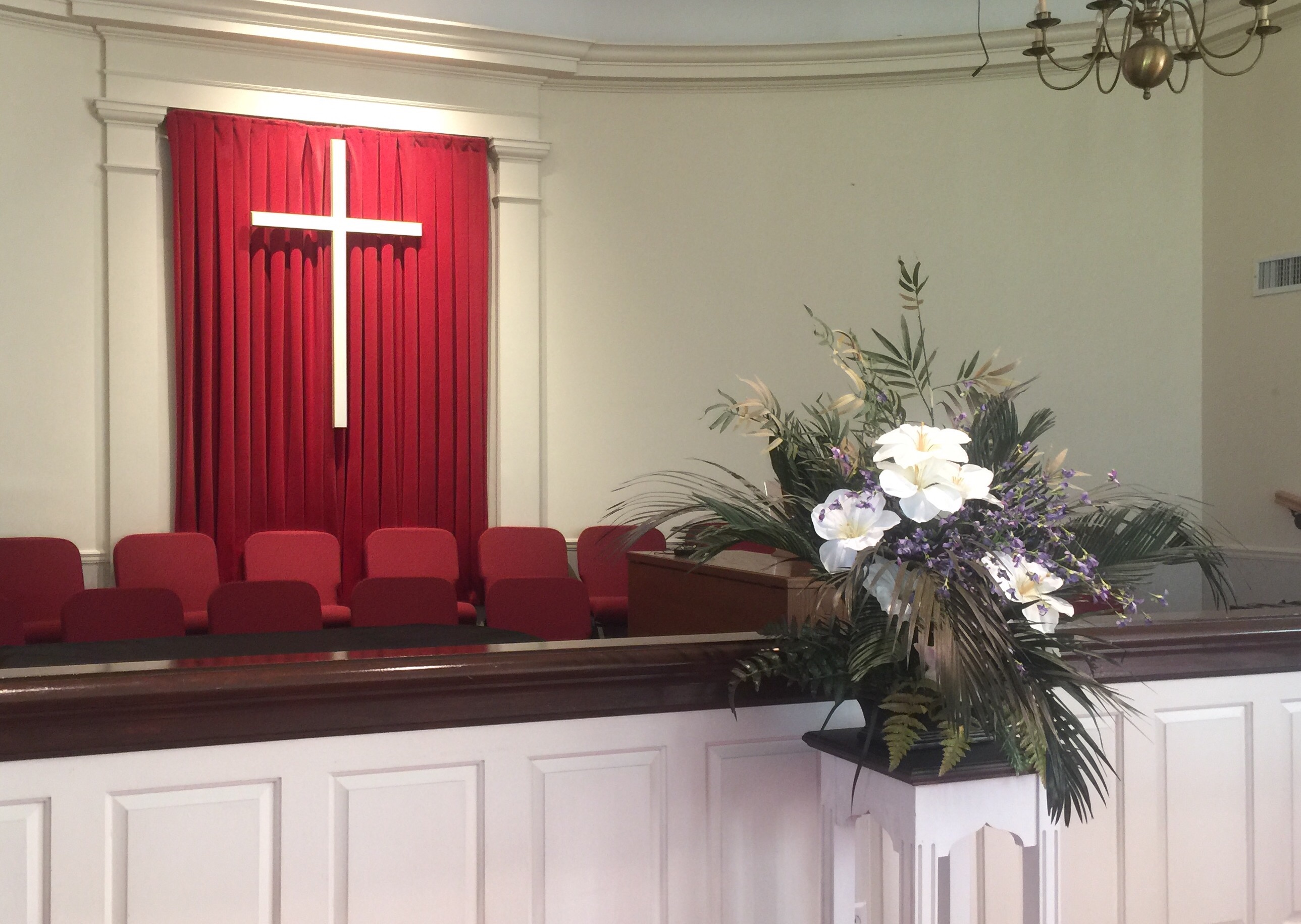
This leads me to consider the flowers that are so carefully placed upon the chancel each week. These flowers remind us each and every week that whatever may befall us, we can trust God to be faithful in all seasons of our lives. When we celebrate, God celebrates with us. When we mourn, God mourns with us. When we are anxious, God comforts us with his presence. Just as he provides everything for the flowers of the field, God provides for us in our time of need. He knows exactly how to care for us.

May we be reminded of this great promise. Romans 8 tells us that nothing can separate us from the love of God in Christ Jesus. Nothing. So let us cast our cares and anxieties upon Jesus and rejoice, even when we have lost control and cannot understand what’s happening in the world. Amen.

A Place For You

We have a place for you at Homewood CPC. That is not just a nifty catch phrase. It is the reality in which we live. Homewood CPC is a place that literally has a place for you. In so many ways, churches and organizations want you to come in and adapt to their standards and guidelines. At Homewood CPC, we truly believe that God has knit this community together knowing that every person who comes to Homewood CPC has a place to exercise the gifts given them by Christ Jesus. We are a place that values the gifts of God in the people of God.

This is the standard to which we all hope to live–we have been blessed to be a blessing to others. So our question each week at Homewood CPC is, “How can we as individuals be a blessing to the world around us?”

This means that we need you. It is so easy for us all to forget this reality. Whenever we have a worship service and you are not in attendance, the body lacks. Whenever we have a bible study or fellowship dinner, we truly miss those who are absent. God created us to be the body of Christ and to live fully together to the glory of His name. Let us never neglect this calling, for when we neglect it, we neglect God and His Word.

Sherrad and I hope to see you all this Sunday. We both know that life can be busy. But we also know that the life rightly ordered is anchored in the person of Jesus Christ. Jesus Christ is the Way, the Truth, and the Life. Should we all not make it our priority to encourage one another as we follow Christ together? As we encounter the busyness of life, may we encounter it together.

The witness of Acts is clear: when the Christian community faithfully gathers with one heart and one mind to study the scriptures, to break bread together, to pray with and encourage one another, and to care for one another in our times of need, God adds to the number of that community. If you don’t believe me, check out Acts 2 and Acts 4.

This is our call. This is our desire. This is our purpose. At Homewood CPC, we have a place for you. If you haven’t attended in a while, we invite to come claim your place and let’s see how God grows us for the glory of Christ Jesus.

Defining Moments

Defining moments in sporting events are critical. During the 2016 World Series, the Cubs and Indians played a classic series that led to something no one ever thought possible–the Cubs won the World Series. As a lifelong Cubs fan, I had endured 32 years of disappointment and jokes directed toward the “lovable losers” of baseball. But 2016 was different. A team filled with young talent and wise leadership made the most of their opportunity and took charge of the moment at hand.

When Game 7 began, the Cubs opened the game with a lead off home run by Dexter Fowler. Later in the game, the old veteran David Ross cracked a home run. As big as those two moments were, they were not the defining moments of the game. No, the defining moment of the game came not because of a stellar play on the field, but instead, when the rain began to fall after the 9th inning ended with the game tied 6-6. I truly believe that the Indians would have won the World Series had that rain delay not happened. What was the defining moment? During the rain delay, another veteran who had struggled with his bat during the entire postseason, Jason Heyward entered the locker room with his Cub teammates and delivered and impassioned speech that reminded the team of who they were and what was on the line in that game. He appealed to the team’s sense of purpose and talent. He reminded them that they had what it took to finish the game and end a 108 drought for the “lovable losers”.

When the game resumed around 20 minutes later, the Cubs came out and scored two runs in the 10th and held on to win the series 8-7 over the Indians.

The defining moment of the World Series was a speech during a rain delay from a struggling veteran. Incredible.

As we live our lives, we have defining moments. These moments are important for us as we attempt to navigate this life of faith. On Sunday mornings at Homewood CPC, we have opportunities to come to church and hear a message from God’s Holy Word reminding us of who we are, who God is, and what God has done for us and called us to.

The sermon each and every week hopefully provides each of us with the truth of Jesus Christ in order for us to finish well. Paul often times refers to life as a race, and he encourages us all to finish well. If we want to finish this life well, we must focus upon Christ and his call for all our lives. Any person who stands in the pulpit at Homewood CPC is aware of the importance of the centrality of the defining moment in all of creation. This defining moment is Jesus Christ. How do we respond to him?

I think I can speak for both Sherrad and myself here, but we know and understand that every sermon cannot be “the greatest sermon ever preached”. We wrestle and struggle each week with obediently proclaiming the Gospel to a community of faith in an imperfect world. Through all our weaknesses and limitations, we always strive to proclaim the only thing worth proclaiming–Jesus Christ and him crucified. As a result of that truth, we hope to lead and equip the members of HCPC in the faithful execution of Christ’s commands. We are called to love one another more and more.

We are called to share the love of Christ with all we meet. We are called to worship and know our place in this world. And we are called to trust in Christ alone for our salvation, our purpose, our strength, and our all.

What will we do with the defining moments on Sundays? Only you can answer that question.

Sacred Spaces: The Pulpit

I’ve lost track of the number of times my wife has told me, “I love you.” Next Friday, we’ll have been married for ten years. If you add in the six years we were dating (which we’ll also celebrate this month), she’s been telling me she loves me half of my life. Her love comes unconditionally. She’s taken the promises she made to me at our wedding seriously, loving me even in spite of parts of me that aren’t very lovable.

But her unconditional love does not mean passive acceptance. It’s a love that leads to transformation. When she says the words, “I love you,” I am reminded of who I am to her as well as the things she has endured with me and for me. I am reminded of who she is. In her proclamation, I remember that I love her too, that I have made my own vows to her, and – stirred by this reminder of her love – I am compelled to abandon those less-lovable parts of me so that I might love her more.

When the preacher stands in the pulpit, Jesus Christ proclaims his love for his Bride, the Church. When the preacher stands in the pulpit, the Holy Spirit fills those gathered with the love of Christ. When the preacher stands in the pulpit, by the Holy Spirit and in the love of Jesus Christ, we cry out, “Abba! Father!”

As the Bride of Christ, this love of Christ is the proclamation we needed to hear when God first wooed us. The proclamation from the pulpit is never one of simple moralism, never one of mere “second chances,” never one of conditional love. It is a proclamation of God’s work. It is the reminder that God found us when we loved being lost, died for us when we loved death, rose for us when we rejected life, and sits in power for us even as we reject God’s power.

As the Bride of Christ, this love of Christ is the proclamation we need to hear from Christ again and again. The proclamation from the pulpit is never one that succumbs to the whims of time. It is timeless and timely. The lectern and the pulpit are inseparably intertwined. The words of Scripture spoken at the lectern are the timeless wedding vows of our Lord. We know what his promises are because he has given us his word in Scripture; we know that his promises are true because the eternal Word, Jesus Christ, speaks them. The pulpit is where we hear those eternal promises in the here and now, to us and for us. And we are transformed. The love of Christ that met us without conditions now conditions us!

And as the Bride of Christ, this love of Christ is the proclamation we make to the world as the Holy Spirit works in us, through us, and beyond us. The proclamation from the pulpit is never meant to stay there. Amen.

Sacred Spaces: The Lectern & Bible

FullSizeRender 9

In Dr. Robert Smith’s preaching class at Beeson Divinity School, he often tells his students that the greatest part of any worship service is the pure reading and hearing of the Word of God. Why is this true? We call the Bible the Word of God because it reveals to us the One Word of God, Jesus Christ. This revelation ought to lead the worshipping community into deeper fellowship with God and one another. Now I realize that there have been many arguments regarding the reliability of the Scriptures. Is it infallible? Is it inerrant? Is it inspired? I tend not to get too caught up in these arguments because at the end of the day, the Bible, as Cumberland Presbyterians see it, is “the infallible rule of faith and practice, the authoritative guide for Christian living (CP COF, 1.05).”

We have to be honest, though, and admit that the Scriptures have been maligned to do great evil in the name of Jesus Christ. From the Crusades to chattel slavery in America to the Holocaust during WWII to abusive situations in marriage, there is great harm that sinful humanity can inflict upon one another using an authoritative text. This evil shouldn’t surprise us at all, seeing that Satan twists God’s Word all the time in the Bible as he tempts Eve, as he tempts Jesus, and we all know from our own battles with temptation. The question that the serpent asks Eve in Genesis is the same question Jesus faced, as do we. That question: “Did God really say?” Sin in many ways is the result of us answering with an emphatic “NO!” to that question.

(A final brief word about the Bible. As Christians, it is important for us not to get caught up in speaking too strongly about the infallibility/inerrancy/inspiration discussion. Any discussion along these lines can very quickly lead us into a place where we think we have authority OVER the Bible. We are not the judge of Scripture–we never can be. We sit underneath the Bible and it reads us more powerfully than we read it. When we read Scripture, it is imperative that we do not get into the habit of picking and choosing what is and isn’t true or false. Scripture is the revelation of the Gospel of Jesus Christ. When the Bible speaks, it speaks into a sinful humanity and should cause us not to quarrel with what the Bible says to us about our sinfulness. Instead, the faithful child of God receives the word of God in Scripture as his or her looking glass into the realities of our lives. So, rather than argue what the Bible is, the proper dispensation for the Christian is to humbly receive the commands of God and allow the Holy Spirit to conform us to the image of Christ. This is what brings glory to Christ in our lives.)

We know in 2 Kings 22-23, that when the Book of the Law was found in the Temple, King Josiah renewed the covenant in the presence of the LORD. He vowed to follow the LORD, keep his commandments, statutes, and decrees with his entire being. Then the people of God followed and pledged themselves to the covenant with God to be a faithful people. Josiah ordered the people of God to celebrate the Passover and observe the holy call of God. He destroyed the altars to false deities and returned to the word of the Lord as his national standard. We often see the pure reading of the word of God cause the people of God to repent and return to faithfulness to God.

Paul also instructs Timothy in 2 Timothy 3 to be ready in season and out of season to proclaim the word of God. He tells Timothy that all Scripture is God-breathed and useful for all teaching, preaching, correction, and rebuke. The Bible contains within its pages the standard of God by revealing to us His character and saving activity in Jesus Christ for a sinful humanity.

Our task as Christians is to faithfully encounter the revelation we have in Scripture, repent of the ways we have done violence to others when we misuse God’s Word, and seek the faithful adherence to the commands of God. As another Beeson professor, Dr. Osvaldo Padilla, cautioned us all on the first day of Exegesis of Colossians, “You current and future preachers of the Gospel need to understand that the Bible contains the words of life and death. Do not take your task lightly as a preacher. People’s eternity depend upon the proclamation of the Gospel.” Wow! The proclamation of the Gospel has the power of life and death Allow that to sink in. May God have mercy upon all preachers and teachers who work to communicate the truths of the Gospel from the Bible. Lord, have mercy!

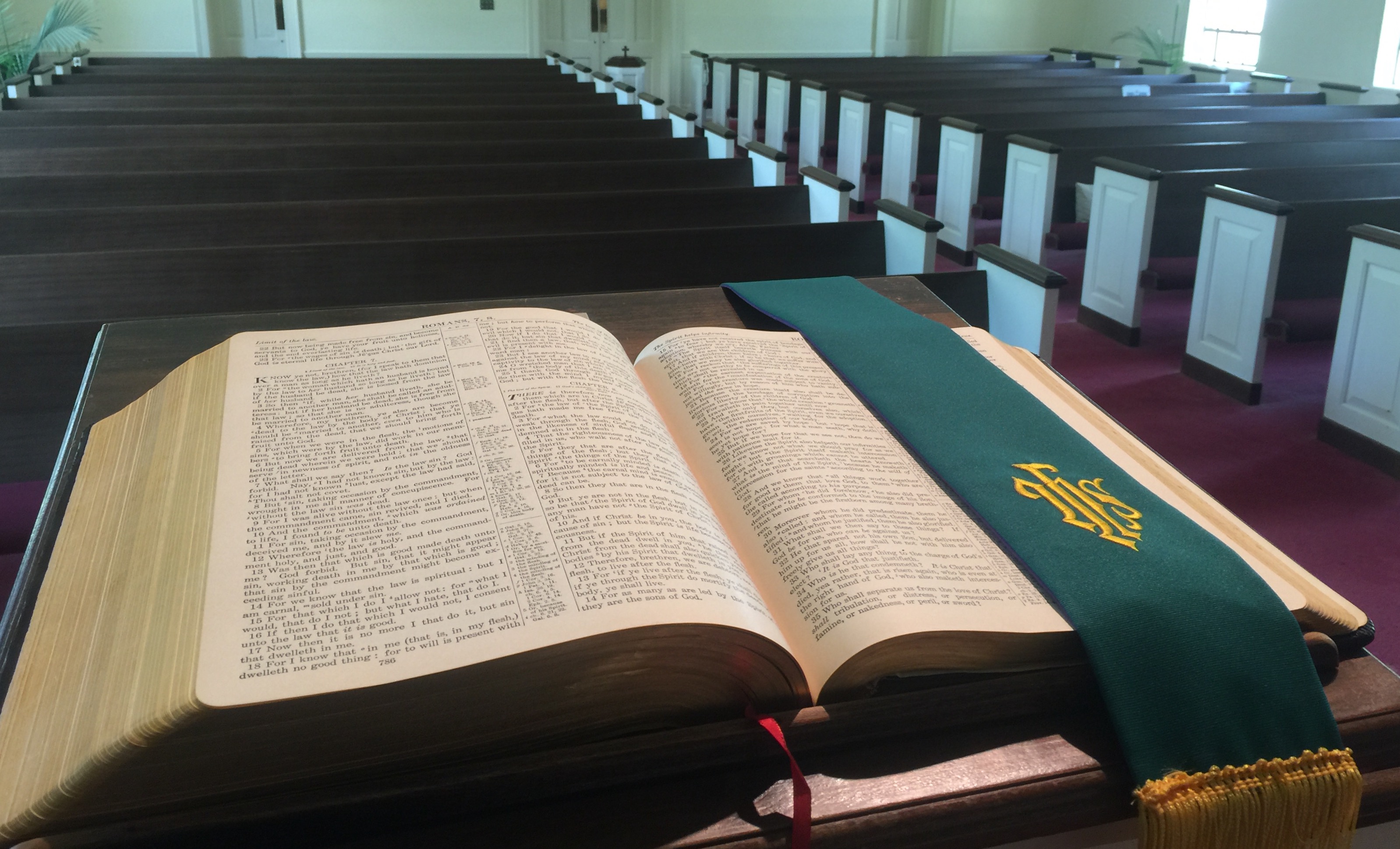
In our sanctuary, we have a Bible sitting atop a lectern on the chancel platform. The purpose of this arrangement may seem to be decorative, but rather, it communicates to us abiding presence of God in His creation. The Bible atop the lectern reminds us of the importance, beauty, and revelation of God to us. (Note: As Christians, we don’t worship the Bible. As yet another Beeson professor Dr. Mark DeVine would say, “The Bible is not the fourth person of the Holy Quadrinity!” It is important to make this distinction. We do, however, need to understand and take the Bible at its word when it reveals to us the person of Christ and our sinfulness.) The lectern is the place from which the people of God hear the public reading of Holy Scripture. As we hear the great accounts of God’s interactions through Jesus Christ with Adam, Eve, Abraham, Moses, David, Isaiah, Malachi, Mary, the twelve disciples, the Apostle Paul, along with all the others, we hear the story of a loving God pursuing his fallen creation. Even in the difficult sections when we read of Sodom and Gomorrah, the violence in the Book of Judges, and the enigmatic Revelation, we have a glorious truth of a God who is holy, just, and true to his promise. These events in the Scripture remind us that our God is a God who is never far from us. He has promised never to leave nor forsake us. He has even loved us so much that he gave us his Son, Jesus Christ, to save us from sin and death. We do great damage to the word of God when we treat it casually. When Scripture is read in faith, it presents with opportunities to worship faithfully, to serve God obediently, to trust Christ more deeply, and understand the presence of God in our lives continually.

The next time you see the lectern and Bible at HCPC, rejoice in the fact that, as Isaiah 40:8 affirms, “the grass withers and flowers fade, but the Word of our God will stand forever.” What a beautiful reality. Amen.

Life after Death

(For more information on this series, see the Introduction.)

Below is a sermon I preached at West Point Presbyterian Church in West Point, GA and Lebanon Presbyterian Church three miles north of Lafayette (pronounced “lah-fet” if you’re from Chambers County), AL on June 25, 2017, the Third Sunday after Pentecost. 

West Point Presbyterian is the church I attended from the time I was maybe five years until I moved to Birmingham after college. I was confirmed in this church. I was married in this church. I preached my first sermon in this church. It was founded in 1837. The “old” building straddled the Alabama-Georgia line; the pastor preached from Alabama to the congregation in Georgia. A “cyclone” destroyed the “old” building in 1920 while the elders were at a meeting, killing one. In 1923, the “new” sanctuary was built, and new additions have been made over the decades, most recently in 2014. The church is part of the Presbyterian Church (U.S.A.), though they are in the process of trying to leave and join the new ECO Presbyterians. Their pastor, the Rev. Jerry Ledbetter, grew up Baptist, was ordained Methodist, and has served this Presbyterian church since 2003 (the same year I graduated high school).  

Lebanon Presbyterian Church is a country church founded in 1843. Though the building is well kept and has several modern additions, it reminds me of some of the churches I’ve seen at Cades Cove while on vacation. I’ve only preached here once before, but it’s perhaps the most intimate place I’ve preached. They do not have an installed pastor, but Jerry frequently serves as their pulpit supply. In the middle of this service, my mind completely drew a blank during the Apostle’s Creed (which wasn’t written down) and led to what was probably the most awkward moment I’ve ever had in a worship service. I had memorized it as a child, and I have said it thousands of times from memory. But I still forgot it in the middle of leading worship . . . So, my fellow Christians, if you ever wonder why a pastor seems to be reading the Apostle’s Creed or the Lord’s Prayer instead of reciting it from memory – that’s why. It’s not that he or she doesn’t have them memorized; it’s that they’re too important to mess up!

Friends from HCPC – forgive me for the extended Bonhoeffer quote. Though I’ve preached it to you several times . . . I hadn’t to these good folks!


“Life after Death”

First Reading: Romans 6:1-11

Sermon Text: Matthew 10:24-39

There is a tendency in our Christian life to want to stay near the cross – but not too near. We know that we should not be like Peter who flees the cross after Jesus is arrested and denies Jesus three times. We know that – as difficult as it would be – we kind of want to be like one of the Marys or John, who stayed with Jesus until the cross.

No one wants to be the criminal crucified alongside him.

We like the hymn – and don’t get me wrong, it’s good, and it’s one of my favorites – “Jesus keep me near the cross / there a precious fountain / free to all, a healing stream / flows from Calv’ry’s mountain.” I doubt many of us have heard the one we sang earlier today: “Jesus, I my cross have taken, / all to leave and follow Thee; / destitute, despised, forsaken, / thou, from hence, my all shall be.”

We say – very rightly – that Jesus on the cross has done what none of us can do. We say – correctly – that we are reunited with God only through the cross of Jesus, his bearing of our sins on the tree as a man accursed, through his taking of our place. But too often, when we understand our salvation by grace through faith alone, we forget what John Calvin said, that “the faith that saves is never alone.” We forget what Luther said, that “idle faith is not saving faith.” Too often, when we understand that God has already done everything to save us, and that we can do nothing to save ourselves – all correct statements! – that this is an invitation to a discipleship where we do nothing.

And these misunderstandings make us scratch our heads and try to explain around very difficult passages in the New Testament like the words from Jesus this morning, or the words from Paul we heard earlier, that in our baptism we were baptized into Christ’s death. It’s hard for us to understand Paul when he says that our old self was crucified with Christ. We think Paul gets a little extreme in Galatians when he says, “I have been crucified with Christ. It is no longer I who live, but Christ who lives in me.”

No, we all want to be near the cross witnessing and thankful for what has happened for us and on our behalf. No one wants to be the thief – even if Jesus promises him paradise.

Because we forget the words of Jesus – who has indeed done everything for us, lest any of us should boast – that we are not greater than him. If he was slandered, persecuted, and killed, how can we think that we are immune from those things.

And that’s the gist of the three-fold analogy that Jesus uses in the beginning of our passage for today in verses 24-25. At the start of chapter 10. Jesus is getting ready to send the 12 disciples – the 12 students – out on their own. They are to go out into “the lost sheep of the house of Israel,” proclaiming the kingdom of heaven, healing the sick, raising the dead, cleansing lepers, and casting out demons.

Not exactly a demanding job description, is it?

But more than the difficulty of their task, Jesus tells them that they will face something that they haven’t really faced yet – persecution. Sure, the Pharisees have bad-mouthed their teacher. But how are they to understand Jesus when he says, “Behold, I am sending you out as sheep in the midst of wolves”? Or, “Beware of men, for they will deliver you over to courts and flog you sin their synagogues, and you will be dragged before governors and kings for my sake, to bear witness before them and the Gentiles?” Or “Brother will deliver brother over to death, and the father his child, and children will rise against parents and have them put to death, and you will be hated by all for my name’s sake”? The disciples left everything to follow Jesus, but I don’t know if this is exactly what they signed up for!

Anticipating that his students might need some clarification Jesus gives them the three-fold analogy. They would have known the first from other Jewish teachers – a student can’t surpass the teacher. If the teacher has taught the student as much as he knows, and the student is like the teacher, that’s enough. The teacher has done her job. But a servant – or more precisely – a slave? They didn’t have the help from Paul’s letter to the Romans where, in chapter six, Paul explains that one is either a slave to sin or a slave to righteousness. They didn’t have the help of Paul in his first letter to the Corinthians that those who are freed when called are slaves to Christ. What kind of relationship exactly was Jesus describing here?

But before elaborating on that further, Jesus’ analogy goes further for the disciples. If he is the master of the house, and they are his slaves, they can’t escape the slanderous things those outside the house call their master. If they say to their noble master that he “casts out demons by the prince of demons” – as they did earlier in Matthew 9:34 – then how much more will they malign the character of those in the household of a lower class? They call Jesus a sickening name in 10:25 – Beelzebul. The pagans in the Promised Land before (and even after) the Israelites came sacrificed their children to a god named like this. Over time – since the Israelites knew there was no god other than God – the name became associated with a demon and the name was changed in order to mock him: Beelzebul – “Lord of the House” – became Beelzebub, “Lord of the Flies.” The very Son God, who had taken on flesh to become the savior of the world, who gave of himself at every turn to heal the sick, cleanse lepers, make the blind see, make the deaf hear, and proclaim the good news that the kingdom of God had come – was being told that his power wasn’t coming from God but from the demonic. How much worse would his followers hear?

Quite a bit. Because Jesus in this section isn’t just preparing them to go out on this short missionary journey – a journey where in the narrative they go out, come back, and continue to walk with Jesus. He’s preparing them for what’s going to happen after he leaves! At my church in Birmingham, the senior pastor and I are preaching through Acts. I don’t mean to spoil anything about what happens later in this story, but things don’t exactly turn out well for the disciples! Everything that Jesus says will come to pass – not just in this section, but in all of chapter 10 – it all comes to pass!

And we, disciples of Jesus Christ in the 21st century, should expect no different, even here, in a country where we are not really being persecuted for our faith. If we follow Jesus in his teaching on sexuality and marriage, we’re called “bigoted.” If we follow Jesus in his teaching that there is no salvation apart from him, we’re called “intolerant.” If we follow Jesus in his teaching that the poor actually need to be fed, and the sick actually need to be healed (even if they can’t afford it!), and the alien – the foreigner – in our midst actually need to be welcomed and not turned away . . . we’re called something you only say to your worst enemy here in the deep South – “liberal.”

Jesus did not fit into any of the preconceptions of the Pharisees, and they lashed out at him with derogatory labels, vile ones, to try to get him to shut up. And if we are truly following Jesus and what Jesus actually says in the Bible – and not just the preconceived ideas we hear bouncing off whatever echo-chambers are our favorites – then expect to be slandered.

Of course, whatever we might be called here pales in comparison to what our sisters and brothers are called in places of real persecution. There, they face death. There, they are called an infidel, or worse, an apostate, and in the minds of those precious to them, their faith in Christ as fully God and fully human is a faith straight from hell – which is where it is thought they’re headed. No, we have it tame.

But for them – and for us – the hope that we have in God is far stronger than any slander. It’s a hope that casts out all fear. And that encouragement to not be afraid is what Jesus tells the disciples in the next section of our text, in verses 26-33.

The worst the oppressors and the persecutors can do is kill our body. We fear not them but the God who can destroy our body and soul in hell. And the beautiful promise from God in Jesus Christ is that – though he is capable of destroying both and though we deserve to have both destroyed – he does the exact opposite. Persecution may come. If Jesus tarries, death will certainly come to each one of us. But the sure promise from a God who is in complete control of the entire universe is that we will have life, abundantly, forever and ever.

The same God who keeps the stars in their places across 93 billion light years not only counts but causes to grow each of the 100,000 or so hairs on your head. The same God who knows with intimate precision the daily activities of a microbe at the bottom of the Marianna Trench, at a depth a mile deeper than Mt. Everest is tall, is the same God who does not allow a little sparrow of the air – practically worthless to us – to fall to the ground without his supervision. And how much more are we worth than any sparrow? Worth so much, that God did not spare his only Son but gave him up for us all. Indeed this God, who manages the forces at work in every atom to keep them from flying apart, is not so high up or distant or busy that he is not willing to crawl around in the dirt with us, to be spat upon for us, to be whipped – for us and by us – or ultimately to die for us. Sisters and brothers, I cannot hope to describe for you how much more than sparrows you are worth to God.

How can we be afraid? With such joy in our hearts over the sovereign God’s love for us and his infinite ability to keep his promises, how can we not shout from the rooftops what he has done? How can we not proclaim in the light – in the daylight of the world outside – what we have learned in the dimness of this place under the opaque light of stained glass? If God is for us, then who can be against us?

There is such a misunderstanding of God numbering the hairs on our head or the fact that we are worth more than sparrows when we think that these signs are signs that we’re ok doing whatever it is we want to do. Too often, we think that God’s intimacy means approval of our actions; we think that because God numbers our heads that God will give us what we want.

But that’s not the purpose of Jesus’ saying here. He doesn’t want to just make us comfortable and happy with this knowledge. He wants us to talk about Jesus Christ who makes our comfort possible! The knowledge of God’s provision is not for our mere happiness but to give us the joy to proclaim the goodness of God in Jesus Christ through the power of the Holy Spirit in all circumstances – happy or not.

We may not face active persecution like our sisters and brothers around the world, but we are not above it. And if that day comes – and if you find yourself in that circumstance like Jesus and the disciples and so many of our brothers and sisters right now where you might have to lay down your life for your faith – know that as you proclaim Jesus your hairs are numbered and your life is kept forever by God. Take heart. Do not be afraid regardless of the circumstance. Do not deny Jesus, but confess him – today and every day – with the sure knowledge that when the time comes, he will confess you before the Father. And the One who keeps your body and soul forever in the life of the resurrected Christ will not let you be put to shame. The worst they can do is kill the body.

And you’ve been dead already before.

In the last section of our text, vv. 34-39, Jesus lays out the cost of our discipleship. As Dietrich Bonhoeffer said, a few years before he laid down his life for the cause of Christ, “When Christ calls a man, he bids him come and die.” We so often talk about the new life we have in Jesus Christ, we overlook the many times in the New Testament where this life comes by death. Christ’s own death is primary, of course. But it is a death in which we must participate if we are to be his disciples. For the Christian, life after death is the here and now – not someplace else in the future.

As Paul says, in our baptisms we have already died with Christ and been raised with Christ! I make fun of Amy way too much for being a former Baptist. But this is something that the Baptists get in their celebration of their namesake sacrament that we Presbyterians often miss. Baptism – regardless of age (that’s where my Presbyterian credentials kick back in!) – is the sign of dying with Christ and rising with him to new life. The glory that our spirits experience in heaven after the death of our physical bodies, and the joy of the new life to come after the resurrection when spirit and body are reunited – certain hopes for us as Christians – are not “life after death” experiences. Instead they are, as N.T. Wright would call them, “life after life after death” experiences. We are experiencing right now the life after death that comes from Christ’s resurrection. We need not fear death because we have died before.

The sword that Jesus brings is the sword in this passage is the sword that cuts away our new life from the old. I don’t know a lot about butchery. My papa was a butcher, my dad butchers his own deer, but I’m no expert. Yet as someone learning how to cook and prepare cuts of meat for cooking, I know that a knife can be a friend, not an enemy. Silver skin has to be removed. Fat sometimes needs trimming. And just so, the old person needs to be cut away from the new. The remnants of the old life have to be separated by Jesus with a sword.

We view Jesus’ talk about the separation from family as a bit hyperbolic, a bit extreme – maybe even metaphorical. But there is no metaphor for the disciples here. Like Jesus himself, they have family members who have abandoned them for following Jesus. In this country, we think about leaving father or mother or son or daughter metaphorically. For our sisters and brothers facing persecution right now, they – like the disciples – understand it literally. Because there are places in this world where brother will stone to death a sister for becoming a Christian.

And as Christians, though we have clear responsibilities to love and care for our families from other places in Scripture, Jesus claims our primary loyalty. He comes before our families. He comes before our family because he is our true family. And the intimacy that we share with God through Jesus Christ is greater than even the intimacy shared between husband and wife or mother and son (great as that intimacy is)!

Because whoever finds his life will destroy it, and whoever destroys his life for Christ’s sake will find it. The cross Jesus commands us to take up is indeed a reference to a structure like the one that would kill him. It is the same word here as in the passages describing Jesus’ crucifixion. It is a word the disciples would have known the meaning of all too well – a device of torture and death used by the Romans to execute their fellow Jews.

For us, it is the reminder that we die to our old selves. It is the reminder – as Dietrich Bonhoeffer would say – that the grace that saves us is not cheap. Our whole lives are claimed by God.

In The Cost of Discipleship, Bonhoeffer writes,

“[If] the Christian rests content in his worldliness and with this renunciation of any higher standard than the world. He is doing it for the sake of the world rather than for the sake of grace. Let him be comforted and rest assured in his possession of this grace–for grace alone does everything. Instead of following Christ, let the Christian enjoy the consolations of his grace! That is what we mean by cheap grace, the grace which amounts to the justification of sin without the justification of the repentant sinner who departs from sin and from whom sin departs. Cheap grace is not the kind of forgiveness of sin which frees us from the toils of sin. Cheap grace is the grace we bestow on ourselves.

“Cheap grace is the preaching of forgiveness without requiring repentance, baptism without church discipline, Communion without confession, absolution without personal confession. Cheap grace is grace without discipleship, grace without the cross, grace without Jesus Christ, living and incarnate.

“Costly grace is the treasure hidden in the field; for the sake of it a man will gladly go and sell all that he has. It is the pearl of great price to buy which the merchant will sell all his goods. It is the kingly rule of Christ, for whose sake a man will pluck out the eye which causes him to stumble, it is the call of Jesus Christ at which the disciple leaves his nets and follows him.

“Costly grace is the gospel which must be sought again and again, the gift which must be asked for, the door at which a man must knock.

“Such grace is costly because it calls us to follow, and it is grace because it calls us to follow Jesus Christ. It is costly because it costs a man his life, and it is grace because it gives a man the only true life. It is costly because it condemns sin, and grace because it justifies the sinner. Above all, it is costly because it cost God the life of his Son: “Ye were bought at a price.” And what has cost God much cannot be cheap for us. Above all, it is grace because God did not reckon his Son too dear a price to pay for our life, but delivered him up for us.”

The grace that saves is never cheap. But it tells us that we are worth more than many sparrows. Do not fear, but take up your cross, today and every day, to follow Jesus. Go and proclaim the wonderful news of Jesus Christ who has brought us from death to life. Amen.

Preaching the Blessed Gospel: Introduction

“What does Sherrad do when he’s away?”

Last year, I preached so often at other churches and missed so many Sundays at HCPC that the choir director had an easy time picking the “choir award” I would receive for our end of the year reception:

TO ALL WHO SHALL SEE THESE PRESENTS, GREETINGS: THIS IS TO CERTIFY THAT, BY AUTHORITY OF THE SESSION, THE CHOIR OF HOMEWOOD CUMBERLAND PRESBYTERIAN CHURCH BESTOWS UPON

SHERRAD HAYES

THE HE DOESN’T EVEN GO HERE!” AWARD

//SIGNED//

ROBERT R. TURNAGE

CHEF DE CHŒUR

Amy thought it was hilarious.

I know most folks at HCPC know the answer to the question at the top this section is: “Sherrad’s away preaching.” But a lot of questions might remained unanswered: Where I was preaching? What text I was preaching? What was my sermon about? The subsequent posts in this blog series will hopefully answer some of those questions. I plan on posting some sermon manuscripts and short introductions to the churches I get to visit. (No, I don’t just reheat old sermons while I’m away…well, I try not to anyway…)

But I hope this introduction will answer another, maybe more pressing, question: “Now that Sherrad’s our associate, why does he still travel around preaching?”


It’s Part of a Cumberland Presbyterian Tradition

Many of the founders of the Cumberland Presbyterian Church were, at some point in their ministries, circuit riders. In the early 1800s, as the young United States expanded westward, there were far more settlers than there were available ministers. Add to this the increasing religious fervor of the Second Great Awakening, and the demand for ordained, trained clergy began to far outstrip the supply. Some denominations (most famously, the Methodists) were quick to respond, equipping itinerate preachers with expedited training and sending them out into the wilderness.

Others, like the Presbyterians, were slow to meet the demand, insisting that proper training of clergy and proper installation of pastors for properly established churches were more important concerns than the hysteria of revival. This reluctance to more rapidly train, ordain, and send preachers was a significant issue leading into the split of Cumberland Presbytery from the rest of the Presbyterian Church in the United States of America in 1810.

In three years, the Cumberland Presbyterian Church grew from three ministers to three presbyteries. Before and after this split, traveling preachers were a great benefit to Christians on the frontier:

“Away from all our friends, and in this then solitary place, we felt that we needed an almighty Protector. We sought the one thing needful as for goodly pearls. In 1800, we trust we both embraced that holy religion which has been our guide and comfort up to the present hour [1853]. The country was filling up rapidly; but there was no one to break to us the bread of life. O, how we did long to hear the blessed gospel preached!”

Franceway Ranna Cossitt,

The Life and Times of Rev. Finis Ewing

CHAPTER VI. “BY ORDER OF PRESBYTERY, ENTERS ON A CIRCUIT”

…but…

Is There Still a Need for Traveling Preachers Today?

The United States no longer has a frontier. The demand for clergy today is nowhere close to the early 1800s. There are plenty of creative, expeditious ways to train new pastors. Yet…

…solo pastors still take (and need to take) some Sundays off.

….some churches are transitioning between pastors without an interim.

…some churches can no longer afford to pay a full time – or even part time – pastor.

Just like in the early 1800s, sisters and brothers in Christ who are in these situations still long to hear the blessed gospel preached and to taste the bread of life broken. This necessitates some form of supply preaching – whether week to week or from an official Stated Supply.


Ok. But Why Sherrad?

Especially when he has a job at HCPC?

There are several personal reasons I like to travel doing pulpit supply: it’s challenging, it fulfills a real need, I can make some additional income for my family, I get more chances to preach (which, hopefully, leads to better preaching), it helps me learn more about our denomination (I’m still a CP youngin’!), it’s good to meet new people and make connections, etc.

But for all these personal reasons, I would not do it if it did not bring a real benefit to HCPC. I take seriously my responsibilities here, which is why my goal is always to keep my preaching travel to no more than one Sunday a month (not counting the occasional vacation, right?). My hope is that by traveling, I can benefit our church by:

  • reminding us that the Holy Spirit is not just at work here but throughout Christ’s global Church
  • reminding us that, as Presbyterians, we’re a connectional church, and those connections shouldn’t only be fostered by presbytery meetings twice a year
  • building connections between our congregation and others through networking and – more importantly – greeting one another in the name of our common Lord, Jesus Christ
  • learning from people of other churches ways we can improve our own (i.e., the way they welcome guests, their liturgies, their sanctuaries, the ways they care for one another, the ways they minister to the community, etc.)
  • sharing with other churches the things we’re learning together at HCPC (which helps our reputation as a church)
  • providing teaching – through this blog – that includes material outside of our regular Sunday series or Sunday School lessons

(Added to this last benefit is the fact that I normally preach from the Revised Common Lectionary while away. We don’t always use the lectionary texts at HCPC. One benefit of these sermons will be to connect us to the larger church. In reading these sermons, you’ll be reading about the same texts a large number of fellow Christians heard preached the previous Sunday – but HCPC didn’t.)


So, It’s a Win-Win for Everybody, Right?

I hope so. And I hope that by publishing the sermons I preach on this blog, the good folks at HCPC can see the benefits, too.


(Note: If you are from a church that’s not HCPC and you’re in need of a pulpit supply for a Sunday – contact me. Have Bible; will travel…at least once a month, anyway!)