The Five Solae: Sola Fide

One of my wife’s “favorite” memories from growing up as a Christian youth in the ‘90s is the Audio Adrenaline song “DC-10”:

If a DC-10 ever fell on your head,

Laying in the ground all messy and dead…

Do you know where you’re gonna go?

Straight to Heaven? Or down the hole?

From this twenty-five-year-old song, to the revivals of two hundred years ago that started our denomination, to the “Hell Houses” of last month – many well-meaning (though sometimes questionable) evangelistic efforts have asked the question: “Do you know where you will go if you died tonight?” It’s so common, many of us probably think that personal assurance about where we will go after death is a basic mark of being “saved.”

Yet this question, if asked to even a faithful Christian in Europe in the early 16th century, would not prompt assurance – it would provoke fear. Luther spent most of his monastic life dreading the righteous judgment of a holy God. The Church of Luther’s day certainly taught grace. You received grace at baptism, through the Eucharist, the other sacraments, prayers, good works, etc. But whether or not an individual had accumulated enough grace to attain salvation upon death was anyone’s guess! The Council of Trent, formed by the Roman Catholic Church as a response to the Reformation in 1547, put it this way:

If anyone says that man is absolved from his sins and justified because he firmly believes that he is absolved and justified, or that no one is truly justified except him who believes himself justified, and that by this faith alone absolution and justification are effected, let him be anathema.

When Luther looked at himself and asked if he had received enough grace to find salvation, he saw only wretchedness and the fear of eternal damnation. Yet in Scripture, he found the only way of receiving saving grace: “For by grace you have been saved through faith. And this is not your own doing; it is the gift of God.” (Ephesians 2:8)

The unmerited grace of God is the only reason for salvation. And this unmerited grace is received through faith – through believing and trusting – that God has actually done what God has said he has done. Martin Luther found the way to peace and assurance with God through this faith: “The law says, ‘Do this,’ and it is never done. Grace says, ‘Believe in this,’ and everything is already done.” (Heidelberg Disputation, 1518)

For Cumberland Presbyterians, faith is neither a “good work” nor a way to “merit salvation,” but it is a “response to God, prompted by the Holy Spirit, wherein persons rely solely upon God’s grace in Jesus Christ for salvation.” (Confession of Faith, 4.08-09) Faith itself is a gift from God, not of ourselves. And it is through this gift of faith alone whereby we can have assurance that everything needed for our salvation by grace alone has already been accomplished in Christ Jesus alone. Glory to God alone, now and forever! Amen.

The Five Solae: Sola Scriptura

“What is truth?”

In thinking of “fake news” over the past year, many of us have probably asked that ancient question – especially since we cannot agree on what even constitutes “fake news.” But when Pilate said these words to Jesus (John 18:38), he did not realize that he was staring at the Truth himself (14:6) – the Word of God made flesh (1:1-14) – the answer to his question. By his education, he had been trained to ask this question, a deeply human question, and to uncover the answer by dialogue and reason. He missed that the man he was about to hand over to be executed was God’s own demonstration for him of the Truth.

For Christians, Jesus Christ is the Truth of God in the flesh. But there was some disagreement at the time of the Reformation in how we approach or understand this Truth. Four years after Martin Luther mailed his Ninety-Five Theses to his archbishop, he was on trial. The pope himself had pronounced that there were errors in his writings, and several of them had been banned. At the Diet of Worms in 1721, Luther’s works were laid out on a table in front of him, and he was asked to recant. His famous reply:

Unless I am convinced by the testimony of the Scriptures or by clear reason (for I do not trust either in the pope or in councils alone, since it is well known that they have often erred and contradicted themselves), I am bound by the Scriptures I have quoted and my conscience is captive to the Word of God. I cannot and will not recant anything, since it is neither safe nor right to go against conscience. Here I stand, I can do no other. God help me. Amen.

For Luther, the only completely trustworthy way of knowing what’s true about the Truth – Jesus Christ – was through the Bible. This was the “formal” cause of the Reformation, the reason Luther thought that his teachings were justified. The ancient councils were important for understanding the Truth. The church was essential for coming to know the Truth. But the teachings of councils and the church must be measured against the teachings of Scripture.

Three hundred years after Luther, the founders of the Cumberland Presbyterian Church used Scripture as their justification for breaking away from the Presbyterian Church in the U.S.A.: “All church-power however exercised, is ministerial and declarative only; that is, the Holy Scriptures are the only infallible rule of faith and practice.” (Introduction to 1883 Confession) This is carried on in our current Confession when we say that the Bible is “the authoritative guide for Christian living” because “the authority of the scriptures is founded on the truth contained in them and the voice of God speaking through them.” (1.05-06) We do not interpret Scripture alone – we need the help of the church, other Christians, the ancient councils, and especially the illumination of the Holy Spirit – but when justified by the teaching of Scripture, we hold that even one person can help correct the whole church.

THE FIVE SOLAE: AN INTRODUCTION

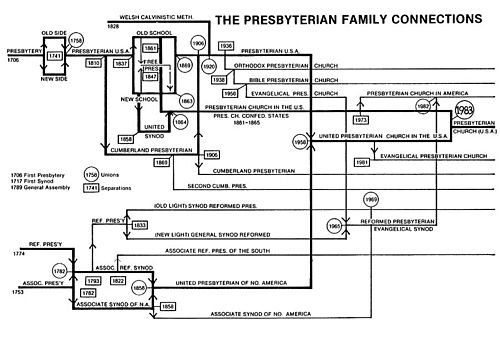
When I teach classes about the history of Presbyterianism in America, I like to use a chart that outlines the different denominations and when they were formed: the schisms, the occasional unifications, the schisms-within-schisms. It’s complex.

Presbyterian_Family_Connections

Someday, I’ll lay this chart out for Will, but I’ll have to wait for him to get over his fear of spider webs. There’s a great cartoon of a similar chart on a chalkboard in a classroom with the teacher saying: “So this is where our movement came along and finally got the Bible right.”

B7R9t.jpg

“Jesus is so lucky to have us.”

Almost five hundred years and somewhere around 30,000 new denominations later, we are still talking about what Martin Luther did on “All Hallows’ Eve” (the day before All Saints’ Day) in 1517. On the door of All Saints’ chapel at the University of Wittenburg, Luther posted a protest of the Church: “Disputation on the Power of Indulgences” or the “Ninety-Five Theses.”

The background to this event was complex, and the Reformation of the Church that swept Europe over the next 130 years was even more complex. But the predominant issue on Luther’s mind on that date was the sale of “indulgences.” The understanding of grace by the Church at the time was an incremental one. You received grace for your original sin and all of your other sins at baptism. Sins after baptism needed more grace, and you received this grace within the church through the seven sacraments – especially the regular sacraments of communion and confession. The Church taught that if you died with minor (or “venial”) sins, your soul had to be purified in Purgatory to make you holy enough to enter Heaven. But there was another way to “spring” your soul – or the soul of a loved one – out of Purgatory. You could buy an “indulgence,” and the Church would absolve the sin.

Luther objected to this as something not found in Holy Scripture. In 1521, he was excommunicated, but the shockwaves were already spreading throughout Europe. Indeed, they reverberate to Cumberland Presbyterians today. Luther’s protest within the Church became the Protestant Reformation.

It is certainly right to mourn the schism of the last half-millennium, and we should, like Christ, desire the unity of the whole Church. Yet, it is also right for us to lovingly pursue the truth of the gospel as revealed in Holy Scripture. In trying to understand how we got here, Derek and I will be looking at the five summary statements, the “Five Solae,” for why Protestants broke away from the Roman Church. We will look at the “formal cause” – sola scriptura, Scripture alone – which was how Luther justified himself in protesting the teachings of the Church at all. And we will look at the content of his protest itself, that we are saved sola fide, sola gratia, solus Christus, soli Deo gloria –  through faith alone, by grace alone, in Christ alone, to the glory of God alone. May Christ bless his Church and help us to better understand his gospel. Amen.

SACRED SPACES: THE NARTHEX

“Therefore, brothers and sisters, since we have confidence to enter the holy places by the blood of Jesus, by the new and living way that he opened for us through the curtain, that is, through his flesh, and since we have a great priest over the house of God, let us draw near with a true heart in full assurance of faith, with our hearts sprinkled clean from an evil conscience and our bodies washed with pure water.” (Hebrews 10:19-22)

For the people of the living God, the entrance to the house of worship has always been a place of repentance and welcome, holiness and grace. The narthex is the reminder to worshipers that God is holy – completely other, distinct from creation, without sin. At the same time, it is the reminder to us that this God passionately desires intimacy with his children.

There is holy tension in this place.

It is not the unnecessary tension created by so many churches whereby the stranger wonders whether or not she will be welcomed. If you’ve ever visited a new church, you’ve likely felt this negative tension. From the car to the stairs and through the first doors, there is an anxious moment: “Will I be welcome here?” The norms of any community are intimidating to the foreigner. But when those norms are manufactured into a facade of “holiness,” even the penitent can find themselves locked outside the gate.

No, this is the necessary tension of Isaiah in the heavenly throne room. It is the tension of a man crying out, “Woe to me! I am ruined! For I am a man of unclean lips, and I live among a people of unclean lips, and my eyes have seen the King, the LORD Almighty” and that man hearing the relief of the response of grace: “Your guilt is taken away and your sin atoned for.” (Isaiah 6:5,7) It is the tension that’s fulfilled Christ. The curtains of the tabernacle and temple did not protect the children of Israel from God, but from themselves. Sinfulness cannot survive the light of a holy God – “for the wages of sin is death.” (Romans 6:23)

“But the free gift from God is eternal life in Jesus Christ our Lord.” (also Romans 6:23) In Christ, “for our sake he made him to be sin who knew no sin, so that in him we might become the righteousness of God.” (2 Corinthians 5:21) The curtain is torn in two, drawing us into fellowship with God – and the curtain torn is God’s own body broken for us. The blood that consecrates us for the worship of a holy God is not the blood of bulls and rams but God’s own blood shed for us.

For Christians, no building is a temple. In Christ, sinful creatures have been made the temple of a holy God. The entry to our place of assembly is a reminder of this holy tension. And “with full assurance of faith” we draw near to God because God has first drawn near to us. Amen.

SACRED SPACES: THE OFFERING PLATE

God does not need your money.

“The God who made the world and everything in it, being Lord of heaven and earth, does not live in temples made by man, nor is he served by human hands, as though he needed anything, since he himself gives to all mankind life and breath and everything.” (Acts 17:24-25)

I confess that, too often, I think God is somehow grateful for what I give. I know the church needs material contributions to keep things going. And, even though I don’t consciously think it, I often have this “you’re welcome” feeling stirred up when I drop my check into the offering plate. It’s the same kind of feeling I get when I round up my purchase at the grocery store for a charity or give some change to someone on the street. My sin is that I reverse the roles of who is dependent on whom. I think of my giving as a transaction, just like any other transaction I make in the world, and the one who receives my money should be grateful for it.

Giving to the church is a good, biblical, and – when done in faith in Christ – a righteous act. But if you give out of compulsion (2 Corinthians 9:7), or give out of the need for praise (Matthew 6:2-4), or because you think God needs it – this is not Christian giving! “‘What to me is the multitude of your sacrifices?’ says the LORD” (Isaiah 1:11). This is why the Bible, and especially the New Testament, is so concerned with the attitude of the giver: “Each one must give as he has decided in his heart, not reluctantly or under compulsion, for God loves a cheerful giver” (1 Corinthians 9:7).

If these were proper Christian attitudes of giving, the church should not make a point to pass around an offering plate in worship! In 2017, there are more efficient ways of collecting money. In a culture that looks with great suspicion on any pastor with a new car or on any church with a “Christian Life Center,” there are more discreet, less provocative ways of asking for money. The offering plate, especially in worship, especially when passed around in the middle of worship, is extremely presumptuous if we think about Christian giving in worldly, transactional terms.

No, we pass the offering plate in worship because it is our reminder that everything we have, everything we are, everything we give, and everything we take belongs to God already. There is no distinction. The tithes are God’s. The offerings are God’s. The giver is God’s – “You are not your own, for you were bought with a price” (1 Corinthians 6:20). The offering plate is a worshipful reminder of what is God’s, not what is ours. Like the cross, like the table, it is the reminder that your old self has died with Christ and your new self belongs to him completely.

We give freely because in Christ we have been given freely. Amen.

Sacred Spaces: The Hymnals

This reflection is dedicated to the Glory of God and in honor of Robert Turnage.

The assembly of the Lord God sings.

She sings the glory of God’s creation – like the stars at the foundation of the world. (Job 38:7) She sings with thankfulness for the works God has done for her and on her behalf – like Moses when God delivered Israel from slavery in Egypt. (Exodus 15:1-22) She sings in her distresses, clinging to the only true hope found in her God – like David when he was in the “dust of death.” (Psalm 22) She sings praises to God even in the midst death because of God’s own assurance that death has been overcome – like Jonah from the belly of the fish. (Jonah 2) She sings because God has come to us in the flesh to sing with us – like Mary when she was visited by the angel. (Luke 15:46-55) She sings eternally the glories of the Christ who died and was raised for her:

Worthy is the Lamb who was slain,

to receive power and wealth and wisdom and might

and honor and glory and blessing! (Revelation 5:12)

In the midst of Nazi oppression, oppression that would later claim his life, Dietrich Bonhoeffer wrote: “God has prepared for Himself one great song of praise throughout eternity, and those who enter the community of God join this song.” (Life Together) The song is God’s, not our own. The song began before we were knit together in our mothers’ wombs. If the Lord tarries, it will continue long after our children’s children are dead, buried, and raised again. But through the mysterious working of God, we join in the eternal, hopeful song of God here and know.

When we stand in our sanctuary, grasp our hymnals in our hands, and sing words from Scripture arranged by the saints who came before us, we join in a miracle. With each verse, we sing with a new song in new circumstances the ancient mystery of God’s intimacy with us. It was the miracle I joined as preschooler (one of my first memories of worship) when I joined in the singing of our Methodist congregation – even though I did not fully know the words or was able to read a single one of them. It is the miracle my son, a preschooler, joins when he sings, “Jesus loves me, this I know…”

It is the miracle of the eternal God that was sung by my friend, Robert, when his soaring tenor voice pierced through the thick liturgy of my ordination service on Holy Saturday to proclaim that even in the depths of our distresses (Jesus was in the tomb!) God’s song continues forever. It continues for his glory. It continues for us. And we sing with God.

“Comfort ye, my people,” saith your God.

Speak ye comfortably to Jerusalem

And cry unto her, that her warfare is accomplish’d,

That her iniquity is pardon’d.

The crooked straight, and the rough places plain.

What is Your Name?

(For more information on this series, see the Introduction.)

Below is the manuscript of a sermon I preached on August 6, 2017 at Coker Cumberland Presbyterian Church in Coker, AL, just west of Tuscaloosa. (As with all the manuscripts I post, the actual sermon varied in places.) I had the privilege of preaching here several times last year as they are currently without a pastor. I had not been back since December, and it was very good to worship with this faithful congregation again.

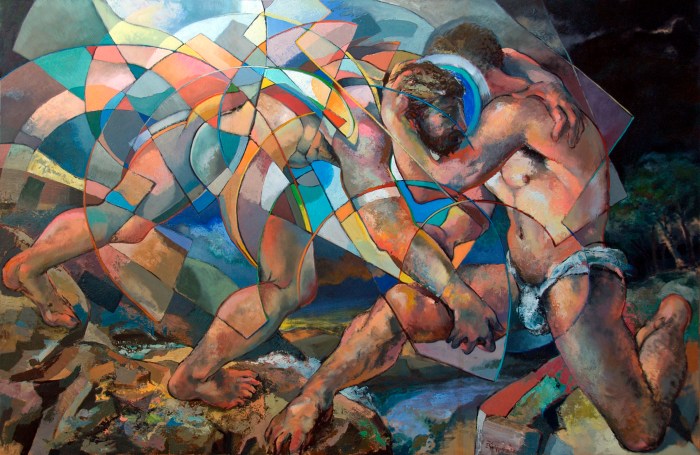
Image credit: Edward Knippers


“What is Your Name?”

Sermon Text: Genesis 32:22-32

Have you ever had a “dark night of the soul”? I’m sure for some of you, the question itself instantly takes you to a vivid memory of a particular time in your life. Maybe it happened for a whole season of your life. Maybe it was an actual night of your life, a night filled with anything and everything but sleep, a night where the dawn never seemed to come.

I’ve known a few nights like this – and, yes, pastors are by no means immune! There’s one night in particular I remember (and I won’t belabor the details now) from my time in Afghanistan as a company commander that I felt particularly anxious, and depressed, and completely alone. Those of us who have been around long enough have had one in some form or another. Maybe it was a long night spent at a hospital with a family member or a friend. Maybe it was a particular time when some sins you had kept secret finally caught up with you – and you were about to have to face some consequences. Maybe it was the night before a particular trial you kew you had to face the next day. Maybe it was a particular moment of doubt or frustration or even anger at God for some circumstance or other you had found yourself.

At the beginning of our passage today, Jacob is experiencing a dark night of the soul. It’s a night that begins with him full of anxiety, fearful that the consequences of his past actions will come to destroy him and his family. It’s a night that begins with him nervous about a particular event that he knew would happen the next day or at least very soon. It’s a night that begins with the stinging pain over a broken relationship with a family member – his own brother! – and the fear that comes with the uncertainty of how this relationship could possibly be restored – if it could be restored at all.

It is a night that ends with Jacob limping; he is permanently wounded from what would take place this night. But it is also a night that ends with Jacob receiving a blessing from God. It is a night that ends in triumph, not over God but with God. It is a night that ends in survival. And it is a night that ends with Jacob receiving a better name, a name that would mark the people of God forever.

Before his new name, Jacob was a trickster, even from birth. His mother, Rebekah, was giving birth to twins and Jacob’s brother, Esau, was coming out first. But Jacob reached out and grabbed his brother by the heel. And that’s what his name literally means, “he takes by the heel,” an idiom that means, “he deceives.” He supplants. He cheats! And almost every Genesis story of Jacob’s life in from his birth up to the scene in our text for today is about how he is able to trick or outsmart someone else, especially to the disadvantage of his brother, Esau. Even though they were twins and Jacob pulled him back, Esau was the older brother and heir since he was coming out of the womb first. But Jacob tricks Esau into selling his birthright for “a bowl of pottage” – some plain lintel stew. Later, Jacob tricks his own father, Isaac, on his deathbed! He pretends to be Esau in order to receive a blessing from his dying father and gain the inheritance that should be Esau’s.

After this episode, Esau is understandably upset! On the advice of his mother, Jacob flees to work for his uncle (and future father-in-law), Laban. Laban tricks Jacob, Jacob tricks Laban, and Jacob has to flee again. Though Laban does overtake Jacob on the road and they are able to be reconciled as family, there is one looming problem Jacob knows he must face as he journeys back home.

Esau is waiting for him.

Esau is waiting for him with a small army. And Jacob does not know if Esau – even years later – is still mad enough to kill him. And it’s not just Jacob alone anymore; it’s Jacob and his wives and his children and the great amount of wealth he’s acquired by working for Laban. Jacob devises one of his tricks to try to persuade Esau to forgive him, or at least spare him. But even Jacob knows this is not enough. He prays to the God of his father, the one true God, who has promised to bless him and who has made a covenant with Jacob (the continuation of the same covenant God made with Jacob’s father, Isaac, and grandfather, Abraham). Jacob prays to the only One who can help him in his time of anxiety, the One who would meet him in his “dark night of the soul”:

O God of my father Abraham and God of my father Isaac, O LORD who said to me, ‘Return to your country and to your kindred, that I may do you good,’ I am not worthy of the least of all the deeds of steadfast love and all the faithfulness that you have shown to your servant, for with only my staff I crossed this Jordan, and now I have become two camps. Please deliver me from the hand of my brother, from the hand of Esau, for I fear him, that he may come and attack me, the mothers with the children. But you said, ‘I will surely do you good, and make your offspring as the sand of the sea, which cannot be numbered for multitude.’”

Jacob sends his family on ahead of him, and he remains there to pray. Alone.

And God answers his prayer by wrestling with him!

It’s okay for us to point out strangeness of this passage we’re looking at today. There are certainly some aspects of this passage that will make us ask questions, questions for which it is very hard to get satisfactory answers. Here God acts in ways I don’t think many of us expect him to act. We often talk about how God acts in mysterious ways – ways we can’t comprehend or know or understand – but in this passage, God acts very strangely. One of the things that’s particularly frustrating in our dark nights of the soul is our lack of understanding of what in the world God is doing! Why is God doing what he is doing or allowing what he is allowing? Why does God seem to be fighting me?

The strangeness of passages like this are reminders of the strangeness of God himself. The word we have for that is “holy.” God is completely other. God is God and we are not. (Thank God!) And while the knowledge that God is holy may not be comforting in and of itself . . . (Quite the opposite, actually! Jacob is amazed that he sees God face to face – and lives!) . . . when we put this knowledge that God is holy up against something else that we know, the result is deeply comforting. God is indeed completely other, completely holy. But God in Jesus Christ is completely human as well. God is holy, but God is for us. And if God is for us, who can be against us? Indeed, even in the things God does that seem strange to us, can only be for our benefit. Because God in Jesus Christ has shown us that God does not look at our dark nights of the soul from a distance, like a dad watching his kid’s wrestling match from the bleachers. In Jesus Christ God meets us, gets dirty with us, endures suffering and trials with us…

…And even wrestles with us!

For Jacob this is quite literal. Even though the text is written in the third person, the perspective is not from some narrator. The scene unfolds as if we, the readers, are Jacob. Completely alone, this mysterious man approaches Jacob, and starts fighting him! They fight all night long, which is a bout of endurance and stamina that would put Rocky Balboa to shame! The man sees that he cannot prevail – Jacob is too stubborn to give in. So the man, whom we will soon learn is God in some mysterious way, touches Jacob’s hip and puts it out of socket. He does not strike – the word here doesn’t mean that. He touches. It could even be translated, “he barely touches.” The man could not overcome Jacob, but the man could displace a hip with his finger! Yet, even injured, Jacob continues the fight. He will not let go of the man. This mysterious man wants his identity to remain a secret, so he demands to be let go before the rising sun can show his face. And Jacob, knowing that he is fighting a man who is somehow more than a man, asks for a blessing.

In the narrative of Genesis, this makes perfect sense, but to us this might seem like a strange thing to ask. In the time of Genesis, a blessing meant something. (Now, it’s a hashtag on social media!) In the time of Genesis, to receive a blessing – always from someone superior to you – meant some type of material or spiritual gain for you. And in the context of this passage, that meaning might seem a little pretentious for some of us – I confess it does a little for me. In a lot of our churches we react so strongly (and rightly) against the prosperity gospel, so strongly against things that proclaim only the “good news” of health and wealth, that the idea of asking someone – especially God! – for a blessing seems maybe a little self-centered.

But here it is a marker of Jacob’s faith.

Jacob does not give up, he does not turn away, but continues to wrestle this man – continues to wrestle with God! – until he receives the blessing. The blessing he receives is not what the health and wealth gospel preaches. It is a blessing of life-long obedience that requires persistent faith. It’s a kind of faith that Eugene Peterson would call, as he does in his book on discipleship, “a long obedience in the same direction.” It is what we Cumberland Presbyterians – and other members of the Reformed tradition – call the perseverance of the saints.

Anyone who has ever participated in some kind of fighting sport – or even been in a real fight! – can tell you that only a few minutes of fighting are exhausting. That’s why these sports separate these confrontations into rounds with breaks in between. Jacob fought all night long and still did not turn aside. How is it Jacob prevailed over God? He did not abandon God but stayed tightly latched to God – even in the pain of a dislocated hip.

And in a strange way, I am convinced that the only way he could do this was because God was with him. They were fighting, certainly with one another, but the fight was also a fight together. The circumstances of Jacob’s worry, the prospect of Esau coming to kill him, faded away in the midst of this wrestling match with God.

The psalms are prayers to God that say some things that would make a good Christian blush. They express the depths of human anger, worry, depression, anxiety, and fear in a profoundly blunt way. And they are inspired by the exact same Holy Spirit that inspired the rest of Scripture. When in the depths of our human suffering it does us no good to pretend, to hide our emotions, and to act like everything is fine. That is a recipe for self-destruction. The psalms teach us – and even Jacob’s fight with God teach us – that we must turn those emotions upward and trust that God is strong enough to take it! Because he is. And though it may seem like we are struggling with God, God is not angry at us, but remains for us.

Because the real wrestling match between God and human beings was finished by the fully-human, fully-God Jesus Christ. He is God in the flesh, come to earth to help us in the dark night with the consequences of our sin came riding toward us like Esau’s army. And when we fought him and tried to kill him, he laid down his life for us willingly.

And he rose for us triumphantly.

When Jacob fought God and prevailed through his persistence, he was blessed. He was no longer named Jacob – “he deceives.” He was named Israel, “he struggles with God.” The place is renamed Peniel, “the face of God.” Because Jacob had seen God face to face and lived.

Brothers and sisters, we have seen the holy God face to face in Jesus Christ – and lived. Like Jacob, he has given us a new name. The spelling of our names may be the same, but Jesus Christ has changed forever who we are. In Jesus Christ, because of Jesus Christ, this holy God calls us, “Child!” In Jesus Christ, because of Jesus Christ, and by the power of the Holy Spirit of God himself in us we cry out, “Abba! Father!”

When the dark nights come, we can cry to our Father out of the depths. He has given us new hearts, new selves, new names. And though we may walk with a limp after those dark nights (and, indeed, may never lose our limps in this lifetime) we know that we are faster limping with God than we are sprinting on our own strength.

And when the dark nights come, we know that Jesus Christ, our savior and our Lord, has limped there ahead of us. Even in triumph over the grave, he still shows the wounds and scares of his wrestling with humanity. And if he names us his friend, and he does, we can know that no night – no matter how dark – will last forever. He remains here beside us, strengthening us to endure, so that we can see the blessing he has promised to give us in the morning. Amen.  

Sacred Spaces: The Windows

Almost every day when Will and I leave the house, I hear the same cheer from the backseat of my car: “The sun came up!” As the sunlight shines on him through the windows of our car, warming his bright smile, he continues his celebration of the new day. He invites me to participate. “Daddy, look!”

“I see! God made the sun come up!”

“Thank you, God,” he says, and our liturgy is complete.

Three-year-olds are experts at seeing the miraculous in the mundane. In this series, Derek and I have already covered the parts of our sanctuary you might describe as the most significant: the cross, the candles, the table, the bible, and the pulpit. The rest of our series (with one exception) now shifts decidedly to the common: some flowers, windows, wood, books of music, a gathering space, doors. Early on, the Reformed church rooted out any hints of idolatry in its worship spaces. The result is simplicity. I find worshipful joy in the majesty of Catholic cathedrals, the icons of Orthodox churches, and even the fine altars of fellow Protestants whose traditions chose not to strip their sanctuaries.

But there is beauty in the simple, too. Our God is God of the common. As we say in our confession: “God exercises providential care over all creatures, peoples, nations, and things…. God ordinarily exercises providence through the events of nature and history.” (1.13 & 1.14) God’s sovereign, providential care over all creation – even those acts we see as common, everyday occurrences – are still miraculous works of God’s abundant grace. It is common grace, poured out on all humanity, by God who “makes his sun rise on the evil and on the good.” When we worship, the sunlight that passes through our windows to warm our faces is the reminder that God is God of the whole world. And he cares for the whole world.

But the windows are not made of one-way glass. Even greater than this common grace we see in the rising sun is the grace extended to us by the resurrection of the Son of God, Jesus Christ. This grace is greater, but it is not for us only. It is for the whole world. When Christ died, the curtain in the temple that separated the common people (and even most priests!) from gazing directly into God’s holy presence was torn in two.

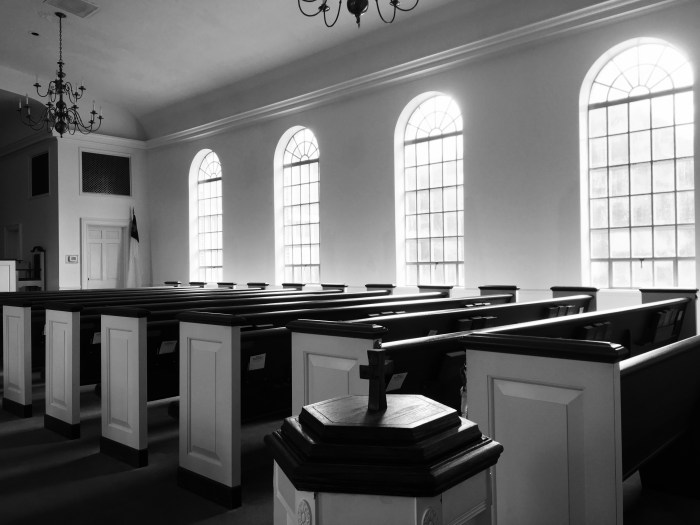
Our windows are tall, unstained, and the natural light of God’s common grace shines in on us during worship – just as it does on the whole world. But our light – the light given to us in the grace of Jesus Christ and for his glory – radiates outward as well. We cannot hide Christ’s light under the bushel of the chapel! As we worship, and as we leave worship, we proclaim – with Will’s enthusiasm – the words of the psalmist: “This is the day that the LORD has made; let us rejoice and be glad in it.

Sacred Spaces: The Pulpit

I’ve lost track of the number of times my wife has told me, “I love you.” Next Friday, we’ll have been married for ten years. If you add in the six years we were dating (which we’ll also celebrate this month), she’s been telling me she loves me half of my life. Her love comes unconditionally. She’s taken the promises she made to me at our wedding seriously, loving me even in spite of parts of me that aren’t very lovable.

But her unconditional love does not mean passive acceptance. It’s a love that leads to transformation. When she says the words, “I love you,” I am reminded of who I am to her as well as the things she has endured with me and for me. I am reminded of who she is. In her proclamation, I remember that I love her too, that I have made my own vows to her, and – stirred by this reminder of her love – I am compelled to abandon those less-lovable parts of me so that I might love her more.

When the preacher stands in the pulpit, Jesus Christ proclaims his love for his Bride, the Church. When the preacher stands in the pulpit, the Holy Spirit fills those gathered with the love of Christ. When the preacher stands in the pulpit, by the Holy Spirit and in the love of Jesus Christ, we cry out, “Abba! Father!”

As the Bride of Christ, this love of Christ is the proclamation we needed to hear when God first wooed us. The proclamation from the pulpit is never one of simple moralism, never one of mere “second chances,” never one of conditional love. It is a proclamation of God’s work. It is the reminder that God found us when we loved being lost, died for us when we loved death, rose for us when we rejected life, and sits in power for us even as we reject God’s power.

As the Bride of Christ, this love of Christ is the proclamation we need to hear from Christ again and again. The proclamation from the pulpit is never one that succumbs to the whims of time. It is timeless and timely. The lectern and the pulpit are inseparably intertwined. The words of Scripture spoken at the lectern are the timeless wedding vows of our Lord. We know what his promises are because he has given us his word in Scripture; we know that his promises are true because the eternal Word, Jesus Christ, speaks them. The pulpit is where we hear those eternal promises in the here and now, to us and for us. And we are transformed. The love of Christ that met us without conditions now conditions us!

And as the Bride of Christ, this love of Christ is the proclamation we make to the world as the Holy Spirit works in us, through us, and beyond us. The proclamation from the pulpit is never meant to stay there. Amen.

Life after Death

(For more information on this series, see the Introduction.)

Below is a sermon I preached at West Point Presbyterian Church in West Point, GA and Lebanon Presbyterian Church three miles north of Lafayette (pronounced “lah-fet” if you’re from Chambers County), AL on June 25, 2017, the Third Sunday after Pentecost. 

West Point Presbyterian is the church I attended from the time I was maybe five years until I moved to Birmingham after college. I was confirmed in this church. I was married in this church. I preached my first sermon in this church. It was founded in 1837. The “old” building straddled the Alabama-Georgia line; the pastor preached from Alabama to the congregation in Georgia. A “cyclone” destroyed the “old” building in 1920 while the elders were at a meeting, killing one. In 1923, the “new” sanctuary was built, and new additions have been made over the decades, most recently in 2014. The church is part of the Presbyterian Church (U.S.A.), though they are in the process of trying to leave and join the new ECO Presbyterians. Their pastor, the Rev. Jerry Ledbetter, grew up Baptist, was ordained Methodist, and has served this Presbyterian church since 2003 (the same year I graduated high school).  

Lebanon Presbyterian Church is a country church founded in 1843. Though the building is well kept and has several modern additions, it reminds me of some of the churches I’ve seen at Cades Cove while on vacation. I’ve only preached here once before, but it’s perhaps the most intimate place I’ve preached. They do not have an installed pastor, but Jerry frequently serves as their pulpit supply. In the middle of this service, my mind completely drew a blank during the Apostle’s Creed (which wasn’t written down) and led to what was probably the most awkward moment I’ve ever had in a worship service. I had memorized it as a child, and I have said it thousands of times from memory. But I still forgot it in the middle of leading worship . . . So, my fellow Christians, if you ever wonder why a pastor seems to be reading the Apostle’s Creed or the Lord’s Prayer instead of reciting it from memory – that’s why. It’s not that he or she doesn’t have them memorized; it’s that they’re too important to mess up!

Friends from HCPC – forgive me for the extended Bonhoeffer quote. Though I’ve preached it to you several times . . . I hadn’t to these good folks!


“Life after Death”

First Reading: Romans 6:1-11

Sermon Text: Matthew 10:24-39

There is a tendency in our Christian life to want to stay near the cross – but not too near. We know that we should not be like Peter who flees the cross after Jesus is arrested and denies Jesus three times. We know that – as difficult as it would be – we kind of want to be like one of the Marys or John, who stayed with Jesus until the cross.

No one wants to be the criminal crucified alongside him.

We like the hymn – and don’t get me wrong, it’s good, and it’s one of my favorites – “Jesus keep me near the cross / there a precious fountain / free to all, a healing stream / flows from Calv’ry’s mountain.” I doubt many of us have heard the one we sang earlier today: “Jesus, I my cross have taken, / all to leave and follow Thee; / destitute, despised, forsaken, / thou, from hence, my all shall be.”

We say – very rightly – that Jesus on the cross has done what none of us can do. We say – correctly – that we are reunited with God only through the cross of Jesus, his bearing of our sins on the tree as a man accursed, through his taking of our place. But too often, when we understand our salvation by grace through faith alone, we forget what John Calvin said, that “the faith that saves is never alone.” We forget what Luther said, that “idle faith is not saving faith.” Too often, when we understand that God has already done everything to save us, and that we can do nothing to save ourselves – all correct statements! – that this is an invitation to a discipleship where we do nothing.

And these misunderstandings make us scratch our heads and try to explain around very difficult passages in the New Testament like the words from Jesus this morning, or the words from Paul we heard earlier, that in our baptism we were baptized into Christ’s death. It’s hard for us to understand Paul when he says that our old self was crucified with Christ. We think Paul gets a little extreme in Galatians when he says, “I have been crucified with Christ. It is no longer I who live, but Christ who lives in me.”

No, we all want to be near the cross witnessing and thankful for what has happened for us and on our behalf. No one wants to be the thief – even if Jesus promises him paradise.

Because we forget the words of Jesus – who has indeed done everything for us, lest any of us should boast – that we are not greater than him. If he was slandered, persecuted, and killed, how can we think that we are immune from those things.

And that’s the gist of the three-fold analogy that Jesus uses in the beginning of our passage for today in verses 24-25. At the start of chapter 10. Jesus is getting ready to send the 12 disciples – the 12 students – out on their own. They are to go out into “the lost sheep of the house of Israel,” proclaiming the kingdom of heaven, healing the sick, raising the dead, cleansing lepers, and casting out demons.

Not exactly a demanding job description, is it?

But more than the difficulty of their task, Jesus tells them that they will face something that they haven’t really faced yet – persecution. Sure, the Pharisees have bad-mouthed their teacher. But how are they to understand Jesus when he says, “Behold, I am sending you out as sheep in the midst of wolves”? Or, “Beware of men, for they will deliver you over to courts and flog you sin their synagogues, and you will be dragged before governors and kings for my sake, to bear witness before them and the Gentiles?” Or “Brother will deliver brother over to death, and the father his child, and children will rise against parents and have them put to death, and you will be hated by all for my name’s sake”? The disciples left everything to follow Jesus, but I don’t know if this is exactly what they signed up for!

Anticipating that his students might need some clarification Jesus gives them the three-fold analogy. They would have known the first from other Jewish teachers – a student can’t surpass the teacher. If the teacher has taught the student as much as he knows, and the student is like the teacher, that’s enough. The teacher has done her job. But a servant – or more precisely – a slave? They didn’t have the help from Paul’s letter to the Romans where, in chapter six, Paul explains that one is either a slave to sin or a slave to righteousness. They didn’t have the help of Paul in his first letter to the Corinthians that those who are freed when called are slaves to Christ. What kind of relationship exactly was Jesus describing here?

But before elaborating on that further, Jesus’ analogy goes further for the disciples. If he is the master of the house, and they are his slaves, they can’t escape the slanderous things those outside the house call their master. If they say to their noble master that he “casts out demons by the prince of demons” – as they did earlier in Matthew 9:34 – then how much more will they malign the character of those in the household of a lower class? They call Jesus a sickening name in 10:25 – Beelzebul. The pagans in the Promised Land before (and even after) the Israelites came sacrificed their children to a god named like this. Over time – since the Israelites knew there was no god other than God – the name became associated with a demon and the name was changed in order to mock him: Beelzebul – “Lord of the House” – became Beelzebub, “Lord of the Flies.” The very Son God, who had taken on flesh to become the savior of the world, who gave of himself at every turn to heal the sick, cleanse lepers, make the blind see, make the deaf hear, and proclaim the good news that the kingdom of God had come – was being told that his power wasn’t coming from God but from the demonic. How much worse would his followers hear?

Quite a bit. Because Jesus in this section isn’t just preparing them to go out on this short missionary journey – a journey where in the narrative they go out, come back, and continue to walk with Jesus. He’s preparing them for what’s going to happen after he leaves! At my church in Birmingham, the senior pastor and I are preaching through Acts. I don’t mean to spoil anything about what happens later in this story, but things don’t exactly turn out well for the disciples! Everything that Jesus says will come to pass – not just in this section, but in all of chapter 10 – it all comes to pass!

And we, disciples of Jesus Christ in the 21st century, should expect no different, even here, in a country where we are not really being persecuted for our faith. If we follow Jesus in his teaching on sexuality and marriage, we’re called “bigoted.” If we follow Jesus in his teaching that there is no salvation apart from him, we’re called “intolerant.” If we follow Jesus in his teaching that the poor actually need to be fed, and the sick actually need to be healed (even if they can’t afford it!), and the alien – the foreigner – in our midst actually need to be welcomed and not turned away . . . we’re called something you only say to your worst enemy here in the deep South – “liberal.”

Jesus did not fit into any of the preconceptions of the Pharisees, and they lashed out at him with derogatory labels, vile ones, to try to get him to shut up. And if we are truly following Jesus and what Jesus actually says in the Bible – and not just the preconceived ideas we hear bouncing off whatever echo-chambers are our favorites – then expect to be slandered.

Of course, whatever we might be called here pales in comparison to what our sisters and brothers are called in places of real persecution. There, they face death. There, they are called an infidel, or worse, an apostate, and in the minds of those precious to them, their faith in Christ as fully God and fully human is a faith straight from hell – which is where it is thought they’re headed. No, we have it tame.

But for them – and for us – the hope that we have in God is far stronger than any slander. It’s a hope that casts out all fear. And that encouragement to not be afraid is what Jesus tells the disciples in the next section of our text, in verses 26-33.

The worst the oppressors and the persecutors can do is kill our body. We fear not them but the God who can destroy our body and soul in hell. And the beautiful promise from God in Jesus Christ is that – though he is capable of destroying both and though we deserve to have both destroyed – he does the exact opposite. Persecution may come. If Jesus tarries, death will certainly come to each one of us. But the sure promise from a God who is in complete control of the entire universe is that we will have life, abundantly, forever and ever.

The same God who keeps the stars in their places across 93 billion light years not only counts but causes to grow each of the 100,000 or so hairs on your head. The same God who knows with intimate precision the daily activities of a microbe at the bottom of the Marianna Trench, at a depth a mile deeper than Mt. Everest is tall, is the same God who does not allow a little sparrow of the air – practically worthless to us – to fall to the ground without his supervision. And how much more are we worth than any sparrow? Worth so much, that God did not spare his only Son but gave him up for us all. Indeed this God, who manages the forces at work in every atom to keep them from flying apart, is not so high up or distant or busy that he is not willing to crawl around in the dirt with us, to be spat upon for us, to be whipped – for us and by us – or ultimately to die for us. Sisters and brothers, I cannot hope to describe for you how much more than sparrows you are worth to God.

How can we be afraid? With such joy in our hearts over the sovereign God’s love for us and his infinite ability to keep his promises, how can we not shout from the rooftops what he has done? How can we not proclaim in the light – in the daylight of the world outside – what we have learned in the dimness of this place under the opaque light of stained glass? If God is for us, then who can be against us?

There is such a misunderstanding of God numbering the hairs on our head or the fact that we are worth more than sparrows when we think that these signs are signs that we’re ok doing whatever it is we want to do. Too often, we think that God’s intimacy means approval of our actions; we think that because God numbers our heads that God will give us what we want.

But that’s not the purpose of Jesus’ saying here. He doesn’t want to just make us comfortable and happy with this knowledge. He wants us to talk about Jesus Christ who makes our comfort possible! The knowledge of God’s provision is not for our mere happiness but to give us the joy to proclaim the goodness of God in Jesus Christ through the power of the Holy Spirit in all circumstances – happy or not.

We may not face active persecution like our sisters and brothers around the world, but we are not above it. And if that day comes – and if you find yourself in that circumstance like Jesus and the disciples and so many of our brothers and sisters right now where you might have to lay down your life for your faith – know that as you proclaim Jesus your hairs are numbered and your life is kept forever by God. Take heart. Do not be afraid regardless of the circumstance. Do not deny Jesus, but confess him – today and every day – with the sure knowledge that when the time comes, he will confess you before the Father. And the One who keeps your body and soul forever in the life of the resurrected Christ will not let you be put to shame. The worst they can do is kill the body.

And you’ve been dead already before.

In the last section of our text, vv. 34-39, Jesus lays out the cost of our discipleship. As Dietrich Bonhoeffer said, a few years before he laid down his life for the cause of Christ, “When Christ calls a man, he bids him come and die.” We so often talk about the new life we have in Jesus Christ, we overlook the many times in the New Testament where this life comes by death. Christ’s own death is primary, of course. But it is a death in which we must participate if we are to be his disciples. For the Christian, life after death is the here and now – not someplace else in the future.

As Paul says, in our baptisms we have already died with Christ and been raised with Christ! I make fun of Amy way too much for being a former Baptist. But this is something that the Baptists get in their celebration of their namesake sacrament that we Presbyterians often miss. Baptism – regardless of age (that’s where my Presbyterian credentials kick back in!) – is the sign of dying with Christ and rising with him to new life. The glory that our spirits experience in heaven after the death of our physical bodies, and the joy of the new life to come after the resurrection when spirit and body are reunited – certain hopes for us as Christians – are not “life after death” experiences. Instead they are, as N.T. Wright would call them, “life after life after death” experiences. We are experiencing right now the life after death that comes from Christ’s resurrection. We need not fear death because we have died before.

The sword that Jesus brings is the sword in this passage is the sword that cuts away our new life from the old. I don’t know a lot about butchery. My papa was a butcher, my dad butchers his own deer, but I’m no expert. Yet as someone learning how to cook and prepare cuts of meat for cooking, I know that a knife can be a friend, not an enemy. Silver skin has to be removed. Fat sometimes needs trimming. And just so, the old person needs to be cut away from the new. The remnants of the old life have to be separated by Jesus with a sword.

We view Jesus’ talk about the separation from family as a bit hyperbolic, a bit extreme – maybe even metaphorical. But there is no metaphor for the disciples here. Like Jesus himself, they have family members who have abandoned them for following Jesus. In this country, we think about leaving father or mother or son or daughter metaphorically. For our sisters and brothers facing persecution right now, they – like the disciples – understand it literally. Because there are places in this world where brother will stone to death a sister for becoming a Christian.

And as Christians, though we have clear responsibilities to love and care for our families from other places in Scripture, Jesus claims our primary loyalty. He comes before our families. He comes before our family because he is our true family. And the intimacy that we share with God through Jesus Christ is greater than even the intimacy shared between husband and wife or mother and son (great as that intimacy is)!

Because whoever finds his life will destroy it, and whoever destroys his life for Christ’s sake will find it. The cross Jesus commands us to take up is indeed a reference to a structure like the one that would kill him. It is the same word here as in the passages describing Jesus’ crucifixion. It is a word the disciples would have known the meaning of all too well – a device of torture and death used by the Romans to execute their fellow Jews.

For us, it is the reminder that we die to our old selves. It is the reminder – as Dietrich Bonhoeffer would say – that the grace that saves us is not cheap. Our whole lives are claimed by God.

In The Cost of Discipleship, Bonhoeffer writes,

“[If] the Christian rests content in his worldliness and with this renunciation of any higher standard than the world. He is doing it for the sake of the world rather than for the sake of grace. Let him be comforted and rest assured in his possession of this grace–for grace alone does everything. Instead of following Christ, let the Christian enjoy the consolations of his grace! That is what we mean by cheap grace, the grace which amounts to the justification of sin without the justification of the repentant sinner who departs from sin and from whom sin departs. Cheap grace is not the kind of forgiveness of sin which frees us from the toils of sin. Cheap grace is the grace we bestow on ourselves.

“Cheap grace is the preaching of forgiveness without requiring repentance, baptism without church discipline, Communion without confession, absolution without personal confession. Cheap grace is grace without discipleship, grace without the cross, grace without Jesus Christ, living and incarnate.

“Costly grace is the treasure hidden in the field; for the sake of it a man will gladly go and sell all that he has. It is the pearl of great price to buy which the merchant will sell all his goods. It is the kingly rule of Christ, for whose sake a man will pluck out the eye which causes him to stumble, it is the call of Jesus Christ at which the disciple leaves his nets and follows him.

“Costly grace is the gospel which must be sought again and again, the gift which must be asked for, the door at which a man must knock.

“Such grace is costly because it calls us to follow, and it is grace because it calls us to follow Jesus Christ. It is costly because it costs a man his life, and it is grace because it gives a man the only true life. It is costly because it condemns sin, and grace because it justifies the sinner. Above all, it is costly because it cost God the life of his Son: “Ye were bought at a price.” And what has cost God much cannot be cheap for us. Above all, it is grace because God did not reckon his Son too dear a price to pay for our life, but delivered him up for us.”

The grace that saves is never cheap. But it tells us that we are worth more than many sparrows. Do not fear, but take up your cross, today and every day, to follow Jesus. Go and proclaim the wonderful news of Jesus Christ who has brought us from death to life. Amen.