Lent with Bonhoeffer: The Welcome of Christ

Life Together Header

Shrove Tuesday, February 13, 2018

“Now concerning love of the brothers and sisters, you do not need to have anyone write to you, for you yourselves have been taught by God to love one another…But we urge you, beloved, to do so more and more.”  1 Thessalonians 4:9

It is God’s own understanding to teach such love. All that human beings can add is to remember this divine instruction and the exhortation to excel in it more and more. When God had mercy on us, when God revealed Jesus Christ to us as our brother, when God won our hearts by God’s own love, our instruction in Christian love began at the same time. When God was merciful to us, we learned to be merciful with one another. When we received forgiveness instead of judgment, we too were made ready to forgive each other. What God did to us, we then owed to others. The more we received, the more we were able to give; and the more meager our love for one another, the less we were living by God’s mercy and love. Thus God taught us to encounter one another as God encountered us in Christ. “Welcome one another, therefore, just as Christ has welcomed you, for the glory of God.” (Romans 15:7)

-from Life Together, pgs. 33-34

(These reflections from Dietrich Bonhoeffer can be found in a collection entitled A Year with Dietrich Bonhoeffer: Daily Meditations from His Letters, Writings, and Sermons. It can be purchased HERE.)


The Angst and Peace of the Psalms

The Psalms reveal to us how we are to pray and how God answers our prayers.

The prayer book of the Bible contains the requests and praises from God’s people as they travel the road of life. As we encounter the Psalms, we become aware of the joys and tumults of life—things that open the mouths of God’s people to praise him as well as things that open those same mouths in lament and frustration. The Psalms stand as the open invitation to all to call upon the Lord with raw reality and unfettered hope.

One of the most difficult things for some to do is pray. What should we say to God and how should we say it to him? The Psalms give us a beautiful testament to the freedom we have in our approach to God. Furthermore, the Psalms show us that even during the angst we have in our lives, the peace of God in Christ is always present with us.

Take for example Psalm 69. The psalmist David begins his plea to God with what sounds like hopelessness. He is in danger of drowning. He is weary. His throat is parched. His eyes grow dim. This all happens as he waits for God to save him. David’s situation doesn’t relent. He is aware of the multitude of his enemies and how they attack him to destroy him. He recounts his weeping and humility. He even asserts his consuming zeal to serve the Lord. In all theses situations, his spirit is filled with uncertainty and angst.

Does this sound familiar to you? Do life’s anxieties, pains, and sufferings cause you to question the presence of God in your life? Do you sometimes feel as if your prayers during these trials are going unheard? Do you ever wonder what the point is to pray if God doesn’t seem interested in giving you an answer, a hope, or salvation? All of this can be compounded when we are doing our best to be faithful and obedient to God and his call on our lives.

If we were to stop here, we would certainly be overcome by our angst. But in this same Psalm, we see David grapple with his angst and not stop until peace prevails. The peace of God resounds throughout the Psalm. As David seems to be filled with despair, his constant cry to God is filled with reminders of God’s faithfulness and steadfast love. God is the only one who can deliver him from his tribulation. He looks to no other for his rescue. As the Psalm ends, David is filled with the assurance of God’s power and ability to rescue him. At one point, he cries, “But I am afflicted and in pain; let your salvation, O God, set me on high!” Ultimately, in the throes of affliction and with the hope of salvation, David rejoices and worships God for his mighty strength to save. God has given David his word and David trusts in that word regardless of his situation.

In our celebration of the birth of Christ, we must remember that God has given us his Word in the flesh. As we live, we have the hope, love, joy, and peace that can only be given by Christ. May we not neglect to keep our eyes upon Christ no matter how dire our situations. We will have times when we are under attack and seemingly ignored by God. But remember, we are never ignored by God. Jesus is the proof that God is always with us. He took on flesh and encountered the very enemies and angst that we battle. He defeated these threats and gives us his peace. So, as we end one year and begin another, may we never give into our angst and instead embrace the peace we have in Christ Jesus our Lord. “For God will save Zion and build up the cities of Judah, and people shall dwell there and possess it; the offspring of his servants shall inherit it, and those who love his name shall dwell in it.” In the name of the Father, the Son, and the Holy Spirit. Amen.

Advent Sandals

“Take off your sandals from your feet, for the place where you are standing is holy.” (Joshua 5:15)

My friend Tal has a long-standing tradition of refusing to listen to the song “Christmas Shoes”. He measures the greatness of the Christmas season by whether he has had to endure listening to the song. It is quite humorous seeing Tal take precautions and setting up his guard against hearing it. (I have heeded my brother’s warning about this song and I myself have avoided it.)

The scene in Joshua 5 when Joshua stands before the Commander of the LORD’s Army is a familiar scene. Joshua is told to remove his sandals because he is on holy ground. In Exodus 3:5, the same words are uttered by God in the burning bush to Moses as Moses is being commissioned to go announce freedom to the Hebrew slaves in Egypt. One other mention of sandals in the Bible is intriguing. In Mark 1:7, John the Baptist announces that he is preparing the way for one “mightier than he, the strap of whose sandals I am not worthy to stoop down and untie”. When we see sandals mentioned in the Bible, it appears, at least in these three accounts, that God calls people to humbly and reverently be about His mission on earth.

Moses, Joshua, and John. Men called by God to declare His mission on earth. What strikes me about the encounter with the Commander of the LORD’s Army in Joshua 5 is that Joshua is preparing to lead God’s people, the Hebrews, into the promised land. One would think God was mightily on their side, right? But when Joshua asks this Commander whose side he’s on, either Joshua’s side or the side of their opponents, this Commander responds with a resounding, “NO!” This Commander was not on either side of the conflict between men. The Commander’s loyalty was to God. Joshua’s response, along with Moses’s response and John’s response to this truth was a response of faithful worship. They realized very quickly that they should never ask if God is on their side, but instead, “Am I on the side of God?”

Advent is a season where the people of God should reflect upon that question. We just endured a contentious special election in Alabama and I believe that many people wanted their vote to reflect God’s will. The conversations I heard among faithful Christians seemed to echo concern about choosing the correct candidate because we did not want to vote for the candidate that God had not chosen. Advent is when we take time to reset and remember—Christ is King. Our loyalty as Christians is first and foremost to him. We should be a reflective people who take time to discern whose side we are on. Ephesians tells us that we do not wrestle against flesh and blood but against spiritual forces of evil in the heavenly places.

In other words, we cannot just assume that because we as Christian individuals assume the right course of action is the actual right course of action. Humility, sobriety, and discernment are essential to obedience. The true question for us as believers isn’t, “God, are you on our side?”. Rather, it isn’t a question at all. It is a plea–“Have mercy on me, O God, for I am a sinner. Create in me a clean heart and renew the right spirit within me!”

All of this is to remind us about who we are as Christians. As Tal avoids at all costs the “threat” of listening to the song “Christmas Shoes”, we should avoid at all costs false understandings of who Christ is. Christ is God for us. He has made it possible for us to be at peace with God. So, as we are on mission for God, I pray that we remember the message of the Advent Sandals. Humility, reverence, and service for the glory of God is our task. May we prepare the way for the return of our Lord, Jesus Christ, the Commander of the LORD’s Army. “Take off your sandals, you are on holy ground.” Amen.


The Five Solae: Solus Christus

solus christus

In Scripture alone we know we are saved by grace alone through faith alone in Christ alone.

In Acts 4:12, Peter and John make the clear proclamation of where salvation is found: “There is salvation in no one else, for there is no other name under heaven given among men by which we must be saved.” What is that name? It is Jesus Christ.

In Christ alone. This means that because Jesus is our Savior, then he is our Lord. If he calls us to move, we move. If he commands us to go, we go. If he tells us to act, we act. No questions.

When the citizens of Rome would greet each other in the streets during the time of the Early Church, those citizens would say to one another, “Caesar is Lord!” It was the type of “hello” and “goodbye” that a hearty “Roll Tide” or “War Eagle” has become in our time and place. When the first Christians were greeted with “Caesar is Lord”, their response was markedly different. Instead of affirming what the worldly powers proclaimed, the early Christians would respond with the words, “Jesus is Lord!”

These words were treason. They threatened the security of the state. They struck at the heart of “law and order” as the political powers understood it. Why? Because the political leaders during the time of the Early Church believed that they themselves were divine. They had, in their estimation, a connection with God and that meant that their decrees and leadership must be followed and worshipped. But Jesus was God. And the followers of Jesus could not serve both the world and God (Matthew 6:24)

The Protestant Reformation was centered upon the truth that man is saved by Christ alone. This means that our lives and service are dedicated to Him alone. The heresy that we as individuals can merit salvation by what we do must always be defeated in our lives. In his Letter to the Galatians, Paul fought against the idea that faith in Christ must be accompanied by works of the flesh (circumcision) to be true. Martin Luther fought against the idea that monetary donations to the church ensures salvation of the soul. In our day, we must always fight the idea that any political or social idea is necessary for us to have and understand rightly salvation in Jesus Christ.

It is clearly and definitively in Christ alone that we have salvation. He is the bridge, the door, the way to eternal life. He is the Christ. May we never forget the sufficiency of Jesus for our salvation and life. Amen.


The Five Solae: Sola Gratia

sola gratia (2)

In Scripture alone we know we are saved by grace alone.

I probably speak for most people when I say two intolerable states of mind in our world is ungratefulness and entitlement. To be ungrateful is to deny the giver the proper gratitude for gifts given. To be entitled is to believe you deserve those gifts. It is truly soul-draining to have to live among ungratefulness and entitlement.

Ephesians 2 points us to the cure for ungratefulness and entitlement for the Christian. In this section of Paul’s letter, he clearly spells out the foundation of our life in Jesus Christ. Jesus clarifies the truth about who we are as God’s people. You see, our lives do not belong to us. Every one of us have been saved by Jesus, but the battle we wage in the Christian life is not forgetting where we came from. If we have all been saved by Jesus from sin and death, we know that we have an eternal home with Him. But that eternal life does not first begin when we die. Eternal life has already begun. And if it has already begun, then how and why do we live?

Scripture teaches us very clearly that God is holy. It teaches us that we are a fallen people. It teaches us that this fallenness separates us from God. And if we take this truth seriously, we begin the attempt to find out how to repair the division caused by our sin. But Scripture also teaches us that there is nothing we can do to repair the rift between us and God. As it is, we need a miracle. We need something other than we can give. We need grace.

Grace is defined as the “unmerited favor of God”. Where do we find such a thing as grace? Contrary to our plans and schemes, we cannot purchase it, nor can we earn it. It is a gift. If it were an answer to the question “What can I do to be saved?” the short answer would be “Nothing in your own strength and power, but only the grace of God can save you.”

Jesus is the embodiment of the grace of God. He takes on our sin and death and defeats both definitively. He then extends this victory over sin and death to his people. Grasping the grace of God in Jesus Christ is professing that all our strivings to be made right before God are ineffective. No good work, regardless of how great it is, can save you. Instead, it is only the grace of God in Jesus Christ that saves.

When we forget the grace of God in Jesus Christ, we live ungrateful lives ignoring the giver of the precious gift of salvation. We see our blessings as the result of our own efforts. We then do not worship with gratitude. We might even slip into the realm of believing we are deserving of the good gifts of God. Because we have done this or that, then somehow God owes us for our good work. Yet again, this is another affront to the Gospel of Jesus Christ.

May we live with gratitude to God by understanding that while we were yet sinners, Jesus died for us. May we life knowing that our good deeds are not work deserving of eternal compensation. Instead, may we see the life changing truth of Ephesians 2: it is by grace that we are saved, so that we may walk in the good deeds God has already done. This makes the content of our lives a source of glory and joy to God alone. Amen.

Meditating on the Word

The spiritual discipline of meditating on Scripture can be intimidating. Why should we do it? What comes from it? How do we do it? How do I overcome the difficulties of meditation on Scripture? These are certainly four pressing questions to anyone who desires to dwell in the Word of God faithfully and hear God’s voice each day.

First things first. You do not need a bunch of books or education to begin meditating on Scripture. All you need to begin a daily routine of meditation on Scripture is time, a bible, and perhaps a journal. A final important aspect one will need for meditation on Scripture is a community to walk through God’s Word faithfully with you. This final component is neglected many times when we begin to meditate upon Scripture. However, it is of immense importance because it creates a relationship built upon a common reflection on God’s Word and it can help prevent faulty readings and interpretations of Scripture.

Bonhoeffer answered the four questions I listed above by sharing how he meditated upon Scripture and offered up prayers each day.

Bonhoeffer believed that Christians should meditate upon Scripture first and foremost because they are Christians. If we say we follow Jesus Christ, then it is imperative for us to know how Christ calls us to obedience. It is in Holy Scripture that we hear God’s will for our lives—how we are to love God and love others.

He also believed that we should expect transformation from our meditation on Scripture. As the people of God read and allow God’s Word to penetrate their souls, they understand the reality of Christ living within them. When we meet with Christ each day before we meet others in the world, we will be strengthened by the grace of Christ for what we will experience.

The final two questions help us to understand how we are to go about meditating upon Scripture. Bonhoeffer believed that the Christian should be concerned with the quality of their time with Scripture over the sheer quantity of reading a text. For Bonhoeffer, a Christian should spend an entire week meditating upon the same ten to fifteen verses of Scripture for at least thirty minutes a day. This repetition may not make sense to us, but for Bonhoeffer, when we allow our hearts to meditate upon the individual words of a small set of verses, then we would be more aware of their power and meaning for our lives. One may begin to feel their heart or mind wander as they meditate upon those texts, but we should engage that wandering and allow it to be the fertile ground for our prayer life. We may perceive that our wandering mind is a problem—but it is not a problem. It is the occasion for prayer. As you read and ponder a text, a family member or a friend may appear in our mind. We must take that opportunity to pray specifically for them as we meditate upon the text. Through this discipline, we are understanding the grace of God and seeking it for our lives and the lives of others.

Most importantly, be patient and faithful in your meditation. One may believe that thirty minutes is too much time to devote to such an exercise, but as we all know, time in God’s word is never a waste. Don’t let the frustrations of life cause you to miss hearing the life-giving word of life that we have through Jesus Christ. Amen.

Sacred Spaces: The Doors

“So Jesus again said to them, ‘Truly, truly, I say to you, I am the door of the sheep. All who came before me are thieves and robbers, but the sheep did not listen to them. I am the door. If anyone enters by me, they will be saved and will go in and out and find pasture. The thief comes only to steal and kill and destroy. I came that they may have life and have it abundantly. I am the good shepherd. The good shepherd lays down his life for the sheep.’” John 10:7-11 (ESV)

Every church sanctuary points us to Jesus. The sanctuary is not just another building for just another group of people to gather because of their shared interests. It is a holy place. It is a place that is radically different from what the world offers. It is a place where people gather to worship and proclaim Jesus Christ.

This can be confusing since sanctuaries often share similar features to other buildings we enter. That is not a reason for us to consider the activity of the church to be equal to that of other activities that take place every day. It is always helpful to remember that though the Church is not a building but a people, the church building serves a sacred purpose for the strengthening of the people of God for the mission of God in our world.

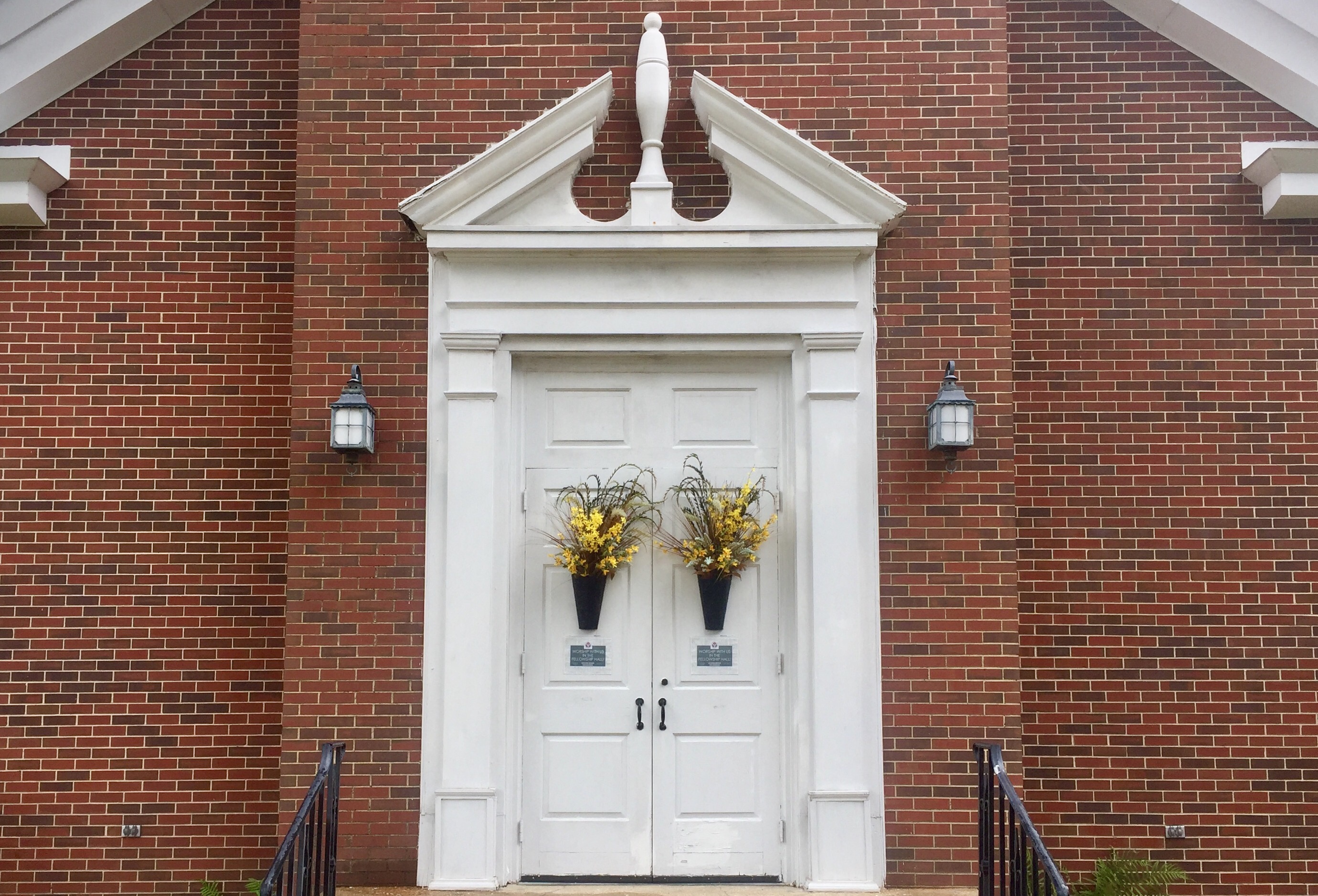
In John 10, Jesus proclaims that he is the door to eternal life. As we enter through the doors of our sanctuary, we should be reminded that it is only in Christ alone, through Christ alone, and for Christ alone that we have peace with God. The doors of the church are a proclamation and invitation to those in our community to come and see that the Lord is good. The doors are open for all to hear the Gospel call of Christ to salvation. That is why it is problematic when the church closes its doors to people who are lost and in need of being found. It is a true scandal when the church shuts out men and women who are weary and heavy laden by the demands of this world because Jesus is clear in his invitation to all those burdened souls to come to him and experience rest (Matthew 11:28).

The doors at Homewood CPC should be a blessed sight in our community. They should be emblematic of the refuge we have in Christ. They should shout to the world Jesus’s proclamation that even though in this world we will have trouble, we must take heart because he has overcome the world (John 16:33). The doors of the church remind us that the mission of God never rests. Even during times of prosperity and relative comfort, the doors of the church emphasize the importance of God’s people remaining awake and not lulled into the coma of comfort. The doors of the church help us hear the words of Jesus time and time again that salvation is available to all. When we forget this, we are exactly who Jesus talks about—those who are thieves stealing, killing, and destroying the very message we’ve been entrusted with to share so freely.

May we always receive the rest of Christ when we see the doors of the church, but may we never slumber in that rest. May we always be pointing people to Jesus wherever God has placed us so that to those who need to hear the Gospel will always know the door to enter. Jesus is that door to life abundant. Amen.

Sacred Spaces: The Baptismal Font

I love walking into the home of a friend or family member and receiving the welcoming embrace of a hug accompanied by the words “make yourself at home!” A warm welcome is a powerful sign of acceptance, security, and rest. It leads us into fellowship and communion. Oh, how our world could use a warm welcome right now!

September 14 will mark the beginning of my eighth year as senior pastor of Homewood CPC. The warm welcome my family and I received those eight short years ago still resounds in my heart and mind. It is that welcome that created for me and my family the foundation for ministry at HCPC.

Easter of this year, Sherrad and I decided to move the baptismal font to the back of the sanctuary to welcome each person as they entered in for worship. As worshippers entered, they were encouraged to touch the water and make the sign of the cross upon their foreheads in order to remember their baptism. It’s place at the back of the sanctuary also served as a reminder that we had all passed through the waters of baptism into the family of God’s people from all times and places. You see, the baptismal font is like that warm welcome we receive when we enter a friend or family member’s home. In our baptism, we are claimed by God. We are welcomed into his family. We receive from him the assurance of his faithfulness. God welcomes us in and invites us to make ourselves at home within his fellowship with our brothers and sisters.

When we see the baptismal font, let us not just see something that is used only during times of baptism, but as a constant reminder of our welcoming and hospitable God who has claimed us in baptism. May we be reminded of the longing within our souls that pleads to be set free from a world of chaos in order to reside in the eternal presence of God. May we remember the words of Hughes Oliphant Old who said that baptism in the name of the Father, the Son, and the Holy Spirit hopes that all people will be received into the household of faith, joined to Christ in his death and resurrection, and be filled with the gift of the Holy Spirit. Amen.

Sacred Spaces: The Wooden Pews

Our good friend Adam Borneman recently introduced me to a podcast entitled Strangely Warmed on the Crackers and Grape Juice website. A recent episode included a discussion of the lectionaries readings for the 12th Sunday after Pentecost. Intriguing stuff, I know, but this was a timely episode for me as I have been wrestling with how to write about how wooden pews remind us of the Gospel of Christ.

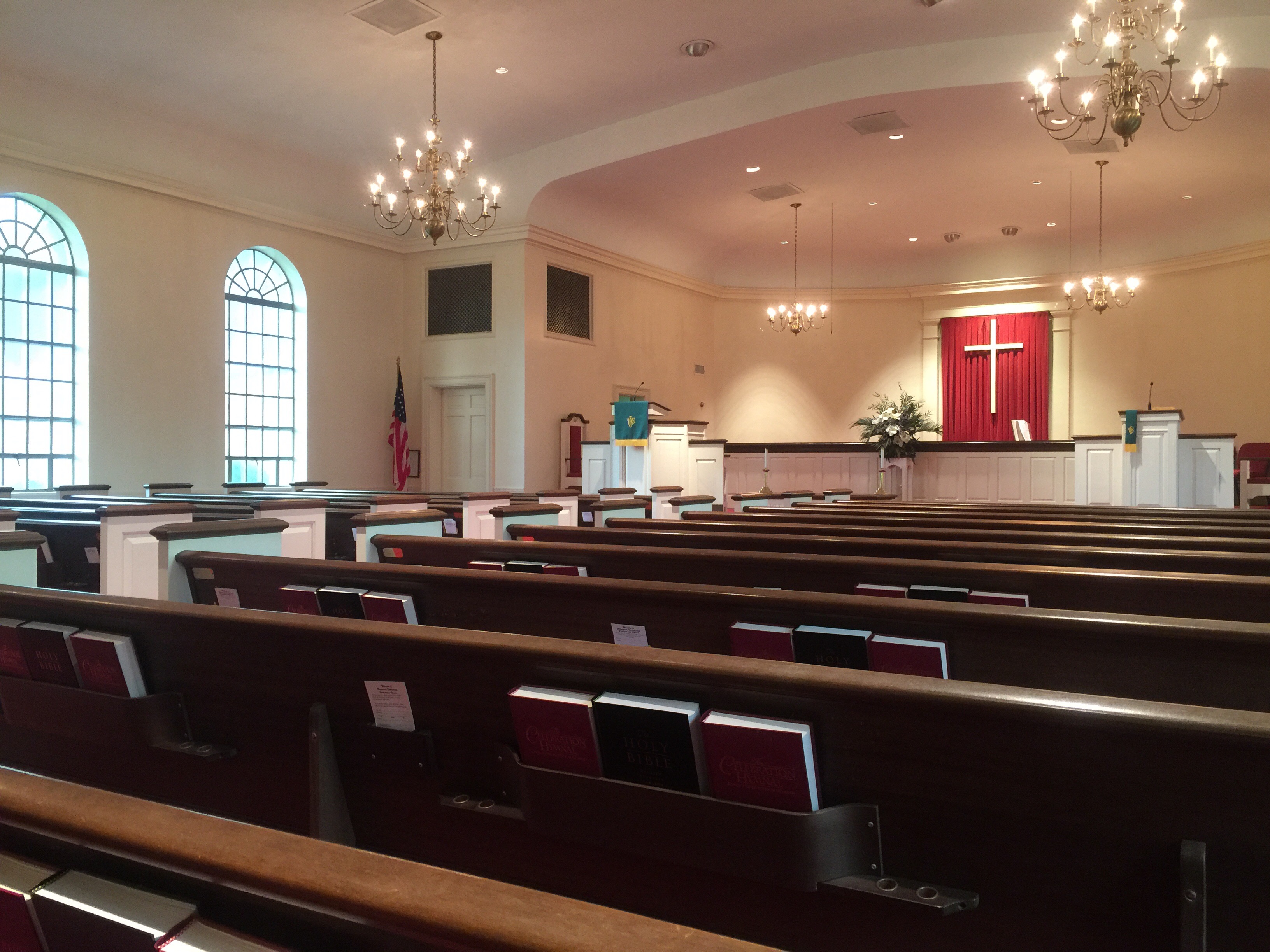
Full disclosure—I have never overheard anyone ever gleefully rejoice in getting to sit in a wooden pew for an hour on Sunday. Instead, I’m pretty sure that several of our choir members joined the choir so they wouldn’t have to sit on wooden pews. They have luxurious, padded chairs in the choir loft, y’all! Nevertheless, the wooden pew communicates an important truth about God’s salvation in Jesus. In 1 Peter 3:18-22, Peter describes our salvation in Christ by reminding us of Noah and his ark. “They formerly did not obey, when God’s patience waited in the days of Noah, while the ark was being prepared, in which a few, that is, eight persons, were brought safely through water. Baptism, which corresponds to this, now saves you, not as a removal of dirt from the body but as an appeal to God for a good conscience, through the resurrection of Jesus Christ (1 Peter 3:20-21).” God brought his people safely through the waters in the ark. A wooden structure to get us safely through life.

This brings me to Borneman’s recommendation of the podcast mentioned above. This particular episode was about the story of Moses in Exodus 1:8-2:10. I quickly realized as I listened to the podcast that I had missed something incredible about the birth and rescue of baby Moses. When Moses was born, his mother made a basket of bulrushes, or reeds, daubed it in bitumen and pitch, and placed him in the river so that he would survive Pharaoh’s edict requiring all Hebrew newborn baby boys to be thrown into the Nile to die. Moses’s mother courageously constructs a tiny ark to save her child. Pharaoh’s daughter then finds baby boy, takes him as her own, and names him Moses, which means “drawn out of water”. Rev. Drew Colby on the podcast then proceeded to blow my mind as he connected some dots that I am ashamed to not have connected myself. He connects the ark of Noah, the tiny little baby basket boat of Moses, the manger of Jesus, and the Church of Jesus Christ as the vessels that God places his children into in order for them to be brought through the chaotic waters of life into the eternal presence of his Kingdom! Mind. Blown.

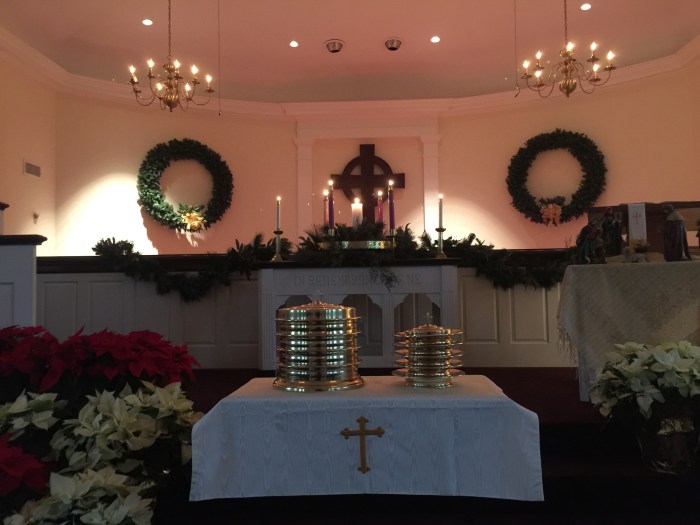
How excited should we be to enter the sanctuary each Sunday and take our seat within a wooden pew next to brothers and sister in Christ and direct our attention to the Gospel proclaimed from the wooden pulpit? How overwhelmed should we be to know we were drawn from the waters of a wooden baptismal font? How thankful should we be when we eat bread and drink wine from atop a wooden table? Brothers and sisters, when we experience these realities, we are experiencing the same type of providence and loving-kindness that Noah, Moses, Jesus, and all the other people of the Gospel promise that has come from being grafted into the family of God. Let us never neglect the blessing of joining together with the communion of saints and truly rejoice! All praise, glory, and honor to our God who saves us from the chaotic waters of life! Amen.

The Importance of Sunday School (or Awesome Sauce Life Group)

It's back to school time! As teachers and students begin a new  school year, we all get a reminder of the joys of learning, friendship, and early bedtimes. I am grateful that my three kids are much more successful at making friends than I was when I was their age. Ava, Braden, and Drew were happy to go to school today in large part because of their friendships and the value they see in what they learn in school. It is amazing how elementary school children understand, in their own ways, of course, relationships and the value of what they are learning. What's more amazing is how we adults forget both of those aspects as we live our lives.

Since its back to school time, I was pondering the importance of Sunday school to my life as a pastor. I know that, in general,  over the last few years, Sunday school has fallen out of fashion in favor of "life groups", "small groups", "home groups", or other inspiring groupings of people. Be it Sunday school or "awesome sauce life group", the purpose remains hopefully the same–a faith community for people to gather around the Word of God in order to deepen relationships with one another and understand the eternal truth of Jesus Christ. This is called discipleship. Usually people will stop attending Sunday school if it doesn't provide meaningful, Christ-centered relationships or if it doesn't contribute any type of meaning or purpose to our lives. When this occurs, it is a mournful thing because the community of Christ should be built around the relationships that God has knit together focused upon the testimony of God for us in our world. We need each other more than we realize.

Dietrich Bonhoeffer believed heavily in Christian community. For him, it was not a social club. It was not an activity group. It was not something to be attended to whenever we felt like we should. It was communion. It's purposes were plenty, but central to this purpose was the presence of Christ. Jesus says in Matthew 18:20, "For where two or three are gathered in my name, I am there among them." What an incredible promise! Sadly, this is a promise that never gets experienced by so many in our churches. Bonhoeffer tells us in his classic Life Together,

"God has put this word (the Gospel) in the mouth of men in order that it be communicated to other men. When one person is struck by the Word, he speaks it to others. God has willed that we should seek and find His living Word in the witness of a brother, in the mouth of man. Therefore, the Christian needs another Christian who speaks God's Word to him. He needs him again and again when he becomes uncertain and discouraged, for by himself he cannot help himself without belying the truth. He needs his brother man as a bearer and proclaimer of the divine word of salvation. He needs his brother solely because of Jesus Christ. The Christ in his own heart is weaker than the Christ in the word of his brother; his own heart is uncertain, his brother's is sure."

Sunday school (or Awesome Sauce LG) provides us with the opportunity to come together as brothers and sisters who are navigating through life clinging to Christ and needing to hear that someone else is trodding that same path with us. In our discipleship we can encourage one another, rejoice together, pray together, mourn together, work together, sing together, and commune together. And with this communion in the name of Christ, we get Jesus. 

So, may we always understand the importance of our relationships and the value of our fellowship each week as we meet together for worship and discipleship. For when we gather each Sunday, Christ is present with us and nourishes us for the lives we've been called to live. Amen.